












After years of cost overruns and delays, Saudi Arabia’s flagship futuristic megaproject, Neom, is set to be significantly scaled back. The futuristic super-city, meant to run entirely on alternative energy sources, was due to host the 2029 Asian Winter Games, which has now been postponed.
Saudi Arabia is set to significantly scale back Neom, its flagship super-city project.
 ADVERTISEMENT
ADVERTISEMENT
ADVERTISEMENT
According to reports, Saudi Crown Prince and Neom chairman Mohammed bin Salman now envisions a much smaller development than originally planned, following years of cost overruns and delays.
On Saturday, the kingdom announced the indefinite postponement of the Asian Winter Games, which had been scheduled for 2029 at Trojena, a year-round ski resort in the Neom mountains.
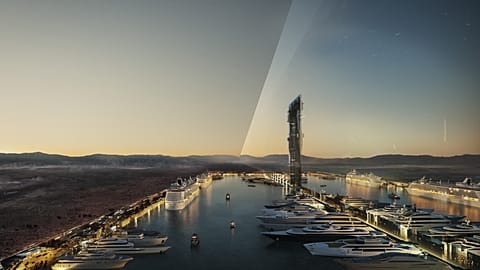
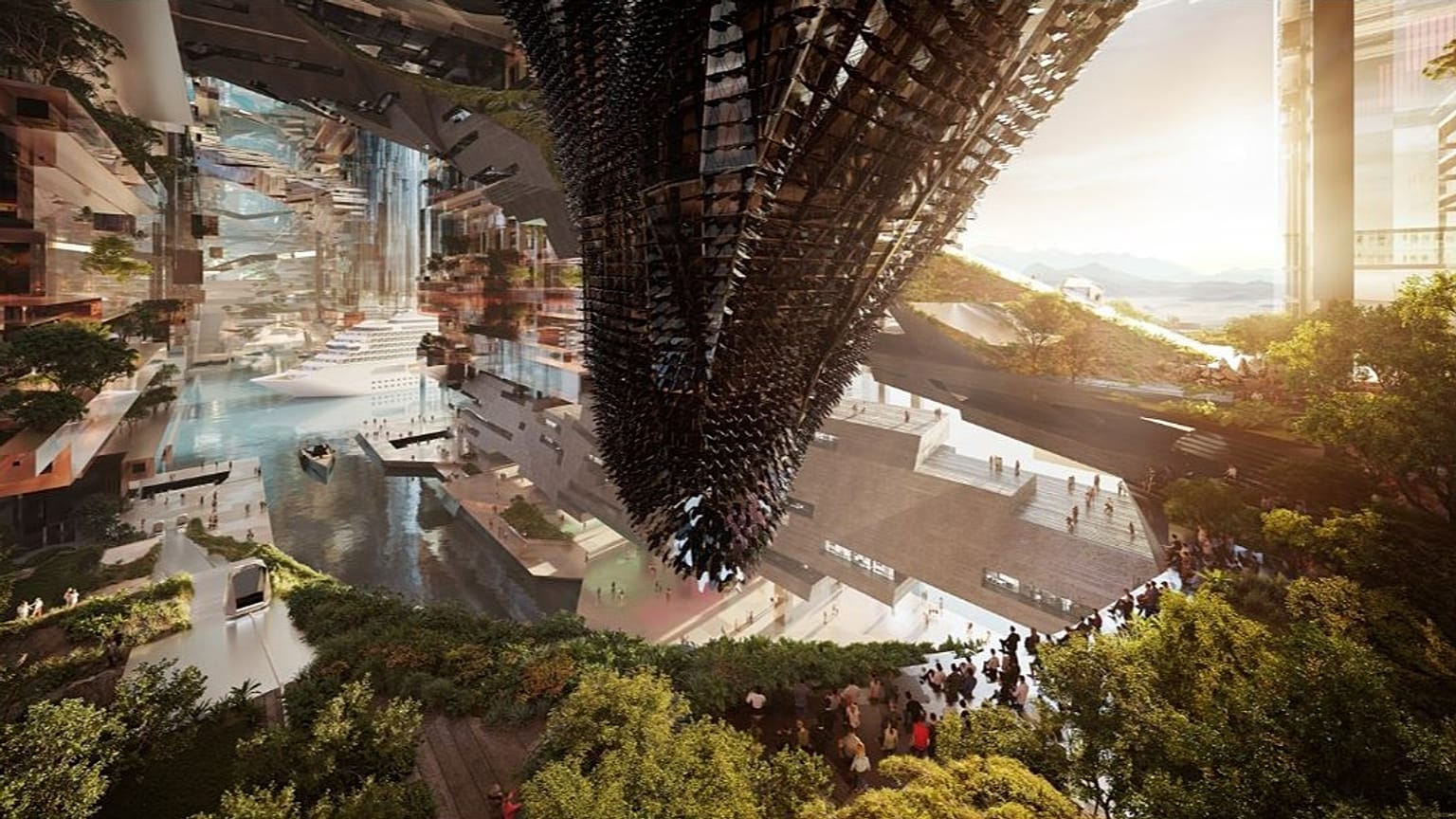
In addition to downsizing Trojena, work is reportedly underway to radically redesign The Line, the futuristic linear city and Neom’s centrepiece, which was originally planned to stretch 170 kilometres inland from the Red Sea across desert mountains.
Mounting price pressure
The decision to scale back Neom and postpone the Asian Games appears to reflect mounting pressure on Riyadh’s ambitious projects amid a subdued oil price. Brent crude is currently trading just above $60 a barrel.
Covering roughly the size of Belgium, Neom was first billed as Saudi Arabia’s answer to Silicon Valley — a hub for technology and futuristic innovation. The projected cost was around $500 billion, but recent reports suggest the true figure could approach $9 trillion.
First touted in 2017, the desert megacity was expected to be home to nine million people by 2045, as Saudi Arabia sought to grow its population and become a global economic powerhouse.
Several high-profile projects included:
- 'The Line', an inland city running from the Red Sea through desert mountains.
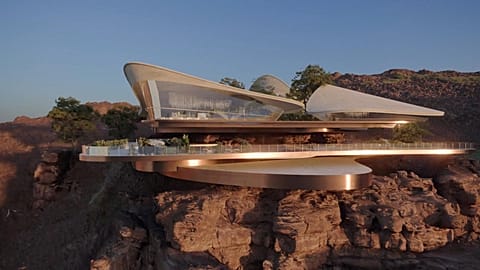
- Trojena, a ski resort selected to host the Asian Winter Games in 2029.
- Oxagon, a coastal industrial and logistics zone.
Ever since its launch, Neom has faced persistent doubts, both inside and outside the kingdom, over its sheer scale and feasibility.
'The Line' in the sand?
When he unveiled designs for The Line, bin Salman said the car-less city, with its flying taxis and robot butlers, would become the planet's most liveable city "by far".
Notwithstanding the feat of engineering required to build two 500-metre tall skyscrapers running the length of 170-kilometres of Red Sea coast, the entire city was supposed to run entirely on renewables.
Inhabitants were also to have every service they needed within a five-minute walk from their home.
AI to take centre stage
With the project now expected to be much more modest, the Saudi government is believed to have shifted its focus towards industrialising Neom, notably as a hub for data centres.
Its coastal location, with access to abundant seawater, is seen as strategically suitable for such facilities, which require massive amounts of cooling water.
Diversifying the kingdom’s oil-dependent economy remains a top priority for the Crown Prince, who has made it his aim to position Saudi Arabia as a global leader in artificial intelligence.
Neom is backed by Saudi Arabia's Public Investment Fund, valued at nearly $1 trillion and also chaired by the Crown Prince. Tasked with driving the kingdom’s transformation, the fund has faced increasing scrutiny to deliver returns on its massive investments.
The scaling back of Neom comes as Saudi Arabia prepares to host a series of major international events, including the 2030 World Expo in Riyadh and the 2034 FIFA World Cup. Requiring vast infrastructure investment, they are part of bin Salman’s Vision 2030 project.