












Sir Don McCullin: 'My life, thanks to photography, has had purpose and meaning'














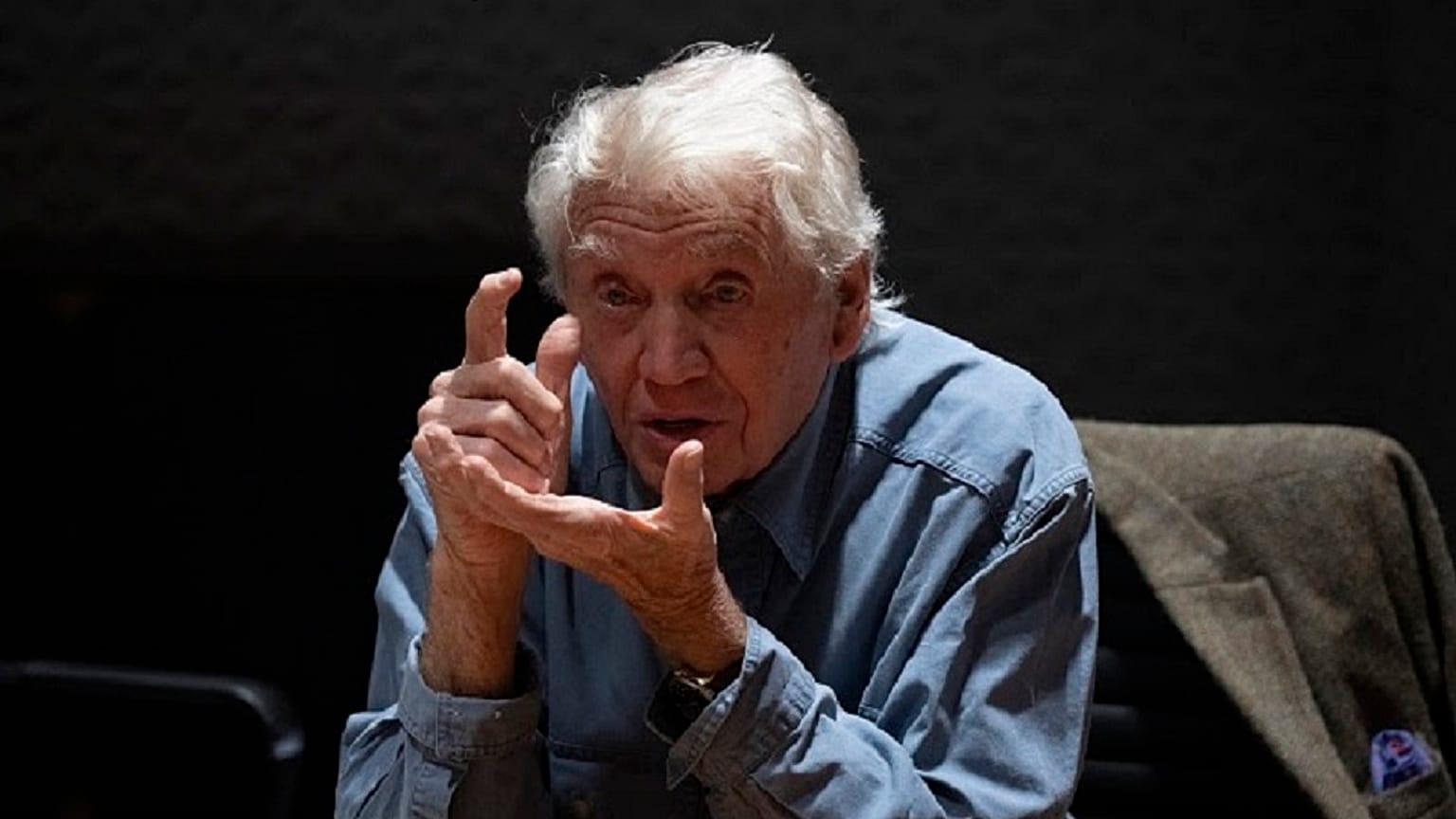
Renowned war photographer Sir Don McCullin has been talking to Euronews Culture in Athens about his remarkable life behind the lens at the exhibition based on his book "Life, Death and Everything in Between."
Sir Don McCullin is a legend of war photojournalism.
 ADVERTISEMENT
ADVERTISEMENT
ADVERTISEMENT
The Briton ranks among the greatest living photographers. He is an eyewitness to our time, who has recorded war, poverty and human suffering with rare compassion and dedication. His photographs have made history over the past seven decades and have made him a sensitive palmographer of our time.
From very humble beginnings in North London, he's followed the news in several war and conflict zones such as Vietnam, Cambodia, Lebanon, Biafra, Northern Ireland, Congo and Uganda.
He has witnessed unimaginable atrocities during his travels, been injured himself and experienced the deaths of friends and colleagues. Understandably, he also has breathtakingly horrific stories to tell.

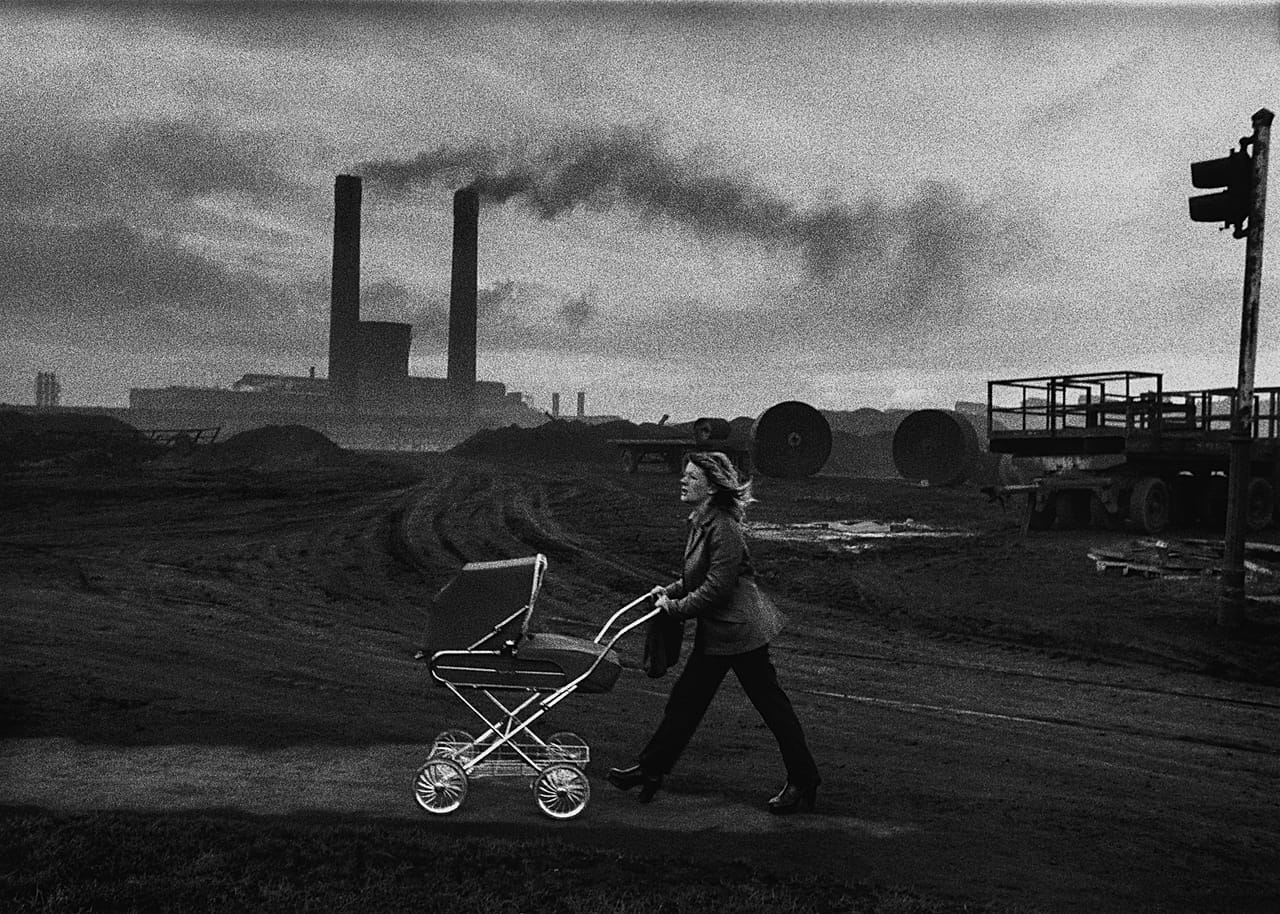
But to strike some sense of balance and soulful nourishment, McCullin has also traveled to Africa, India and Indonesia in search of the poetry of everyday life, and captured the English landscape with unparalleled inner intensity.
Shooting from the start
McCullin's career began at the weekly Observer newspaper back in 1959 when he was 23 years old. Success swiftly followed in 1961 when he won the British Press Award for his piece on the construction of the Berlin Wall.
His first contact with war came in Cyprus in 1964, where he covered the eruption of ethnic and nationalist tensions, winning the World Press Photo Award.
In 1966, McCullin moved to the Sunday Times and charted a course that would define him over the next two decades.
In 1993 he was the first photojournalist to be given a prestigious Commander of the British Empire (CBE) honour in recognition of his spectacular work.

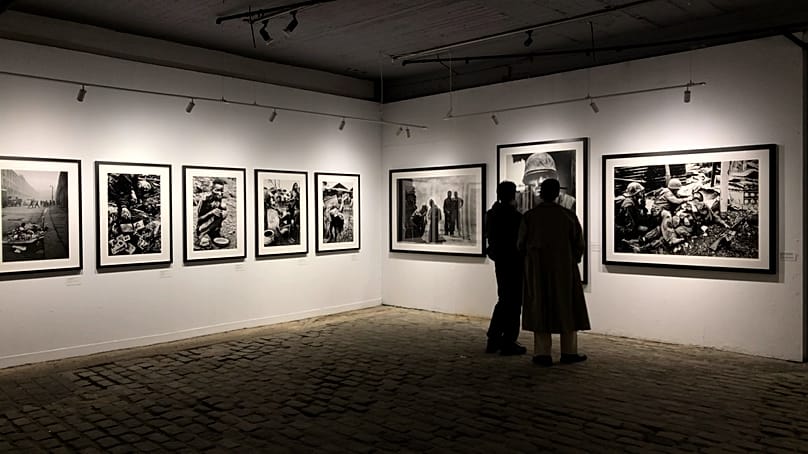
McCullin, who's 91, has been in Greece this past week for his exhibition based on his book "Life, Death and Everything in Between", which was a key part of the 8th Athens Photo World International Festival of Photojournalism.
He took time however to meet with Euronews to discuss his life, the art of photography, photojournalism and his many missions around the world.
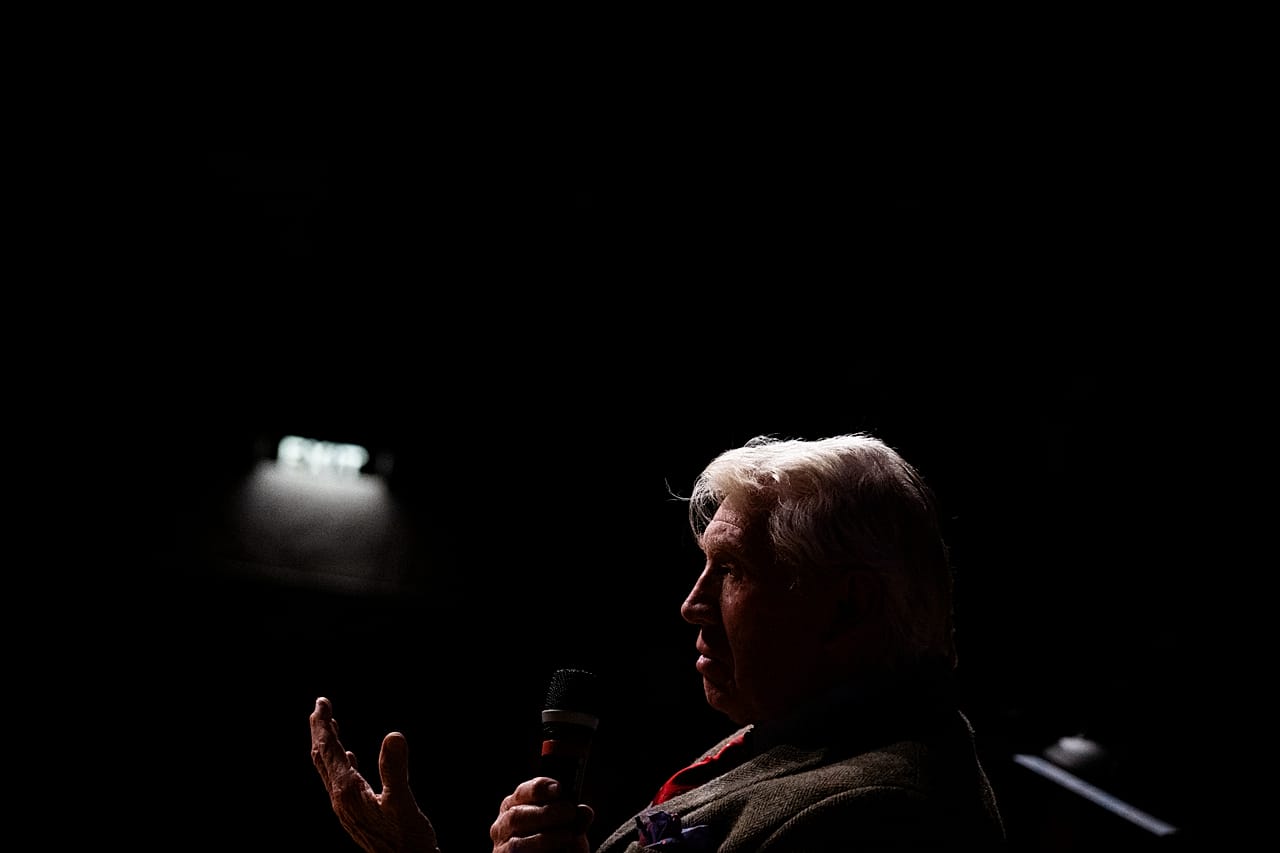
You have devoted yourself wholeheartedly to photography for seven decades. How did it come into your life and what has this medium brought to you?
Well, when I was young, I didn't have any particular career prospects, because I didn't have the necessary education to start a business. I did my military service in the Air Force. During it, I went to many countries in Africa and the Middle East and came back to England with a camera. I wasn't particularly interested in becoming a photographer. I feel that photography chose me. I used that camera to photograph the people where I grew up in North London. I realised I loved doing it. I thought this could be the life I wanted to have. It turned out to be exactly the right career choice for me. I published these photos and that's how the journey began. Eventually, I realised that I wanted to experience a much bigger world.
I have been involved in photography, or rather practicing photography, for 70 years. I started in my 20s, and it has rewarded me. I reached a point where I learned more and more about humanity, about photography, about the tragedy of the human species. I have now published 20-30 books on photography. I suddenly felt that my life, thanks to photography, had a purpose, a meaning.
I must confess that I have reached the point today where I am quite tired of talking about it. I'm tired of talking about my life and photography. I've talked too much over the years. So I'm looking forward to completing my photography journey. I am now 91 years old. I want to have a quieter life. The only thing is that I will no longer go to cover any more wars.

What made you become a photojournalist?
Because I studied the work of other photographers who called themselves photojournalists, I thought that this profession had a purpose and a meaning. I thought it wasn't just about taking pictures, but about creating photographs that have something to say. After that whole process, the work started to become more and more political. I mean, even today I'm still constantly following the international news. I'm passionate about international news and I want to know what's going on around the world right now. It was something I started doing at the beginning of my career and I combined it with the camera.
I worked at the Sunday Times for 18 years, as well as many other newspapers. I really believe that photojournalism made me proud. It made me feel that, although I had no education as a young man, that I was gaining from this work. I was traveling with journalists and distinguished writers. I was understanding myself a little more, instead of just following those outside my circle. I started to feel like I was making the right decisions And I enjoyed it, more than anything. That's the most interesting thing. You have to enjoy what you're doing and that's the reward. I wasn't looking for financial reward. I was looking for personal dignity.

What were you interested in "capturing" with these photographs? What did you want the rest of the world to know about what was happening in the war zones you were in?
Without wanting to sound arrogant, I also wanted to feel a little important for going to those places. I took these photos, which have a meaning. They were tragic but I took them with compassion for what I was seeing. I wanted people to receive them with the same compassion so that they would try to understand that what they saw in them was wrong. So I had, in a way, a slightly evangelistic attitude. But I eventually realised that I was kidding myself, thinking that I could change the world. I couldn't.
How much did these photos change your life?
Well, they didn't make my life more comfortable, because I was becoming more and more famous. It's what we call fame, which I had to be very careful about. But I was thinking that it has nothing to do with me as a person. It's about my work. It's about the content of my work. It wasn't about me, even though I was ultimately the focus, because more and more people were saying, "Oh, he's taking these pictures. He's the photographer." So I had to be very careful about how all these images were presented and what they showed. People would think and wonder about my intentions: "Is he trying to promote himself or the situation?" So it was very complicated, very difficult for me to manage the impact of the pictures I was taking in various wars around the world.
In recent years, you have turned to different subjects: still lifes, portraits and landscapes of the British countryside. It's a complete shift. Why? Was it your way of finding peace after living on war fronts for five decades?
Yes, because I felt like a mouse running incessantly on the wheel. I had to change direction to show people that I am more than what they think I am and that I have more to present. I tried to expand my field of vision, to try my talents in other subjects. It wasn't about being smart or seeking artistic fame. I was interested in exploring other things. I wanted to get rid of the guilt of the reputation I gained from the war and gain some respect purely for my photographic work.
The world hasn't changed at all after so many decades. Today, almost the entire planet is experiencing wars, disasters and humanitarian crises. How do you feel about it, seeing what is happening in Ukraine, Gaza and Iran?
Well, I have expressed my opinion on this issue many times. The answer is that I feel that despite all the efforts I have made to show people the tragedy and the lack of compassion for other people, humanity is in a very bad situation right now. And it doesn't seem to be improving.
If something is not done, things will get worse. Especially with President Putin, who is threatening Europe the way he is, and with all these other crazies in North Korea, Kim Jong-un, and China, who is also a big threat to us. So, in a way, we haven't won any psychological wars in our lives. All the old wars have now come full circle. Today we have other wars that threaten us.
Is there a photographic challenge for you now? Is there a subject, person or event you would like to photograph?
No, because I am now exhausted. I have no more strength and energy. I am over 90 years old. My energy levels are now at rock bottom. I can't wait to sit and reflect on all the years I spent in these wars and in these places. All I would like now from life is to avoid some serious illness, to spend a few more quiet years in my garden.
All of this has its origins in my father, who died at the age of 40, when I was only 13 years old. I have lived more than twice as many years as he did and I still think he didn't live his life. I mean I have lived a very successful life, but my father had nothing because he was very poor. So I have no complaints about the journey I've taken in my life.

Do you think that this profession, this job, war photography, has changed today? We do not have as many photojournalists today as we did in the past, even though wars, crises and conflicts abound on the planet.
We don't have any of those photojournalists now because there is no outlet in the media for their work. Nobody wants to see pictures of wars in their newspapers and magazines. They want to see more upbeat and happy things, things that have to do with entertainment, enjoyment, holidays and success. They are not looking for anything else. It's all about the newspaper owners. They want their newspapers to sell. Tragedies, poverty and all these other social problems don't sell.
What is the most important lesson you have learned from this whole journey?
When I started, I grew up in a very poor area. But there was always the possibility to find a way to escape from that social environment. There is always a way. Usually it's through education, which is the best opportunity you can get. Unfortunately, that didn't happen in my case. But by entering the media world, I began to learn from my colleagues. They had the brains that I didn't have, so I absorbed some of their knowledge.
Working in the media world came at the right time in my life. Today, there is no right time to be looking for what to do with your life. In England, we have a million educated people from universities who can't get a job. A serious problem facing youth around the world today is unemployment. Employment or lack of it will be one of the greatest tragedies facing humanity today and will continue to face humanity in the future.