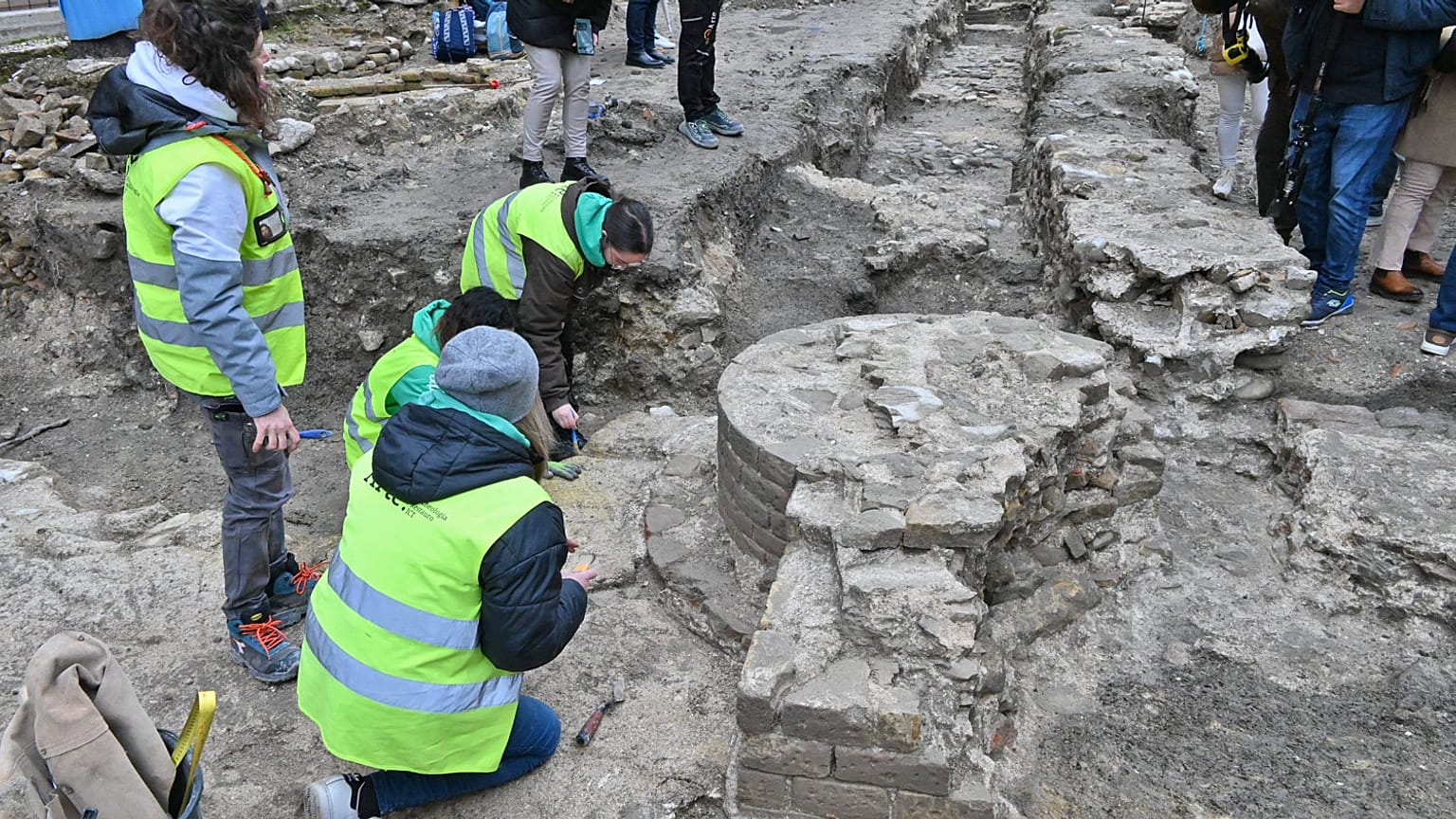













The newly excavated basilica is the only building definitively attributed to Marcus Vitruvius Pollonius, a founding figure of western architecture.
Archaeologists in Italy have unearthed the remains of a 2,000-year-old basilica designed by the pioneering ancient Roman architect Vitruvius.
 ADVERTISEMENT
ADVERTISEMENT
ADVERTISEMENT
Italy's Culture Minister, Alessandro Giuli, likened the discovery to that of Tutankhamun's tomb, adding that it is “something that our grandchildren will be talking about”.
The archaeological treasure was discovered during excavations for the redevelopment of Piazza Andrea Costa, in the city of Fano, in the region of Le Marche. Researchers were able to positively identify it as Vitruvius’ design after finding columns that directly corresponded with the architect’s description.
The rediscovery of a missing basilica
The newly excavated basilica is the only building definitively attributed to Marcus Vitruvius Pollonius, a founding figure of western architecture.
Vitruvius' De Architectura (The Ten Books on Architecture) is the only complete treatise on architecture to survive from antiquity and is regarded as the first book on architectural theory.
His instruction on the classical proportions of buildings underpinned artists’ works for centuries after, including Leonardo da Vinci, whose totemic drawing of the human body is known as the Vitruvian Man.
Vitruvius, who lived in Fanum Fortunae (now Fano) in the first century BC, referred to the basilica specifically in his seminal text, describing it as a majestic public building intended for the administration of justice and business affairs.
But the building’s location was lost over time, and became a mystery. For centuries, scholars and archaeologists have searched for traces of it.
"For more than 2,000 years we have been waiting for this discovery," said Fano Mayor Luca Serfilippi during the presentation of the finding.
"Today in Fano, a fundamental piece of the mosaic that preserves the deepest identity of our country was discovered,” Giuli added at the conference. “The history of archaeology and research is now divided into before and after this discovery.”
‘Something exceptional for the city of Fano’
Authorities say the finding is set to shine an international spotlight on the city of Fano in Le Marche, one of Italy’s less well-known regions.
"This remarkable discovery truly represents something exceptional in the history of archaeology, architecture, and the morphology of the city of Fano,” said Giuli.
"In the coming months and years, we will realise the importance of this extraordinary find and, at the same time, a renewed public awareness of the importance of protection, conservation, and archaeological research in places like Fano."
The city has a Vitruvian Study Centre that Serfilippi said has been working to promote the figure of Virtruviou for more than 30 years.
President of the Le Marche region, Francesco Acquaroli, said, “We are fully aware of the value this heritage can bring, not only economically, but above all in terms of tourism and culture.”
Investigations will continue at the construction site to see how much more of the basilica can be unearthed and whether the site will be opened to the public.