












The 1st-century luxury vessel matches the description given by the Greek historian Strabo, who visited the city of Alexandria between 29 and 25 BC.
People had plenty of fun in the past too: an ancient Egyptian pleasure boat matching a description by the Greek historian Strabo from the 1st century has been discovered off the coast of Alexandria.
 ADVERTISEMENT
ADVERTISEMENT
ADVERTISEMENT
According to The Guardian, the vessel, dating to the first half of the 1st century AD, was 35 metres long and designed to carry a central pavilion with a luxuriously appointed cabin.
With its temples, palaces and the 130-metre-high Pharos lighthouse (one of the seven wonders of the ancient world), Alexandria was once among the most magnificent cities of antiquity.
The 'party boat' was found off the now-submerged island of Antirhodos, which once formed part of the Portus Magnus (the great harbour) of Alexandria.
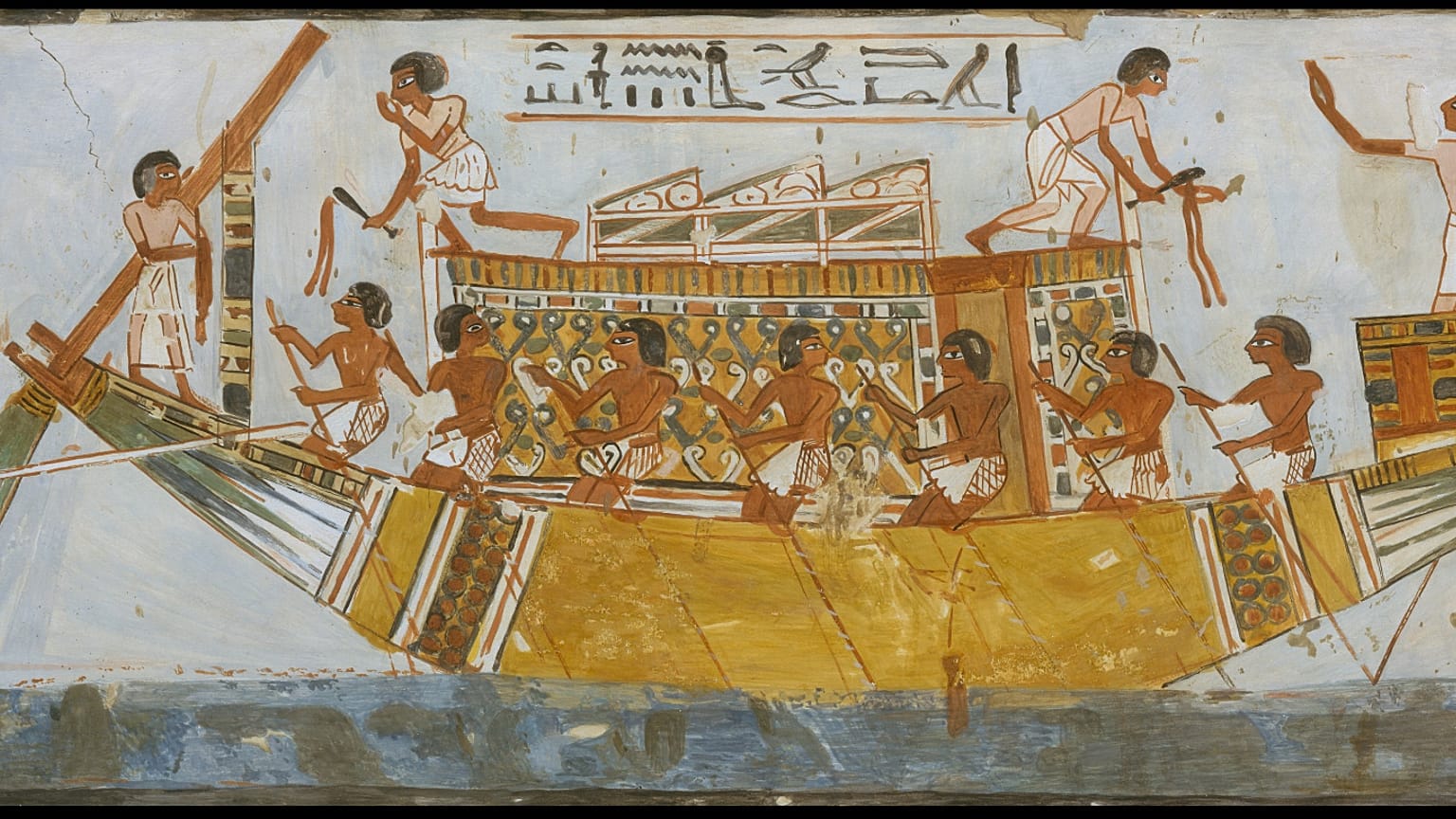
The Greek geographer, historian and philosopher Strabo (Latin: Strabo, c. 64 BC to AD 24) visited the Egyptian city around 29 to 25 BC and wrote about such boats: "These vessels are luxuriously fitted out and are used by the royal court for excursions; likewise by crowds of revellers who set off from Alexandria across the canal to the public festivals. For day and night alike, the boats are full of people playing the flute and dancing uninhibitedly and with great abandon."
No boat from this era has ever been found
The excavations were carried out by the European Institute for Underwater Archaeology (IEASM) under the direction of Franck Goddio, a visiting professor of maritime archaeology at the University of Oxford.
Goddio told The Guardian: "It is extraordinarily exciting because, for the very first time, such a boat has been discovered in Egypt. These boats are mentioned by various ancient authors, for example Strabo, and they also appear in the iconography [...]. But an actual boat has never been found until now."
He added that it was an exceptionally large boat,as can be seen from the well-preserved wooden beams, which are about seven metres wide. It may have required more than 20 rowers.
The find lay just seven metres below the water surface and 1.5 metres beneath the sediment.
Another theory, incidentally, is that the boat may have been a sacred barque belonging to a temple of the Egyptian goddess Isis. According to Goddio, it may have formed part of a "sea ceremony in honour of the goddess".
Investigation of the wreck is still at an early stage. It could yield new insights into "life, religion, luxury and pleasure on the waterways of early Roman Egypt", the researcher added. Further clues may soon come from the Greek graffiti found on the boat, which have not yet been deciphered.