













From ancient Qurans to archival records, rare manuscripts are finding new life in restoration labs, protected for future generations.
Located in Almaty, the National Library of Kazakhstan is the country’s largest book depository, housing more than seven million volumes in 123 languages. Among them is a particularly fragile and valuable collection: over 40,000 rare editions written in 13 Eastern and 13 European languages.
 ADVERTISEMENT
ADVERTISEMENT
ADVERTISEMENT
One of the library’s most remarkable treasures is a 12th-century handwritten Quran, written in Kufic script and one of the earliest forms of Arabic calligraphy. According to Gulshat Abikova, head of the Rare Books and Manuscripts Service, the manuscript was discovered in Turkistan and brought to Almaty in 1936, at a time when the fate of religious texts in the Soviet Union was uncertain.
Today, the ancient relic is preserved under strictly controlled conditions, kept in a secure underground vault where temperature and humidity are carefully regulated. The manuscript is scheduled to undergo a new restoration cycle, a process that may take up to three years, from scientific assessment to hands-on conservation.
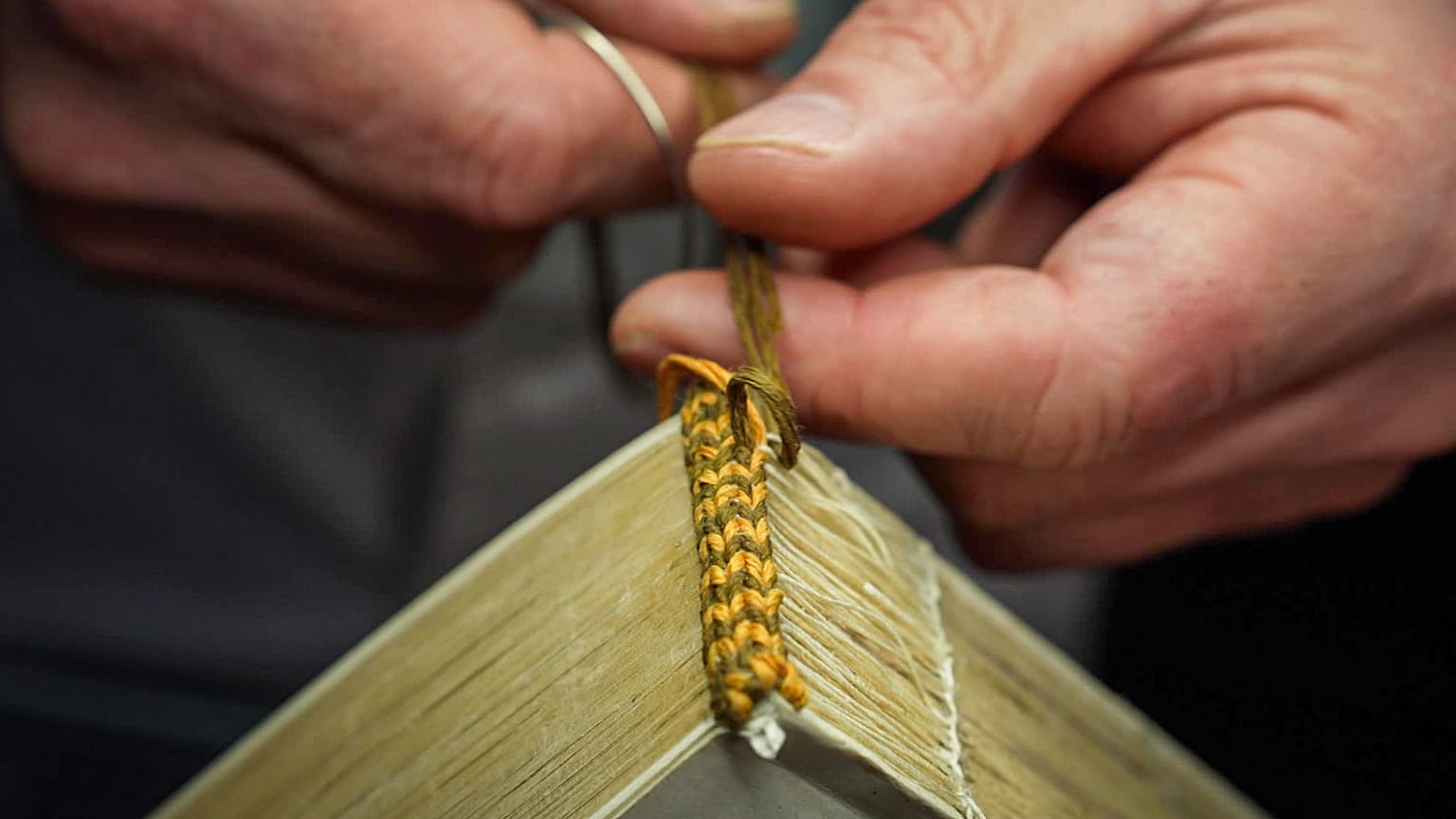
For this work, the library relies on its Conservation, Restoration, and Bookbinding Service. As its head, Aida Shomanova, explains, restoration begins long before any visible repair.
“Restoration is an extremely complex and labor-intensive process,” she says. “Before we begin, documents must undergo extensive research. Our collection includes materials made of rag paper, cellulose, and wood pulp. We must first understand exactly what we are working with.”
Specialists begin by identifying the type of damage. Biological deterioration caused by mould or insects is treated through gentle cleaning, while chemical damage from acidity or humidity is addressed through controlled water immersion. Only after stabilisation can restoration begin.
Where science meets preservation
To follow this delicate process further, our journey continues to another major centre of preservation — the Gylym Ordasy scientific complex.
The complex houses the Central Scientific Library, whose collections number nearly 5.8 million items, including a rare book fund of around 120,000 volumes. In 2025, Gylym Ordasy joined a large-scale project dedicated to preserving Kazakhstan’s scientific and cultural heritage, in partnership with several academic institutions across the country and Harvard University’s Davis Center.
The project aims to identify, restore, and digitise rare books in Eastern languages, creating a shared digital library accessible to researchers worldwide.
In 2025, around 20 rare books were selected for restoration. The work is carried out by the Center for Restoration and Conservation of Rare Books and Manuscripts within the scientific complex.
Here, restoration is both highly technical and painstakingly slow. Many documents arrive with damaged or missing edges, sometimes cutting directly through the text. To repair these areas without disturbing the original writing, specialists use a filling technique on a vacuum table. A paper pulp is carefully poured into the missing sections, while the table draws out excess water, allowing the new material to bond seamlessly with the original page. Restoring a single sheet can take an entire day.
Conservator Dinmukhamed Abdrakhanov notes: “One of our unique projects is a handwritten Quran from 1855. It contains rare seals that once belonged to the khan of the Khiva Khanate. The main restoration work has been completed, but some difficult opening pages remain.”
Restoring the records of repression
Our journey concludes at the Archive of the President of Kazakhstan, the country’s largest repository of documents on the political history of the 20th and 21st centuries.
The archive traces Kazakhstan’s political history from 1918 through the Soviet period and beyond, with holdings exceeding 1.5 million archival units. In 2022–2023, it received more than 700,000 files from the special archives of the Ministry of Internal Affairs, the National Security Committee, and the Prosecutor General’s Office, including investigative case files, registration cards, and other previously classified materials documenting the political repressions of the 1930s–1950s.
Many of these documents arrived in extremely poor condition.
“They were stored for decades in unsuitable environments,” explains archivist Danagul Tyulegenova. “As a result, many were damaged by mould or physical decay. Some almost completely.”
Despite this, restoration remains possible. Specialists work patiently, reinforcing fragile documents layer by layer. One of the key materials used in this process is Japanese paper, whose fibre structure allows it to bond seamlessly with the original document.
“The fibres open up and fit together like a puzzle,” Tyulegenova explains, “creating a strong but reversible reinforcement.”
Once restored, each document is placed in storage under strictly controlled temperature and humidity conditions.
In this careful balance between restoration, preservation, and access, the Archive of the President plays a crucial role — ensuring that even the most painful chapters of history remain intact, readable, and accessible.