















The Europe-wide tour announcement comes amid growing controversy, with several countries boycotting the contest due to Israel's participation.
The Eurovision Song Contest is marking its 70th anniversary with its first-ever international tour, organisers have announced - even as the competition faces one of the most controversial moments in its history over Israel’s participation.
 ADVERTISEMENT
ADVERTISEMENT
ADVERTISEMENT
Set to take place over June and July, the tour will unite "iconic Eurovision song contest performers and 2026’s artists", according to the EBU, and is being billed as “a celebration of the contest’s legacy, its global fan community, and seven decades of unforgettable music."
"Artists will perform their own Eurovision song contest entries plus cover versions of their favourite songs from the contest’s 70-year history," the EBU added.
Ten European cities, including London and Paris, will host the tour between 15 June and 2 July, following the contest’s grand final in Vienna on 16 May.
Growing controversy surrounding Israel's participation
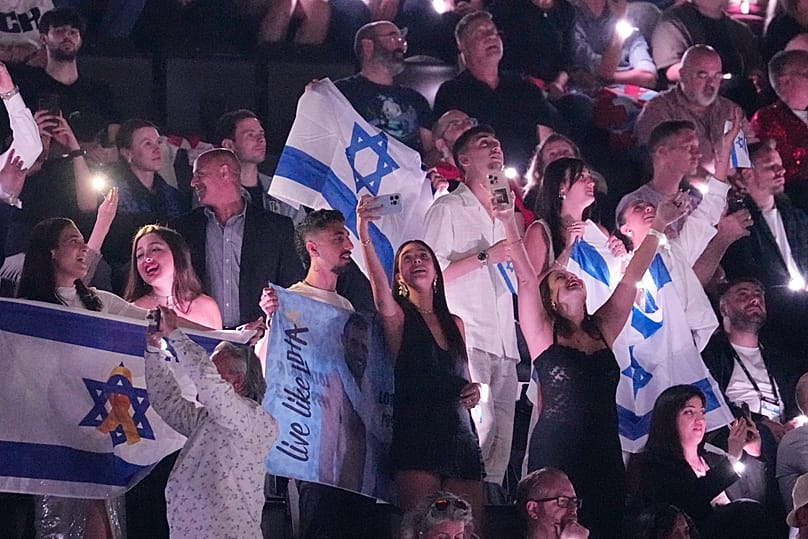
Meanwhile, controversy continues to swirl around Israel’s involvement amid the ongoing conflict in Gaza. Five countries have withdrawn from the contest in protest - reducing the field to 35 participants - marking the smallest lineup since the competition expanded in 2004.
Ireland’s public broadcaster RTÉ cited "the appalling loss of lives in Gaza and the humanitarian crisis there" when announcing its withdrawal. Spain, Iceland, the Netherlands and Slovenia followed suit in December, while the 2024 winner Nemo returned their trophy in protest.
"Eurovision says it stands for unity, inclusion, and dignity for all. Those values made this contest meaningful to me,” Nemo wrote on Instagram. "But Israel’s continued participation, during what the UN’s Independent International Commission of Inquiry has concluded to be a genocide, shows a clear conflict between those ideals and the decisions made by the EBU."

Adding to the headlines this week, Conchita Wurst, the iconic Austrian singer who won the 2014 Eurovision Song Contest, said she would no longer take part in any Eurovision-related events.
In her statement, which she signs as ‘Tom’, the performer says: "The Eurovision Song Contest has shaped my life. It was my stage, my home and my springboard and a chapter for which I am deeply grateful."
"As an artist, change is my greatest constant. From now on, I am withdrawing from the Eurovision context. I am moving to focus more on other professional projects and to let new things evolve."
Johannes Pietsch - better known as JJ, the 2025 Eurovision winner - previously called for an Austrian edition "without Israel", before later apologising for the controversy his comments sparked at home.
Eurovision strives to remain non-political. However, many critics have described the the EBU as hypocrites with regards to the Israeli situation, as Russia was excluded following its 2022 invasion of Ukraine, while Belarus was excluded a year earlier after the contested re-election of President Alexander Lukashenko.
The 70th edition of the Eurovision Song Contest will take place in Vienna on 16 May 2026.