













Jim Jarmusch's Golden Lion winner sees the director return to the anthology film format to better grapple with strained family relationships and explore the unknowability of those we think are closest to us.
Jim Jarmusch has always excelled in the art of extracting the extraordinary in seemingly commonplace situations. Nowhere is this better seen than in the director's superb 2003 anthology film Coffee And Cigarettes, an unexpectedly poetic collection of sketches that turns awkward meetings and missed conversations into something resonant and deeply human.
 ADVERTISEMENT
ADVERTISEMENT
ADVERTISEMENT
He returns this year with Father Mother Sister Brother, another go at the underappreciated cinematic format which won him the Golden Lion at last year’s Venice Film Festival. This time, he’s less concerned with caffeine and nicotine spears, and more preoccupied with water and watches. That, and the frayed family ties between parents and their adult children.
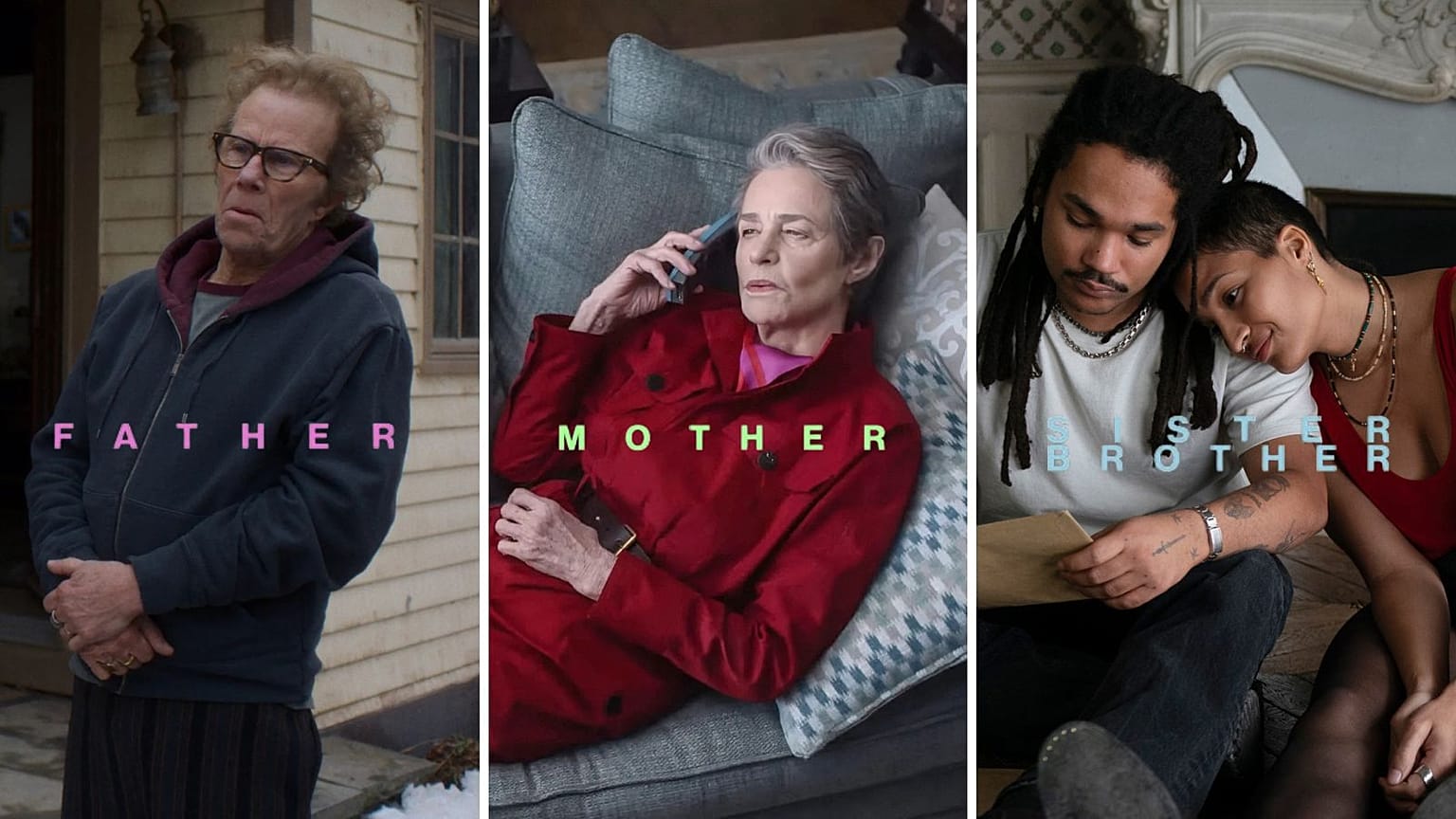
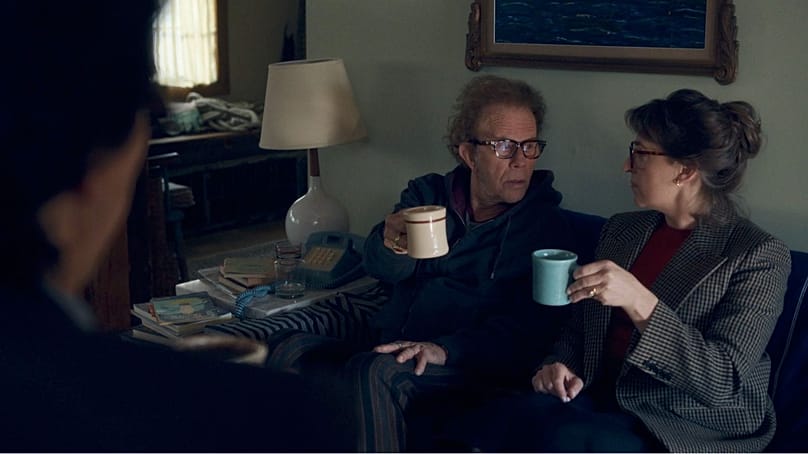
The first chapter, “Father", sees siblings Jeff (Adam Driver) and Emily (Mayim Bialik) drive to see their pops (Tom Waits) in his remote cabin in snow-caked New Jersey. They haven’t seen him since he had “an episode” at their mother’s funeral, and topics of health and money seem to be a source of concern. Their dad has apparently had various issues in his home, including a collapsing wall and a faulty septic tank. Jeff has been helping him out financially and he arrives for the familial sit-down with a small crate of fridge fillers. Cue: loaded silences and the weight of things left unsaid.
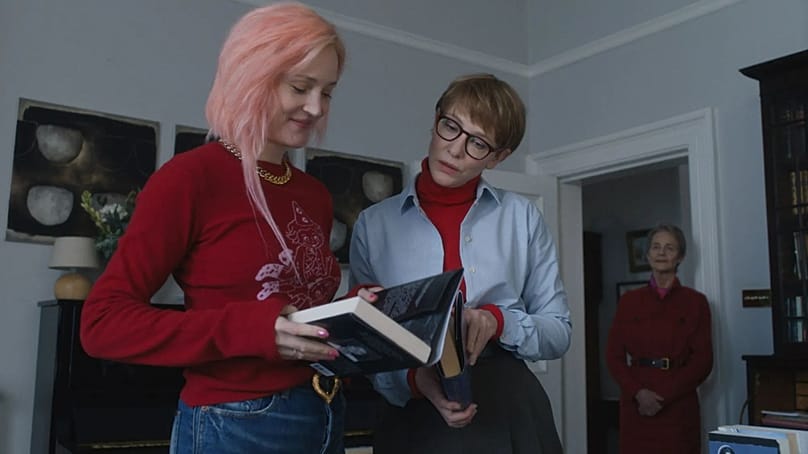
The second segment, “Mother”, centers around another similarly brief family reunion. A mother (Charlotte Rampling) chats to her therapist in her swish Dublin home, readying herself for the arrival of her polar-opposite daughters – the bookish Timothea (Cate Blanchett) and punkish Lilith (Vicky Krieps). They have established an annual tradition of sorts: a formal get-together around afternoon tea and an immaculate selection of finger foods. More pregnant silences ensue, as the trio adopt their family unit façades as they navigate partially verbalised emotions.
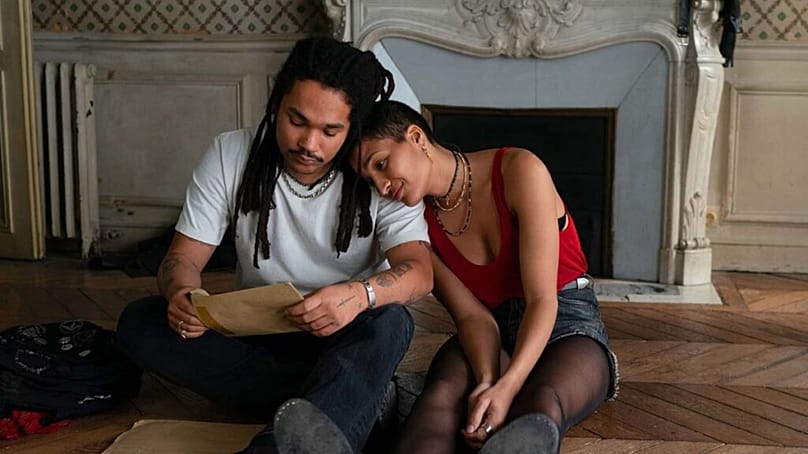
The third and final vignette, “Sister Brother”, breaks the established dynamic by heading to Paris, where twins Skye (Indya Moore) and Billy (Luka Sabbat) deal with parental absence. They meet up to visit their recently deceased parents’ apartment, a final goodbye during which Billy, who has been putting their folks’ things into storage, shows his sister a series of photos and papers that prove there was a lot they didn’t know about them.
Each snapshot is self-contained but opens similarly, with two siblings in cars driving to their parents’ homes. That’s not all though, as further connective tissue comes in the form of recurring visuals and conversational echoes: skateboarders in slow-mo, Rolex watches, accidental colour coordination, glasses of water, the British idiom “Bob's your uncle", and the mention of “Nowheresville”.
While pleasant in the moment, not an enormous amount decries from the symmetries or intersecting motifs, making Father Mother Sister Brother a charming film that teases profundity concealed in simplicity, but one which stumbles at the final hurdle.
Granted, their recurrence suggests that no matter how complicated families are in their own unique ways, everyone can relate to familiar experiences of communication breakdown with the passing of time. Still, it may all lead you to Nowheresville in terms of emotion. Whereas Coffee And Cigarettes (also starring Waits and Blanchett), an admittedly more wryly humourous omnibus, quietly floored the viewer, Jarmusch just misses his mark when it comes to exploring the complexity, absurdity, and sometimes tenderness of fraught family dynamics.
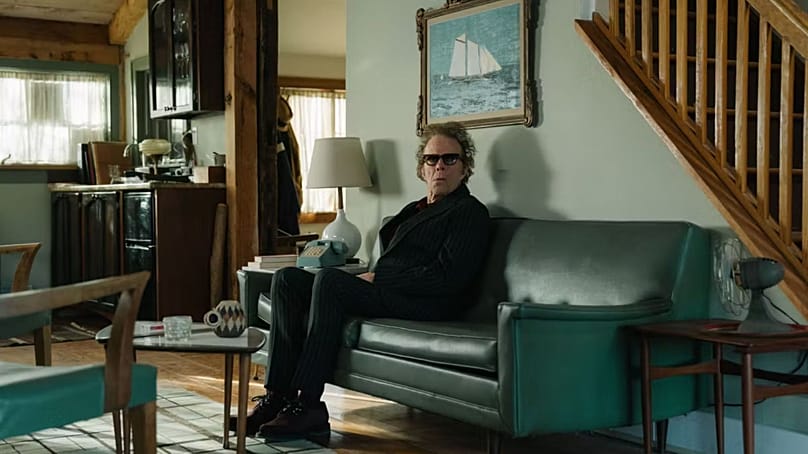
That isn’t to say there isn’t plenty to admire in this portrait of familial estrangement, especially in the first two chapters. Tom Waits – an underappreciated screen presence - excels in a role perfectly tailored to his trickster persona. Waits once said, “Most people don’t care if you’re telling them the truth or if you’re telling them a lie, as long as they’re entertained by it” - and the shabby-by-design father character is definitely entertained. The “Father” segment also benefits from a winking punchline that would have been right at home in one of the singer’s mischievous tall tales.
In “Mother”, Charlotte Rampling shines in arguably the best vignette. Whether oblivious or slyly observant, she is perfect in her role as an uptight matriarch who fusses over appearances in similar ways as Waits’ father - but for completely different reasons. The second vignette also features Father Mother Sister Brother 's best moments. Whether it’s the obscuring bouquet at the table, Blanchett’s buttoned-up daughter dutifully aping "mummy” (all the way to how she digs into a slice of Battenburg cake) or that brief hand holding moment between the two sisters are the gate, “Mother" builds on the promise of “Father” in dealing with deception and the things that hover over conversations but are never confronted.
Sadly, the closing chapter doesn’t bring it together. “Sister Brother”, while earnest and well acted, flirts with emotional resonance without achieving poignancy. It leaves the film on a stiff note which, like the previous two parental get-togethers, feels like a missed opportunity.
There is presence to be found in absence. Layered emotions can hide and stay unexpressed in silence. We all have our cocoons, our secrets, our deceptions fashioned to better cherish privacy and protect a sense of self. And maybe with age, we’ll reach the unspoken understanding that most of us will shuffle off this mortal coil leaving photographs behind and without ever truly knowing those we think are closest to us. It's no coincidence that none of the parents in Father Mother Sister Brother get a name.
Jarmusch nearly gets there. His commitment to exploring what separates intimacy and estrangement is not to be taken for granted – neither is his aversion to overembellished platitudes when it comes to stories of strained family matters. But even if Father Mother Sister Brother works as a charming diptych brushing profundity, it flounders as a melancholic triptych seeking reverberance.
Father Mother Sister Brother is out in Italy, Spain and France. It continues its European theatrical rollout in January and February, before heading to streaming platform MUBI.