



























How can filmmakers tell the horrors of the war in Gaza without distorting reality? With 'The Voice of Hind Rajab', director Kaouther Ben Hania offers an answer, halfway between documentary and fiction.
The art of cinema allows us to confront the most horrific tragedies of our world, both past and present.
 ADVERTISEMENT
ADVERTISEMENT
ADVERTISEMENT
Over the last decades, many films have chronicled the Israeli-Palestinian conflict. But when it comes to Israel’s current war on the Palestinian people of Gaza, fiction has yet to catch up with reality.
One reason for that is possibly the restricted timeframe. It has been a little over two years since Israel launched its campaign of relentless assaults against the Gaza Strip in the aftermath of the October 7 attacks. Making a film can however take much longer than that.
Another factor might lie in the limits of fiction itself.
We know the facts.
Israel’s military campaign in Gaza has killed more than 70,000 Palestinians, according to the territory’s health ministry. The United Nations says at least 1.9 million people - about 90% of the population across the territory - have been displaced during the war. A UN report published in September found that Israel has committed genocide against Palestinians in Gaza.
Images and testimonies, while sometimes hard to obtain, exist and tell the stories of broken lives and families. But the scale of these horrors perhaps makes it too difficult to translate what the people of Gaza are going through into fictionalised narratives in real time.
Among the major fictional international releases about Israel and Palestine, only Nadav Lapid’sYes takes place after October 7 and explicitly tackles the current war. But it focuses on Israeli society.
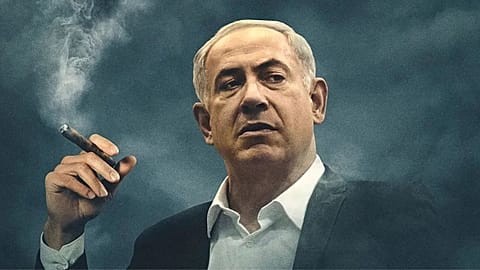
Instead, several documentaries have taken over to help the public understand the atrocities perpetrated in Gaza. These include The Bibi Files, which evokes Benjamin Netanyahu’s attempts to use the ongoing war as a reason to delay his corruption trial, and Sepideh Farsi’s Put Your Soul on Your Hand and Walk, which premiered in Cannes this year just weeks after an Israeli airstrike killed its protagonist, Palestinian photojournalist Fatima Hassouna.
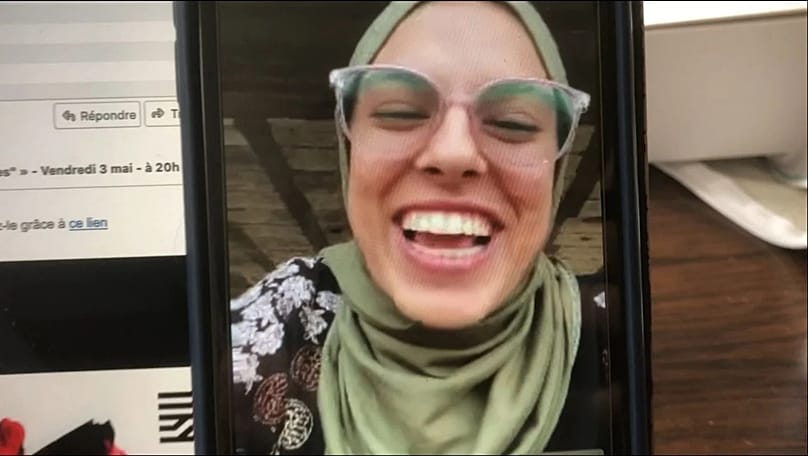
Most recently, Palestinian AFP journalists shared their experience of covering the war in their own surroundings in Hélène Lam Trong's Inside Gaza.
But the most poignant cinematic testimony of the current war to date is a film that manages to blend both fiction and documentary in an ingenious mechanism:The Voice of Hind Rajab, which premiered in September at the Venice International Film Festival, where it won the Grand Jury Prize.
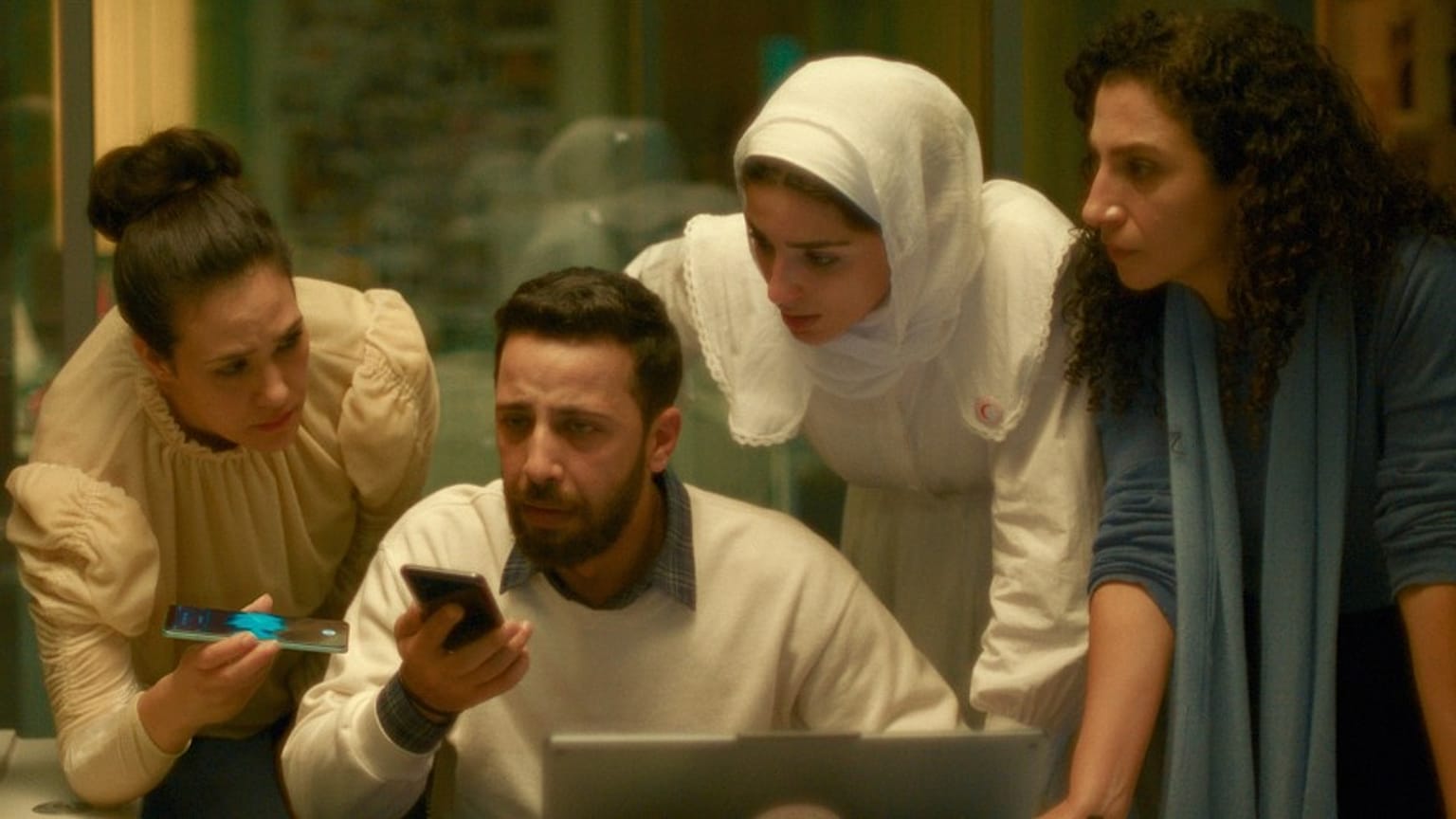
This French-Tunisian docu-fiction by Kaouther Ben Hania follows the Red Crescent as they receive an emergency call from a five-year-old Palestinian girl trapped in a car in northern Gaza.
The other passengers of the vehicle, her uncle, aunt and four cousins, are all dead, killed by Israeli soldiers in tanks. For hours, Red Crescent volunteers try in vain to get an ambulance to save her.
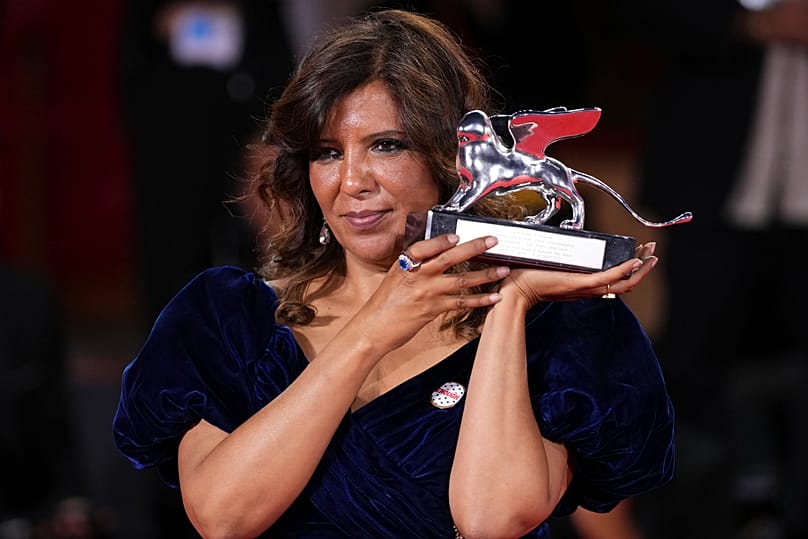
“This dramatisation is based on real events,” an onscreen message tells viewers before the film begins. The Israeli Defence Forces did kill Hind Rajab, her family members and the two Red Crescent paramedics who attempted to rescue her on 29 January 2024. A Forensic Architecture investigation concluded that 335 bullets were fired at the car of Hind’s family.
Ben Hania is used to blurring the line between fiction and documentary. Here, while actors play Red Crescent members, the director uses real recorded calls between Hind and the rescue organisation.
Viewers might not see the violence anywhere other than in the volunteers’ desperate eyes, but we hear it raw and unfiltered, from the terror in the little girl’s voice to the sound of Israeli shots.
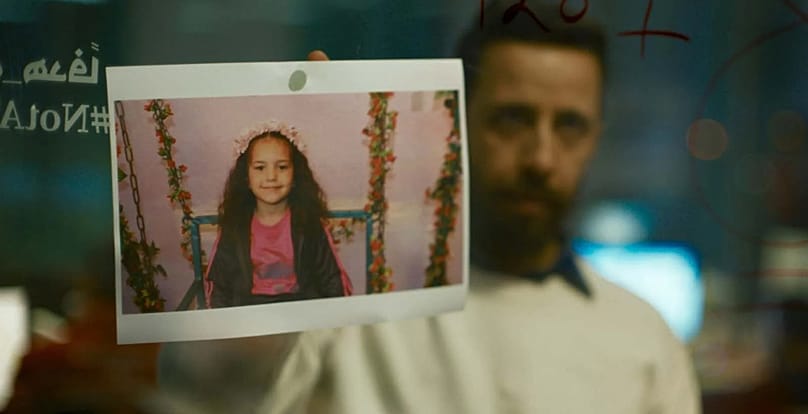
Ben Hania’s method makes for a harrowing and disturbing watch. The real voices of Red Crescent members sometimes merge with the voices of the actors who play them.
At one point, the director uses an authentic video from 29 January 2024 that she overlays on the reenacted scene.
The film does not twist or overdramatize what is already a tragedy in every sense. Instead, it draws on the codes of narrative fiction, relying on feverish camera work and stellar performances to enhance its portrayal of real events.
The docu-fiction received support from Hollywood heavyweights ahead of its Venice world premiere, with actors Brad Pitt, Joaquin Phoenix and Rooney Mara and directors Alfonso Cuarón and Jonathan Glazer joining as executive producers. They understood the film's ability to show how fiction and documentary can work hand in hand to represent the unspeakable.
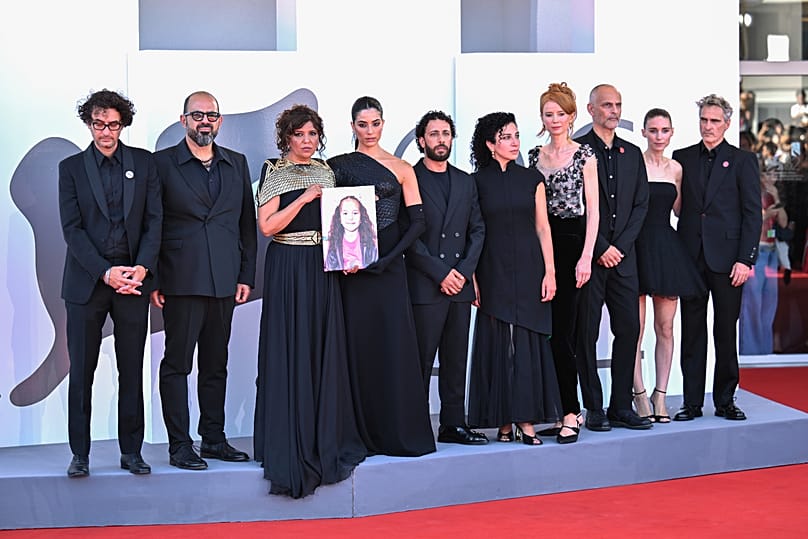
The Voice of Hind Rajab offers filmmakers and viewers alike a powerful pathway to create and embrace the future fictionalised accounts of the current war.
“I believe that fiction (especially when it draws from verified, painful, real events) is cinema’s most powerful tool. More powerful than the noise of breaking news or the forgetfulness of scrolling,” Ben Hania said in a statement ahead of the Venice festival.
“Cinema can preserve a memory. Cinema can resist amnesia.”
The Voice of Hind Rajab is out in cinemas now and continues its theatrical rollout in 2026.