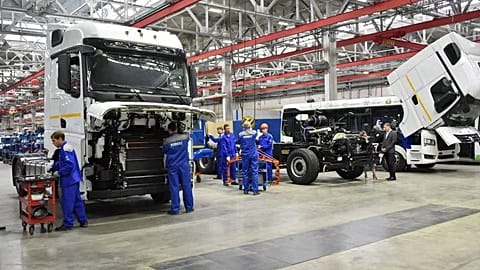































European labour shortages and legal migration systems were central topics at the Tashkent International Migration Forum, where officials came together for discussions and solutions.
Policymakers, international organisations and business representatives discussed Europe’s ageing population and persistent labour shortage concerns - and as a result, how these issues are pushing governments and employers to rethink migration policies.
 ADVERTISEMENT
ADVERTISEMENT
ADVERTISEMENT
Meanwhile, it was highlighted how Central Asian countries are increasingly positioning themselves as suppliers of trained workers through regulated international recruitment systems.
According to the International Organization for Migration, an intergovernmental organisation within the UN system, around 304 million people were living outside their country of birth in 2024, nearly double the estimated global migrant population recorded in 1990.
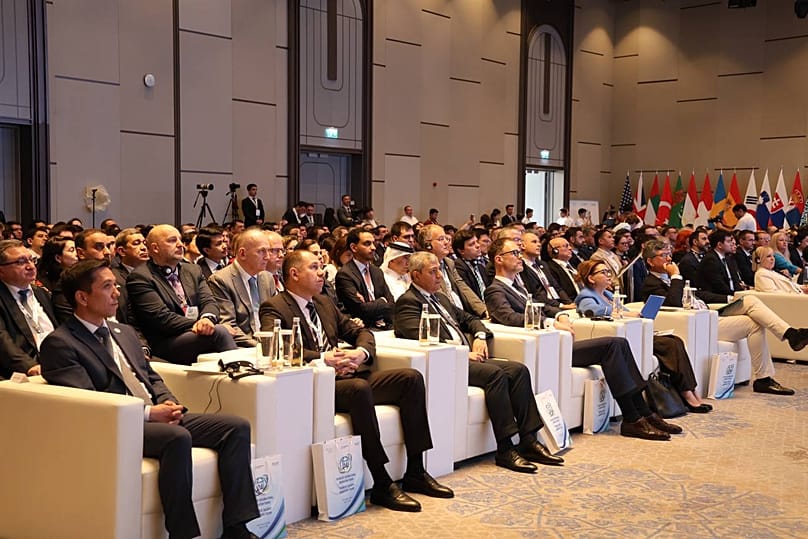
Europe’s labour shortage challenge
Across Europe, low birth rates and ageing populations are reducing the size of the workforce, creating labour shortages in sectors including agriculture, construction, healthcare and services.
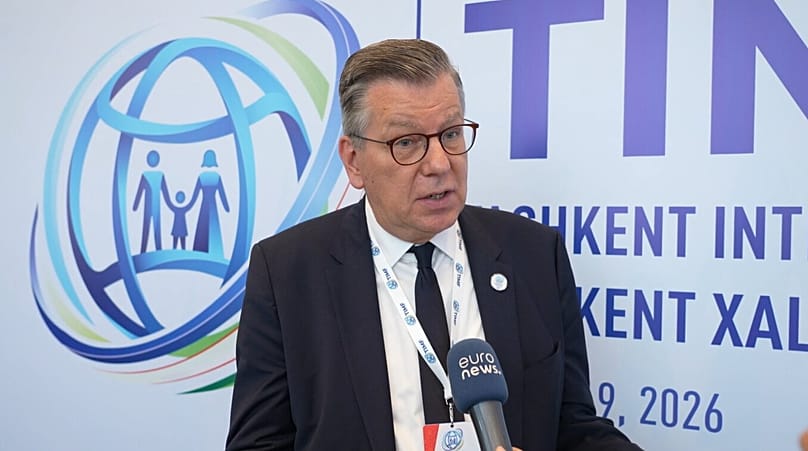
Arthur Erken, regional director for Europe and Central Asia at the International Organization for Migration, said European economies were already feeling the impact of demographic decline.
“Europe actually needs workers because of the demographic decline, low fertility, and ageing population,” he told Euronews on the sidelines of the forum.
At the same time, remittances sent home by migrant workers continue to play an important economic role in countries of origin through household spending, housing and small business investment.
As labour demand grows, European governments are increasingly focusing on legal recruitment systems and bilateral agreements aimed at reducing irregular migration while addressing workforce shortages.
Greta Metka Barbo Skerbinc, director general of the Employment Service of Slovenia, said labour migration had become an economic necessity for many European countries.
“We have to find proper migrants from illegal economic migrants in other countries because otherwise our economy will not grow anymore,” she said.
Central Asia expands labour migration partnerships
Central Asia is also becoming more active in building state-managed migration systems focused on training and overseas employment.
Uzbekistan says more than 1.2 million of its citizens are currently working abroad, while remittances reached nearly $19 billion (€17.5 billion) in 2025.
Authorities say they are increasingly focusing on language education, vocational training and formal recruitment partnerships with foreign employers.
Elyor Toshtemirov, deputy director of Uzbekistan’s Migration Agency, said the country had established labour cooperation agreements with more than 40 countries.
“We prepare our citizens as medium- and high-skilled workers, providing language training and vocational training,” he said.
He added that the system includes pre-departure preparation, professional training, language education, legal employment abroad and reintegration support upon return.
Italian agricultural organisations are among the European groups already working with Uzbek authorities on recruitment and training programmes.
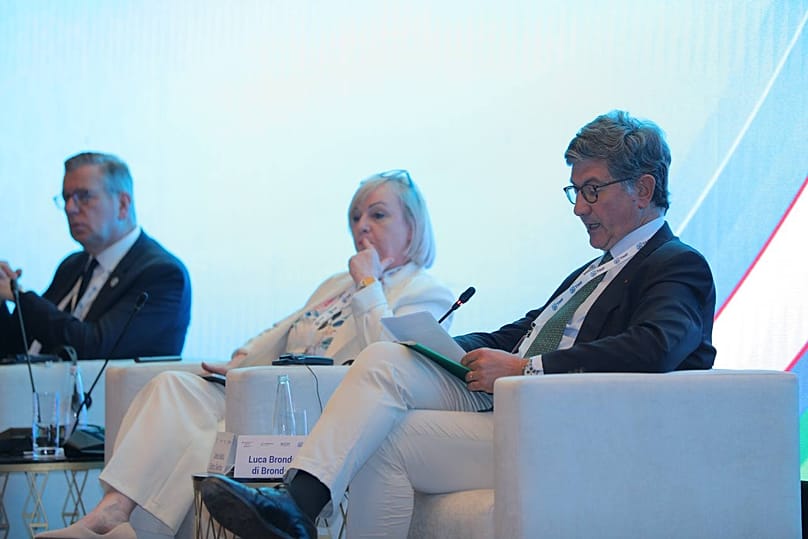
Luca Brondelli di Brondello, vice president of Confagricoltura of Italy, said workers were being prepared before departure through language and cultural training.
“It’s very important to train people here in Uzbekistan,” he said. “They learn Italian, they arrive in Italy, they already have some basis.”
Focus on legal pathways and worker protection
European and Central Asian officials said one of the main goals is to reduce the risks linked to irregular migration, including labour exploitation and recruitment fraud.
According to Konstantin Obolensky, ambassador of Switzerland to Uzbekistan, Swiss-supported programmes in the country focus on safe and regulated migration systems.
“Our goal is to support labour migrants so they can migrate in an orderly and safe way,” he said.
Obolensky warned that many migrants remain vulnerable to fake job offers and fraudulent recruitment schemes.
“People are often exposed to fake invitations and false promises,” he said. “Very often they have already paid a lot of money to criminals who were not real employers.”
Officials and employers at the forum said legal migration systems, workforce training and international cooperation are becoming increasingly important as Europe’s labour shortages deepen and competition for skilled workers grows.