





























Dropbox says its fully remote model has strengthened recruitment, improved retention and supported financial performance, even as many employers tighten office attendance policies introduced after the COVID-19 pandemic.
As major corporations increasingly push employees back into offices, Dropbox is standing by the remote working model it adopted during the Covid-19 pandemic.
 ADVERTISEMENT
ADVERTISEMENT
ADVERTISEMENT
The San Francisco-based cloud storage company says its "virtual-first" structure has delivered business benefits, from stronger staff retention to lower operating costs, helping it reach financial targets.
The company introduced the policy in 2020, becoming one of the first major technology firms to embrace long-term remote work at scale.
Since then, many employers across the technology, finance and consulting sectors have reversed flexible working arrangements, arguing that more in-person collaboration improves productivity and innovation.
Dropbox, however, says it remains committed to making remote work the standard arrangement for most employees.
"The pandemic tested our assumption that we have to be in person in order to be productive," chief people officer, Melanie Rosenwasser, stated in a recent interview.
The firm has also deliberately avoided adopting a hybrid system that requires employees to split their time between home and the office.
"We are explicitly not hybrid. We think this is the worst of all worlds, where employees suffer through long commutes only to sit on Zoom because most of our colleagues are distributed," Rosenwasser explained.
Building a remote-first culture
Dropbox organises work around remote collaboration by default, while bringing teams together in person at least once every quarter for planning sessions, team building and social events.
The approach reflects a broader shift in workplace expectations that emerged during the pandemic. Rosenwasser said Dropbox increasingly views "flexibility and agency" as essential to attracting and retaining workers in a competitive labour market.
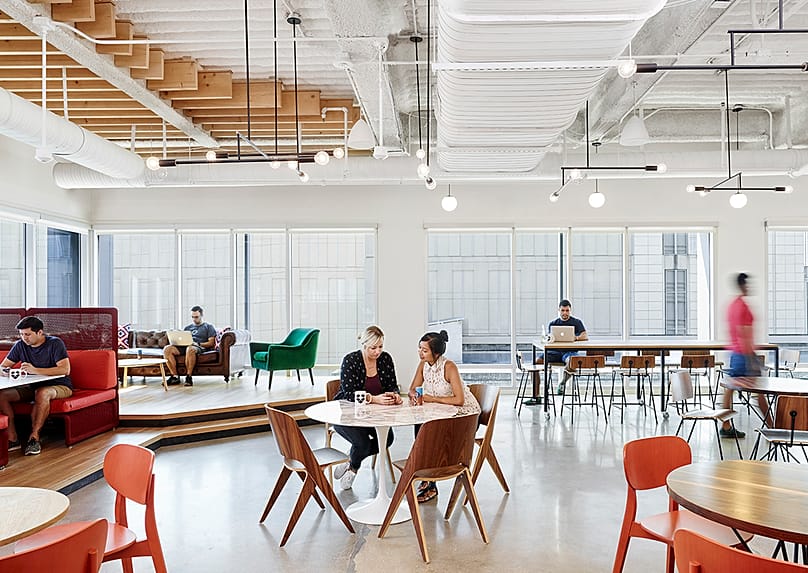
The company also reduced much of its traditional office footprint in favour of smaller collaborative spaces known internally as "Dropbox Studios", designed mainly for occasional in-person gatherings rather than daily attendance.
Dropbox says it has spent several years refining systems intended to make distributed work more effective.
Employees operate within designated "core collaboration hours", overlapping four-hour periods reserved for meetings and group discussions across time zones. Outside those hours, staff largely manage their own schedules.
The company has also introduced strict internal rules around meetings.
Rosenwasser said meetings should only take place if teams need to "discuss, debate or decide" something, part of an effort to reduce fragmented schedules and improve productivity.
"There is a perception that when you're in the office and you can actually physically see the people on your team, you can just assume they're doing what they're supposed to be doing but I think we all know from working in offices that's not necessarily true," Rosenwasser stated.
Dropbox has also experimented with initiatives aimed at addressing remote work fatigue, including "Meet & Move", a pilot programme encouraging employees to take phone meetings while walking instead of sitting in front of screens.
A wider debate over the future of work
The future of remote work remains a point of tension across the corporate sector.
Companies such as Amazon, JPMorgan Chase and Google have led the way in tightening return-to-office requirements over the past two years, despite resistance from some employees who became accustomed to flexible schedules.
Supporters of office attendance argue that face-to-face interaction strengthens collaboration and company culture.
On the other hand, advocates of remote work counter that flexibility improves work-life balance and broadens access to talent beyond expensive urban centres.
Dropbox is among a smaller group of companies continuing to showcase that fully remote work can succeed at scale, provided organisations redesign management structures, communication systems and performance measurements.