



























Tesla’s profit rose in the first quarter as its car sales rebounded from a sharp slump in 2025.
The electric vehicle maker, run by billionaire Elon Musk, said it earned $477 million (€407.7m) during the quarter, up 17% from a year earlier.
 ADVERTISEMENT
ADVERTISEMENT
ADVERTISEMENT
Earnings per share totalled 13 cents. Adjusted for certain items, earnings per share were 41 cents, beating Wall Street estimates of 36 cents.
Revenue came in below analysts' expectations, as it increased to $22.39 billion (€19.14bn), driven by a 16% rise in automotive revenues.
However, both profit and revenue remain well below their peak, when Tesla’s cars were rapidly gaining market share. That trend has now been reversed, as European and Chinese rivals take customers.
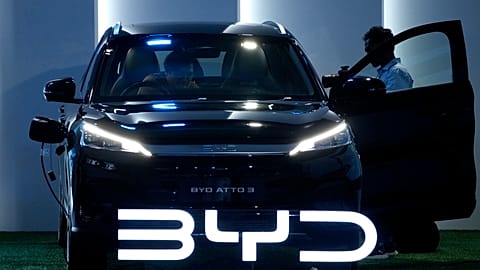
Last year, the company lost its crown as the world’s largest electric vehicle maker to China’s BYD.
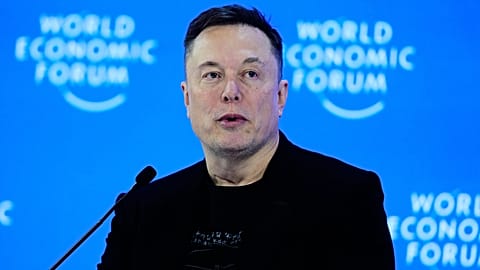
Musk has repeatedly downplayed the company’s struggles in car sales, emphasising that Tesla’s future lies less in selling vehicles and in providing self-driving taxi services.
The company said robotaxi miles doubled in the first quarter compared with the fourth quarter of last year. These services are currently operating in San Francisco and three cities in Texas, including Austin, where Tesla is headquartered.
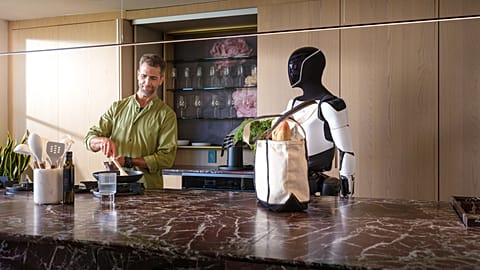
Musk has also highlighted Tesla’s development of robots for homes and businesses.
In a conference call with investors on Wednesday, he spoke about breaking new ground with a planned factory in Texas to produce the robots, known as Optimus, with a potential capacity of 10 million units per year.
“I think Optimus will be our biggest product,” Musk said, adding, “not just Tesla’s biggest product ever, but probably the biggest product ever.”
The company also noted that it has begun producing its so-called Cybercabs, which have neither pedals nor steering wheels.
Musk added a teaser during the call, suggesting that Tesla could unveil a new manually driven Roadster sports car within the next month or so.
The company is investing heavily in its transition, including $2.5 billion (€2.14bn) in capital expenditure in the last quarter, up 67% from the same period a year earlier.
Musk warned of “a very significant increase” in spending going forward. Tesla expects capital expenditure of more than $25bn (€21bn) this year.
"Full-year capex has been raised again to $25bn from $20bn," commented Mamta Valechha, an analyst at Quilter Cheviot. "This implies a significant step-up in spending, around three times last year’s level, with Tesla likely to burn cash for the rest of the year."
The investment will go towards self-driving taxis, trucks, robots and AI infrastructure, according to Tesla.
"Tesla’s physical AI ventures, such as robotaxi and Optimus, offer large potential revenue opportunities, but commercialisation still looks some way off, with timelines once again pushed further out," said Valechha.
As investors digested the CEO’s remarks, Tesla’s shares swung sharply, briefly surging before reversing course to close marginally lower.