
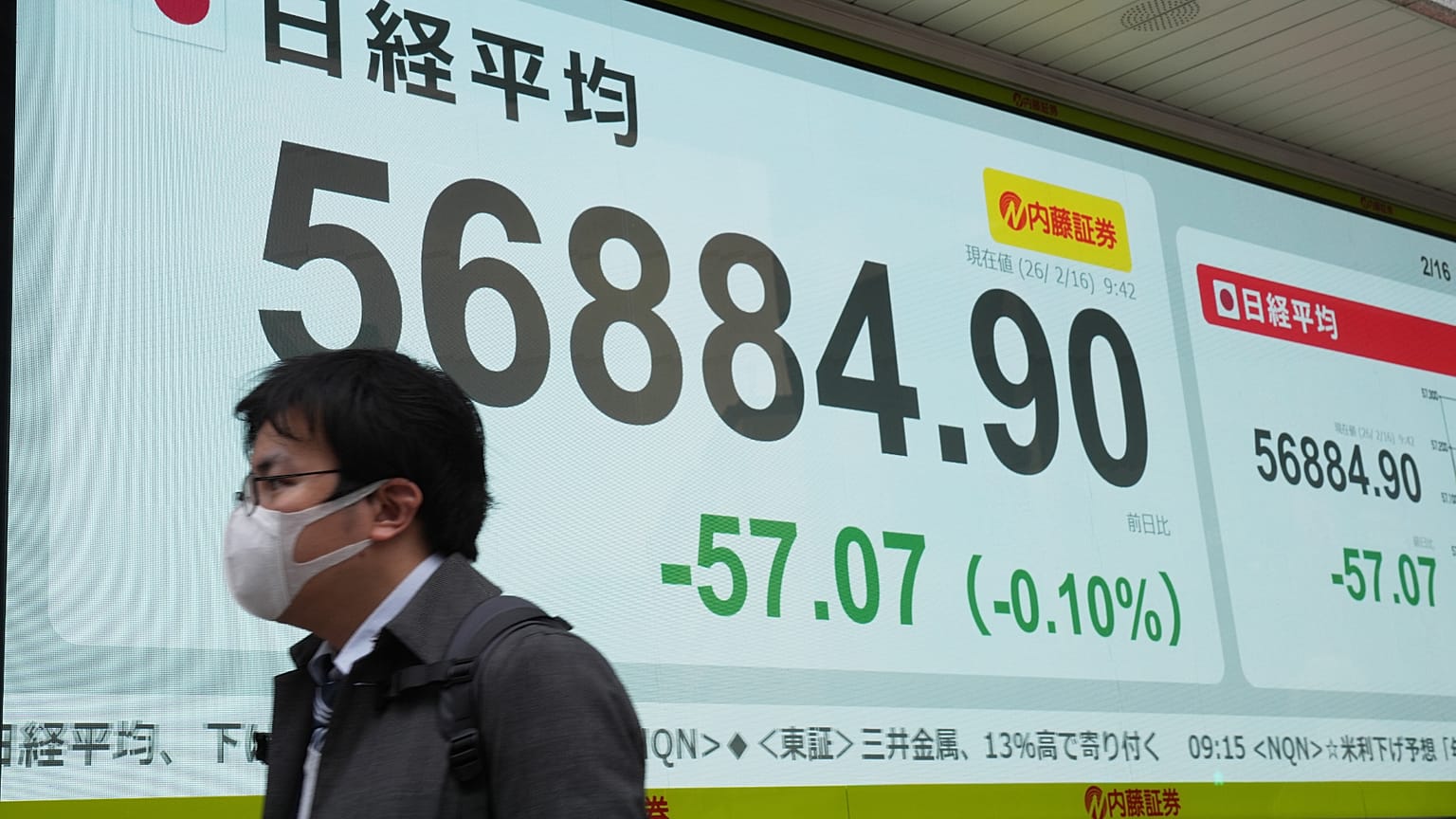













Japan's economy grew at only a 0.2% annual pace in the last quarter of 2025, according to a government report released this Monday. Growth for all of last year came in at just 1.1%.
Japan's economy barely expanded at a 0.2% annual pace in the last quarter, with private consumption rising by 0.4% between October and December.
 ADVERTISEMENT
ADVERTISEMENT
ADVERTISEMENT
The minor growth in consumption was offset by a 1.1% drop in exports, according to the latest seasonally adjusted preliminary data.
Growth for all of 2025 came in at just 1.1% as Japan’s export-reliant economy has been shaken by US President Donald Trump's tariffs. On a quarterly basis, the economy grew only 0.1%, the Japanese government reported.
The country narrowly avoided a technical recession which is defined by two consecutive quarters of negative growth. In the third quarter of last year, Japan's economy contracted 0.7%, with revised data showing a 2.3% annualised decline.
While technically not in a recession, the current numbers paint a bleak picture for the Japanese economy.
In response, Japanese Prime Minister Sanae Takaichi is expected to roll out policies to help revive it after a landslide victory in the general election earlier this month.
Takaichi has promised to spend more and to suspend Japan's sales tax on food, among other measures.
After Takaichi's election victory, Japan’s Finance Minister Satsuki Katayama sought to ease concerns about the country’s debt and recent currency weakness, which many investors believe could prompt a rise in interest rates.
Katayama suggested utilising foreign exchange reserves to fund national expenditures. Although possible, this approach can be challenging, as those reserves are usually used only for currency interventions.
The interest rate in Japan currently stands at a 30-year high of 0.75% after the Bank of Japan (BOJ) hike last December.
Takaichi has vowed to end "excessively tight fiscal policy" and the markets are waiting to see what the BoJ's rate decision will be next month.
The government projects the economy will expand at an average rate of about 0.6% in the near term.