






























Coinbase chief Brian Armstrong has seen his net worth halve since July 2025 following a sharp correction in crypto markets and a downgrade of Coinbase stock by Wall Street analysts.
Brian Armstrong, the co-founder and CEO of the largest cryptocurrency exchange in the US, has fallen out of the Bloomberg Billionaires Index ranking of the world’s 500 wealthiest individuals.
 ADVERTISEMENT
ADVERTISEMENT
ADVERTISEMENT
His departure from the list comes as the crypto markets grapple with a significant downturn, pushing Bitcoin below $70,000 (€58,750), a trading level not seen since late 2024.
According to the index, Armstrong’s net worth currently stands at approximately $7.5bn (€6.9bn). This marks a substantial decline from a valuation of $17.7bn (€16.3bn) recorded last summer.
The drop in his personal wealth, which is largely derived from a roughly 14% equity piece in Coinbase, mirrors the volatility of the broader crypto sector.
Crypto asset prices have a direct impact on Coinbase’s market performance, as the company’s revenue model remains heavily reliant on transaction fees, which typically contract during periods of market stagnation.
Shares in Coinbase closed significantly lower on Tuesday, extending a six-month slide that has seen the stock lose nearly 60% of its value from its July 2025 peak.
Earlier this week, market sentiment regarding the crypto exchange appeared to sour further as analysts at JPMorgan Chase lowered their price target for the stock.
In a note to investors, the bank cited "softness in crypto prices" and a lack of growth in the stablecoin vertical as primary reasons for the revision, reducing the target by 27%.
Post-election momentum fades amid regulatory friction
The euphoria in crypto markets that followed the 2024 US election has noticeably cooled.
Despite Bitcoin reaching a record high of $126,000 (€116,000) in October 2025, investors had anticipated further regulatory clarity by now. Instead, progress has stalled.
President Trump signed the Guiding and Establishing National Innovation for US Stablecoins Act (GENIUS Act), creating a comprehensive regulatory framework for stablecoins, in July 2025.
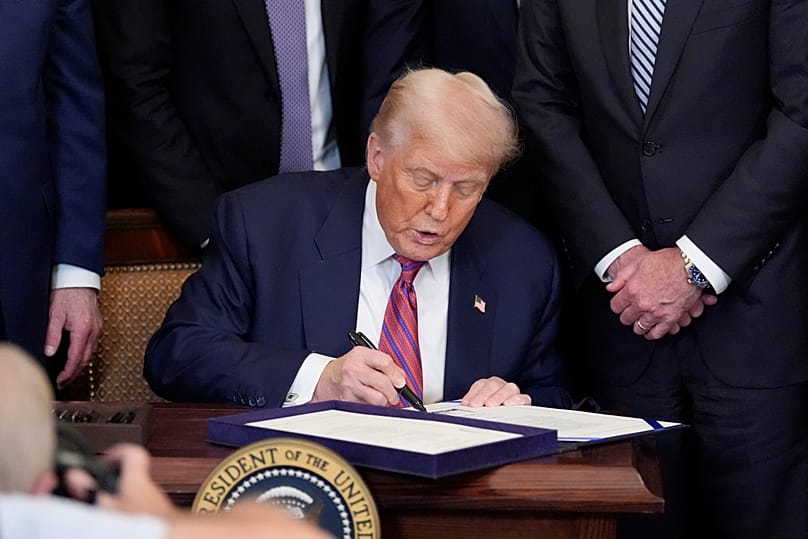
However, there has now been a legislative gridlock over the CLARITY Act.
This legislation intends to establish clear regulatory rules for crypto assets, including jurisdictional boundaries between the Securities and Exchange Commission (SEC) and the Commodity Futures Trading Commission (CFTC).
There is a clear dispute between the Coinbase CEO and major US banks over provisions that would prevent non-bank firms from offering interest-bearing yields on stablecoins.
On Tuesday, there was a meeting at the White House between all interested parties to try and reach a consensus. This was the second session on the issue since Armstrong made his opposition public.
Despite this, the lobbying battle between crypto insiders and Wall Street bankers has still not been resolved.
While traditional lenders cite concerns over "deposit flight", the Coinbase chief has argued that such restrictions amount to regulatory capture designed to stifle competition.
With these revenue streams now in question, market confidence in exchange-based business models, which have user fees as a primary revenue source, has wavered.