





























The airline’s chief says artificial intelligence will help rebuild schedules during storms and improve efficiency in an industry that faces constant uncertainty.
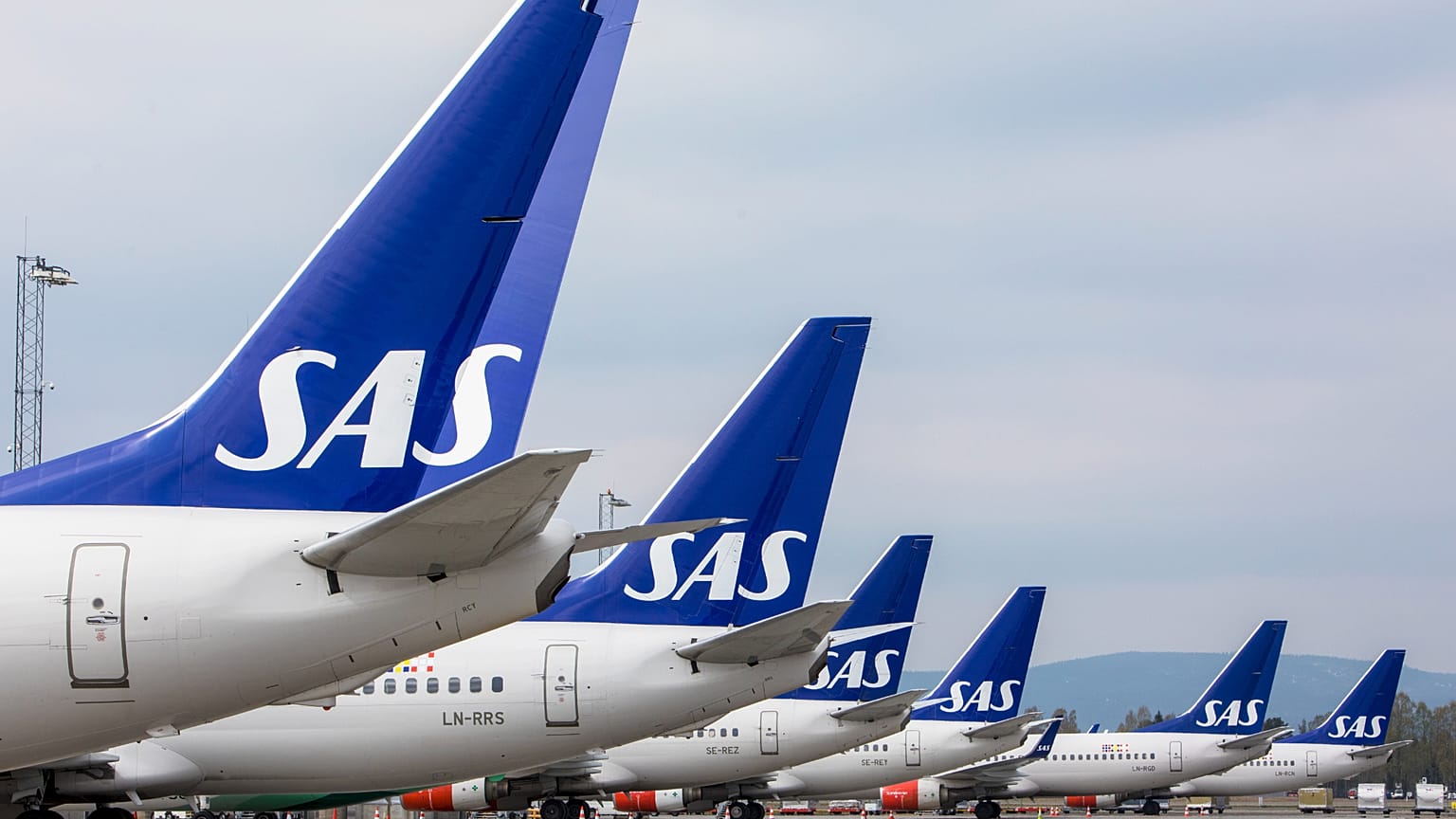
As Europe’s aviation sector continues to consolidate and adapt to new technologies, Scandinavian Airlines is positioning itself for a new phase of growth — while waiting for regulators to give the green light to its next big step.
 ADVERTISEMENT
ADVERTISEMENT
ADVERTISEMENT
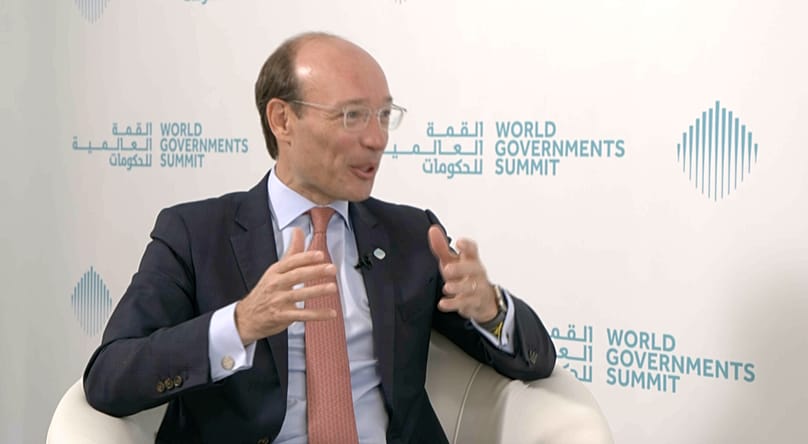
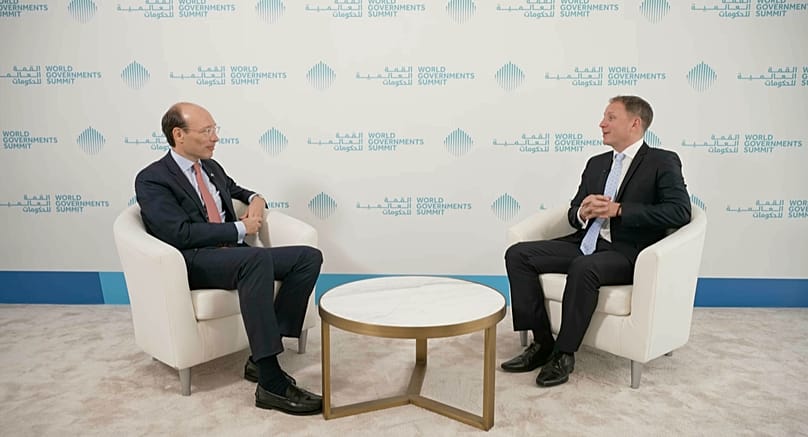
Euronews sat down with SAS President and CEO Anko van der Werff on the sidelines of the World Governments Summit in Dubai to discuss the airline’s planned integration with the Air France-KLM group, the role of artificial intelligence, and the challenges facing the industry.
Waiting for the green light
SAS is currently in the process of being integrated into the Air France-KLM group, a move that still requires regulatory approval from European authorities.
Van der Werff says the company is expecting clarity later this year, but admits the wait has been frustrating.
“We expect to get regulatory approval in the second half of the year,” he said, noting that the process is moving more slowly than he would like. “I’m always a bit impatient… it’s a slow process.”
ns. The airline is eager to unlock the benefits of being part of a larger global network, particularly through joint ventures and expanded partnerships.
“Speed… is of the essence,” he said, adding that many initiatives are effectively on hold. “That is what we, in the end, are in business for… and that is a bit paused at the moment.”
Growth plans inside the Air France-KLM group
Despite concerns about consolidation in the sector, van der Werff is confident the SAS brand will not be overshadowed by its new parent group. He argues that the geography of the network actually creates room for expansion.
“The brand will absolutely survive this,” he said. “The brand will be very strong.”
With capacity constraints at some of the group’s existing hubs, he sees Scandinavian countries — and Copenhagen in particular — as a natural growth engine.
“There will be real, real growth potential,” he said, predicting that travellers will “see more of SAS in the future than what you’re seeing today.”
AI as a practical tool, not a buzzword
Beyond consolidation, the airline is also exploring how artificial intelligence could reshape its operations. Van der Werff says the executive team spent much of last year examining where the technology could have a tangible impact.
“AI is not just a buzzword,” he said, explaining that the company has identified “five big bets” focused largely on improving the customer experience.
One of the clearest applications, he says, is handling disruptions — a familiar challenge for a Nordic carrier operating in harsh winter conditions.
“Occasionally we get hit by real snowstorms,” he said, describing days with “100 cancellations a day” and aircraft, crew and passengers scattered across the network.
In those scenarios, AI could help rebuild schedules faster than human teams alone. “We believe that AI will work through those variables infinitely better.”
From experimenting to implementing
Van der Werff says the industry is moving past early experimentation with AI and into more practical applications that can improve efficiency.
“Some of the walking… is behind us,” he said. “We’re really going now into a phase of running.”
He does not expect fully autonomous passenger jets any time soon, but sees plenty of opportunities in smaller, operational improvements — from better forecasting of supplies on board to reducing aircraft weight and fuel use.
“Autonomous flying… will take a while,” he said, but tools that optimise resources or even handle basic programming tasks could arrive much sooner.
“There’s plenty of opportunities… and many of them will be supporting customers.”
Turning disruptions into an advantage
Among the airline’s AI priorities, van der Werff says disruption management stands out as the most urgent. When large numbers of passengers and crew are out of position, the costs and logistical complexity can quickly escalate.
“Disruption management is of course number one,” he said, describing situations where “tens of thousands, hundreds of thousands of passengers” need to be rerouted.
Faster, more accurate decisions could reduce hotel stays, reposition aircraft and crews more quickly, and limit the knock-on effects of cancellations.
“How do you put that puzzle back together more quickly, more efficiently?” he asked, suggesting AI could solve problems that are simply too complex for human planners alone at an extremely fast pace,
An industry shaped by the unexpected
After more than two decades in aviation, van der Werff says uncertainty is a constant. T
he industry has weathered health crises, financial shocks and geopolitical disruptions — and he expects more surprises ahead.
“Something will always happen,” he said, recalling everything from SARS and the financial crisis to COVID-19.
Beyond sudden shocks, the usual economic pressures remain, from fuel prices to currency swings and changes in demand.
“Without demand, you can’t do anything,” he said, noting how quickly travel ground to a halt during the pandemic.
Still, he sees reasons for optimism, particularly in the potential for further consolidation and technological advances.
A call for faster decision-making in Europe
Van der Werff also believes Europe needs to move more quickly if it wants to remain competitive, particularly compared with regions that are more supportive of entrepreneurship.
“Europe needs to move faster,” he said, calling for less bureaucracy and a clearer strategic vision.
He is not wholly negative about the continent’s prospects, but argues that excessive regulation can slow down innovation.
“Lowering the red tape… bringing speed back in the game,” he said, adding that Europe could benefit from a renewed appreciation of entrepreneurs and risk-takers.
“I do find the hunger in this part of the world always exciting,” he said, suggesting that Europe has “lost or missed out on some of that.”