












The decision to become a founding member of the “Board of Peace” marks Baku’s attempt to translate regional clout into international weight, while navigating sensitive regional dynamics with Iran.
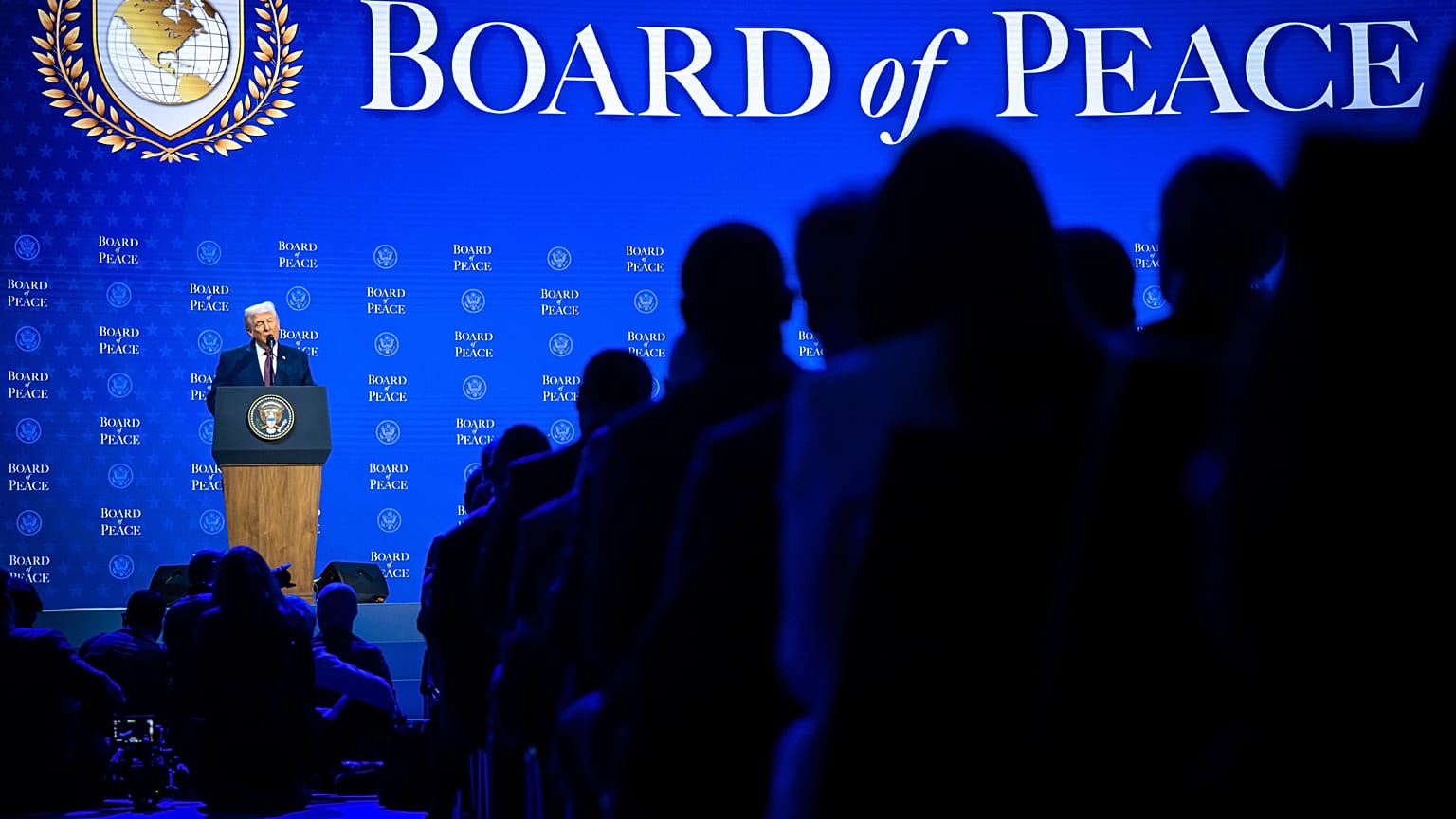
In the tightly choreographed and particularly high-stakes setting of the World Economic Forum in Davos this past January, Azerbaijan signed up to be a founding member of the newly created “Board of Peace”, a US-backed initiative billed as a forum for dialogue and long-term peace efforts.
 ADVERTISEMENT
ADVERTISEMENT
ADVERTISEMENT
The move is being presented by Baku as part of its push to broaden its diplomatic profile beyond the South Caucasus, while analysts say it will also be scrutinised in the region — particularly in Iran — as a signal of how Azerbaijan may position itself if tensions between Washington and Tehran intensify.
“Joining the Board of Peace is a logical step in Azerbaijan’s transformation from a regional actor into a participant in global diplomatic processes,” says Laman Nazarova, an expert in international relations.
For Baku, the move marks more than a symbolic diplomatic gesture. It signals a bid to position Azerbaijan as a credible global political and economic player, capable of shaping conversations on peace, energy and regional stability far beyond the South Caucasus.
Nazarova argues that Azerbaijan has been steadily cultivating the image of a state able not only to manage its own post-conflict realities but also contribute practical experiences to international peace-building efforts.
Years of post-conflict management and negotiation have, in her view, repositioned Azerbaijan from a passive recipient of security arrangements to an active diplomatic stakeholder.
Between flexibility and alignment
According to Tsvetomir Nikolov, a geoeconomic analyst, Baku’s approach reflects a preference for strategic flexibility in a complex regional environment.
“Azerbaijan is trying to keep its options open in a region where power politics rarely allow for simple choices, preferring flexibility over rigid alliances,” Nikolov says.
“From Tehran’s perspective,” he adds, “Azerbaijan’s involvement in a US-associated initiative such as the Board of Peace is viewed less as a peace-building exercise and more as a signal of where Baku might position itself should tensions between Washington and Iran escalate.”
This balancing act, he argues, reflects a broader diplomatic strategy: engaging with Western-led initiatives while avoiding formal alignment that could constrain Azerbaijan’s room for manoeuvre in the South Caucasus and beyond.
Strategic implications for Europe
Azerbaijan’s growing diplomatic profile carries particular significance for Europe. Located at the intersection of Eastern Europe and the South Caucasus, the country occupies a strategic corridor linking Europe with Central Asia and the Middle East.
Its participation in the Board of Peace signals an ambition to extend its diplomatic footprint beyond its immediate neighbourhood and deepen its role as a connector between regions.
For European countries, the move resonates not only in security terms but also in the realm of trust and predictability.
As Nazarova notes, energy co-operation is increasingly intertwined with political and diplomatic considerations.
In that context, Azerbaijan’s involvement in global peace initiatives reinforces its image as a responsible and forward-looking partner, particularly as Europe continues to diversify its energy sources and strategic ties.
A platform for influence
The Board of Peace is intended to serve as a co-ordination platform on issues ranging from conflict resolution and humanitarian assistance to long-term peace-building strategies.
Azerbaijan’s experience in post-conflict recovery and reconstruction is expected to feature prominently in these discussions, particularly in regions with close geopolitical and economic links to Europe.
The World Economic Forum provided a high-profile stage for Azerbaijan to underline its commitment to multilateral diplomacy.
Its presence within the Board of Peace is likely to attract sustained attention from European policymakers and international media, further amplifying Baku’s voice in debates on peace, security and global governance.
As Europe navigates an increasingly volatile geopolitical landscape, marked by energy uncertainty, regional conflicts and shifting alliances, Azerbaijan’s engagement with the Board of Peace illustrates how middle powers are seeking to expand their influence through flexible, diversified diplomacy.