















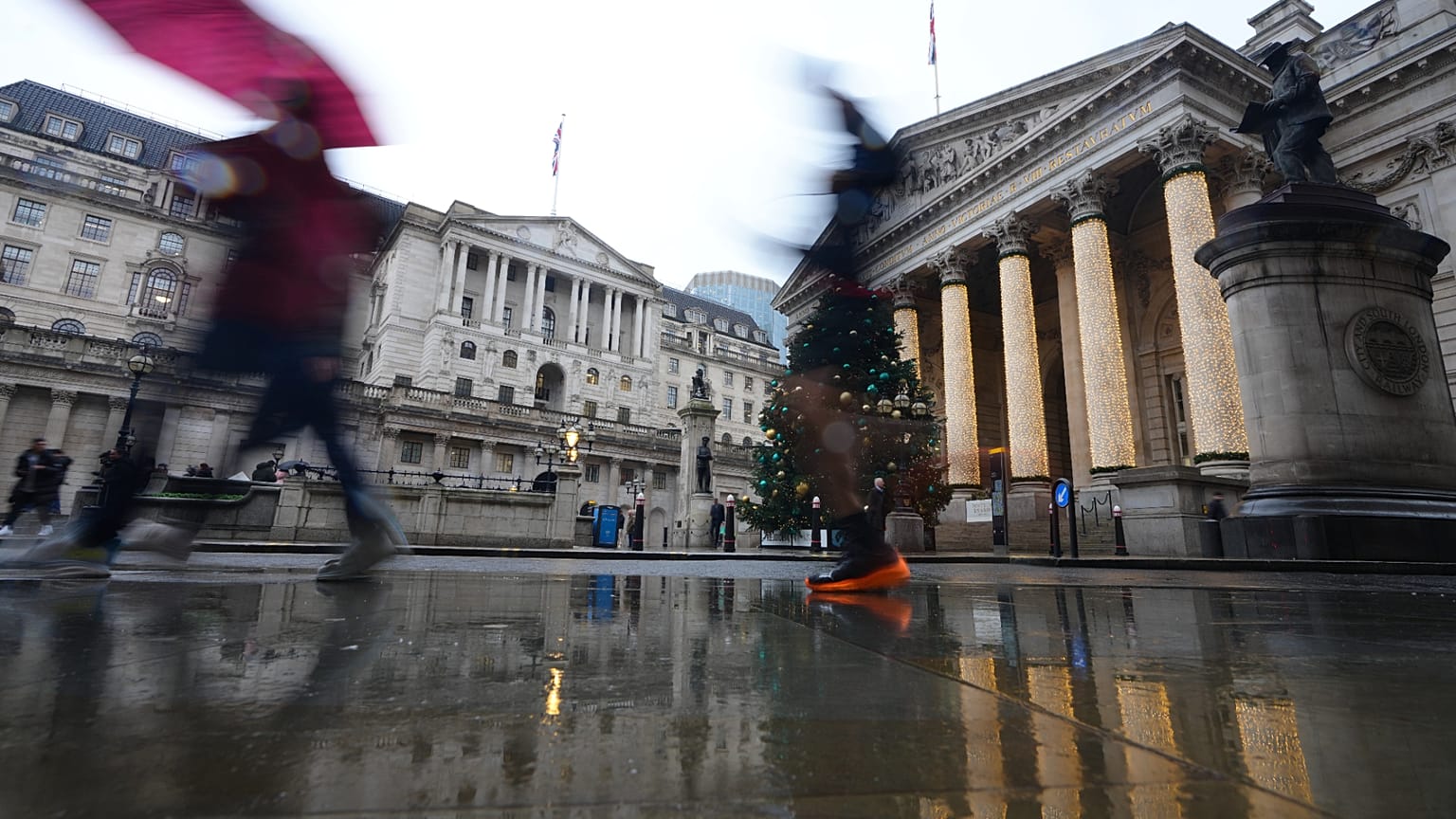













The Bank of England held rates at 3.75%, with inflation still above the 2% target and early-2026 data hinting the economy has started the year stronger than expected — complicating the case for near-term cuts.
The Bank of England kept its main interest rate unchanged at 3.75% on Thursday as inflation remains above target and economic growth is showing signs of picking up.
 ADVERTISEMENT
ADVERTISEMENT
ADVERTISEMENT
The central bank, which sets interest rates for the whole of the UK, has been steadily reducing interest rates over the past 18 months, more often than not every three months.
“The expected decision to hold the base rate at 3.75% offers some breathing space for savers, but it will be frustrating for borrowers who were hoping for relief,” said Karen Barrett, founder of Unbiased, a UK financial advice platform.
It last cut its key rate in December by a quarter of a percentage point and indicated that further reductions are likely this year.
Since then a series of economic indicators have shown the British economy has made a stronger than anticipated start to the year, which has the potential to put upward pressure on inflation.
Inflation, though trending downwards over the past year or so, remains above the Bank of England's 2% target, at 3.4%.
“The early data covering 2026 hint at stronger demand and stickier inflation than we had expected,” said Andrew Wishart, senior UK economist at Berenberg Bank.
Economists said upcoming data will be key to when the central bank cuts interest rates again.
Lower interest rates help spur economic growth by reducing borrowing costs, which can lead to increased spending by consumers and boost investment by businesses. But that can also fuel higher prices.
Central bankers have to weigh those competing forces, trying to prevent inflation from eroding the value of earnings and savings without putting an unnecessary brake on economic growth.
Britain’s Labour government has lost significant support since it won the general election in 2024, partly because of economic factors. It will be hoping that inflation falls sharply this year, allowing the central bank to further reduce borrowing costs.