














Connectivity is seen as crucial to bridging the gap between countries in the Global North and the Global South, according to Asian leaders gathered at Davos to discuss how southern countries can take a more active role in shaping global trends.
Political and business figures gathered at Euronews’ Davos hub for a high-level dinner discussion on closing the divide between the North and South. Long term income disparities are often exacerbated by frailties in infrastructure and high trade costs which, in turn, create supply chain vulnerabilities.
 ADVERTISEMENT
ADVERTISEMENT
ADVERTISEMENT
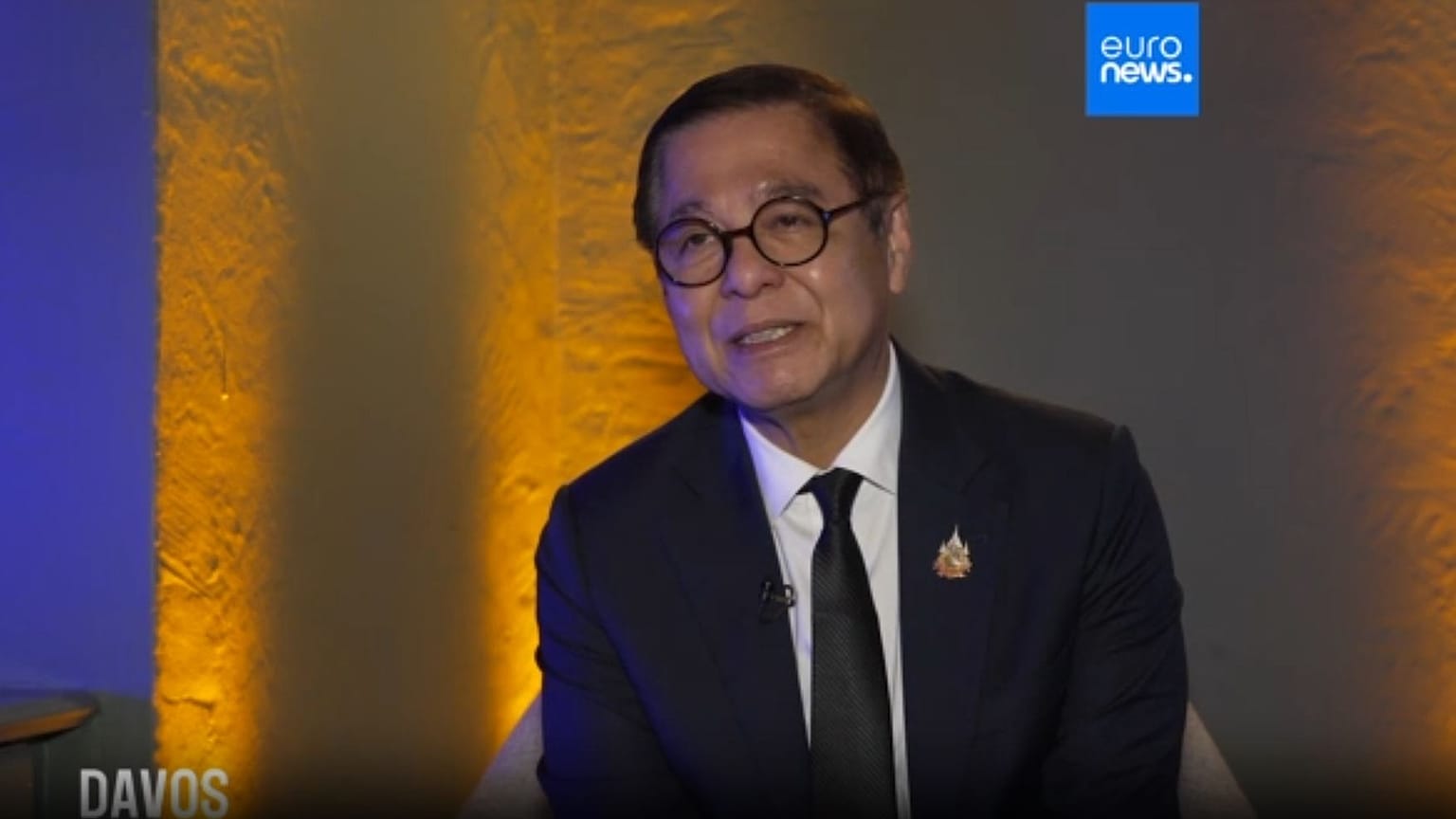
One of the guests speaking on the sidelines of the dinner at the World Economic Forum was Sihasak Phuangketkeow, Minister of Foreign Affairs, Thailand. He said: “We have to move towards more innovation so we need to employ digital technology and most of all we have to make sure that our growth is sustainable, and that requires us to move towards a green economy.”
Fostering regional partnerships - such as ASEAN, which welcomed Timor-Leste as a new member in 2025 and is continuing discussions with Papua New Guinea - and developing competitive logistics hubs are seen as key to enabling diversification and creating pathways for sustainable development.
Himanshu Gupta, co-founder and CEO of ClimateAI, commented: “I also see a lot of opportunities in setting up agriculture corridors between India, Thailand, Indonesia and Africa. And as Africa becomes one of the fastest growing continents in the world, with the most population and the most young people, Global South cooperation might actually drive the new world order.”
At a WEF dominated by US President Donald Trump, there was much talk of the rules-based international order. Mr Phuangketkeow acknowledged the world is changing and said: “We live in a multi-polar world, now we also have the rise of the global south, so the rules based international order needs to be maintained but we also have to make sure it reflects the changes, the transformation that have taken place since we established the rules-based international order after World War Two.”