












Despite the US president’s optimism, the country’s inflation rate remains above the Federal Reserve’s preferred 2% target.
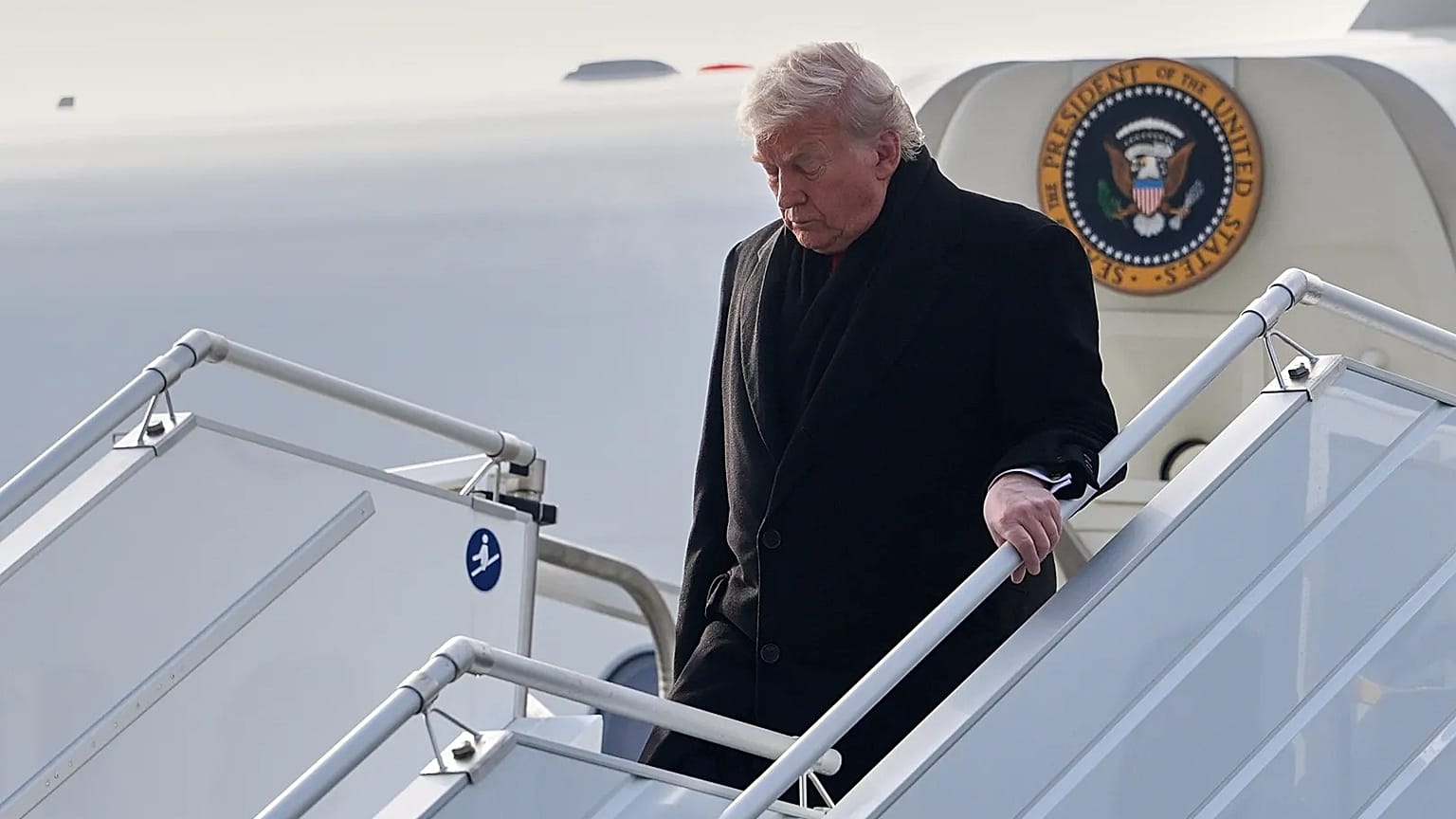
Donald Trump used his high-octane Davos appearance at the World Economic Forum to claim the US has “defeated” inflation, pointing to what he called a booming economy.
 ADVERTISEMENT
ADVERTISEMENT
ADVERTISEMENT
But the numbers tell a more modest story. While inflation has indeed cooled, it is far from the ideal rate, coming in at 2.7% in December, still above the Federal Reserve’s 2% target.
Trump described the US economy in superlative terms while blasting his predecessors, telling the audience that the first year of his second term was marked by “exploding growth... surging productivity,” and “rising incomes.”
He named the US the “economic engine of the planet” and declared that “when America booms, the entire world booms,” claiming to have slashed the US trade deficit by 77% in one year through historic trade deals that have “raised wealth” and fuelled stock market gains.
The data, however, paints a more muted picture. The latest report published by the Bureau of Labour Statistics shows that consumer prices continued to rise in December, with headline inflation at 2.7% and core inflation at 2.6%.
Month to month, prices also kept climbing, with overall inflation up 0.3% and core inflation up 0.2%.
These price pressures remain especially visible in everyday necessities. Food costs are now about 25% higher than before the pandemic, and grocery prices alone rose 0.7% in December and 2.4% over the past year.
True tariff burden yet to come
Federal Reserve President John Williams predicted last year that the true impact of the Trump administration’s wide-ranging tariffs on key US importers — though since scaled back slightly, despite Trump’s recent threats to raise tariffs on several EU countries — would only be felt towards the end of 2025 and into 2026.
Most large companies operating in the US front-loaded their stocks ahead of tariffs setting in, meaning prices will begin truly going up once those stocks dwindle and the wider manufacturing lines see deeper disruptions in the new year.
So far, tariffs are estimated to have added roughly half a percentage point to inflation.
This directly contradicts Trump’s claim in Davos that he cut the trade deficit “with no inflation”.
Grocery prices stay stubbornly high
Much of today’s grocery sticker shock was baked in during Biden’s term, when pandemic-era supply chain bottlenecks and higher transport, fuel and labour costs — compounded by global commodity shocks after Russia’s invasion of Ukraine — drove food prices sharply higher.
Trump campaigned on bringing these prices down, including staple items such as eggs, but significant price drops have failed to materialise.
Despite Trump’s insistence that “people are doing very well,” surveys show widespread concern amongst American citizens over affordability, with most respondents saying the administration is not doing enough to lower prices, and many reporting that they actually feel worse off.
Interest rate cuts on the horizon?
Nevertheless, signs of cooling inflation mean that there is a higher likelihood of interest rate cuts later this year, even if people do not feel the relief yet.
Federal Reserve officials have indicated they may have more room to ease borrowing costs without jeopardising progress on containing price pressures.
The Fed already lowered its key rate by a quarter point in December, and while Chair Jerome Powell has not committed to a future policy trajectory, the latest data strengthens the case for potential reductions that could eventually translate into lower mortgage, auto loan and credit card rates.
At the same time, the White House is moving quickly to reshape the leadership of the Federal Reserve.
Treasury Secretary Scott Bessent said in Davos that Trump is close to selecting a new Fed chair, with the shortlist narrowed to four candidates. Trump has personally interviewed candidates, and a decision could come as early as next week, according to Bessent.
Trouble at the Fed
The search follows months of criticism from the administration over Jerome Powell’s handling of interest rates and broader governance issues at the central bank, alongside a Justice Department subpoena related to the renovation of Fed buildings.
The timing of the selection is key, as Trump has repeatedly urged the Fed to cut rates more aggressively.
He argued that lower borrowing costs would support the economy and reduce the government’s sizeable interest bill.
The candidates under consideration are therefore seen as more aligned with the administration’s push to prioritise faster rate reductions, even as inflation remains above target.
Powell’s term as chair ends in May, though he could stay on as a governor until 2028.