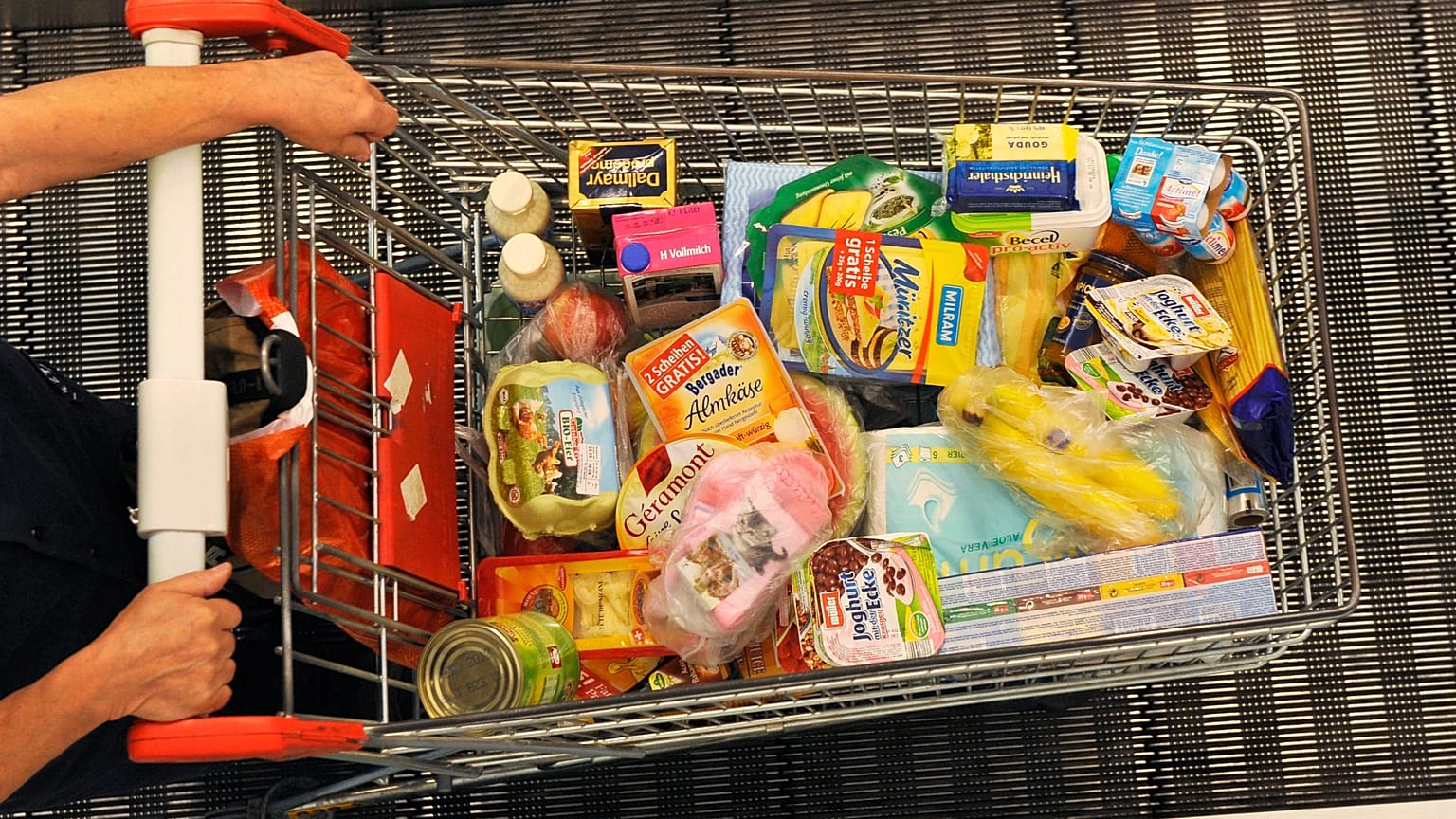














While food prices are lower in some countries than in the EU overall, households in those countries often spend a larger share of their budget on food.
Food is one of the largest household expenses in Europe, accounting for an average of about 11.9% of spending across the EU and rising to as much as 20% in countries such as Romania.
 ADVERTISEMENT
ADVERTISEMENT
ADVERTISEMENT
Food prices also vary widely across Europe. Eurostat’s food price level index provides a useful basis for comparison. If the average EU food basket is set at €100, the index can be used to indicate how much the same basket would cost in each country.
A price level above 100 means a country is more expensive than the European average, while a figure below 100 indicates it is cheaper.
According to Eurostat, in 2024, North Macedonia was the cheapest country for food among 36 European nations. A standard food basket there cost €73 there, making it 27% cheaper than the EU average.
Switzerland is the most expensive, with food prices 61.1% above the EU average. The same basket costs €161.1.
North Macedonia is an EU candidate country — not a member yet but has active trade agreements with the EU — while Switzerland is not in the EEA and instead relies on a network of bilateral agreements with the EU.
In the EU, Romania (€74.6) has the lowest food price level, while Luxembourg (€125.7) has the highest. Food is 25.4% cheaper in Romania and 25.7% more expensive in Luxembourg compared with the EU average.
Following Switzerland at the top, two other European Free Trade Association (EFTA) countries complete the top three: Iceland (€146.3) and Norway (€130.6).
EFTA countries are non-EU members that cooperate with the bloc mainly on trade and market access, while keeping greater national control over laws, borders and policies.
Food prices are also at least 10% higher than the EU average in Denmark (€119.3), Ireland (€111.9), France (€111.5), Austria (€110.9) and Malta (€110.9).
Southeastern Europe and the Western Balkans show the lowest food prices overall.
Besides North Macedonia and Romania, Turkey (€75.7), Bosnia and Herzegovina (€82.5), Montenegro (€82.6) and Bulgaria (€87.1) are well below the EU average.
Serbia (€95.7) and Albania (€98.7) are also cheaper than the EU.
Among the EU’s ‘Big Four’, food prices are also higher than the EU average in Italy (€104) and Germany (€102.9). Spain (€94.6) is 5.4% cheaper than the EU.
Most Central and several Eastern European countries remain below or close to the EU average, including Slovakia, Poland, Czechia and Hungary.
Western Europe generally records higher food prices and Nordic countries are among the most expensive in Europe.
Price gaps matter for households
Ilaria Benedetti, an associate professor from University of Tuscia, noted that structural factors such as production costs, supply-chain integration and exposure to global shocks play a key role in the differences.
“Smaller and highly open economies — often with currencies subject to sharper fluctuations — experienced a stronger pass-through of rising energy and agricultural input costs during the pandemic and the Russia–Ukraine conflict,” she told Euronews.
Benedetti emphasised that these price gaps matter because their impact depends on how much households must allocate to food.
In several Eastern and Southeastern European countries, food accounts for more than 20% of household expenditure, while in higher-income economies the share is typically below 12%.
“As a result, the same price increase carries much heavier consequences where incomes are lower,” she added.
Labour costs and wages
“The most important reason is differences in incomes and wages,” Alan Matthews, a professor from Trinity College Dublin, told Euronews Business.
Countries with higher average wages such as Denmark and Switzerland tend to have higher food prices because labour costs in agriculture, processing and retail are passed on to consumers.
“Differences in taxation, especially VAT on food products, also account for some of the differences,” he added. Some countries impose a lower or even zero VAT rate on food, such as Ireland, while in others like Denmark food is subject to the standard VAT rate.
Matthews pointed out that food prices will also be influenced by consumer preferences.
For example, consumers in Northern and Western European countries may purchase a higher proportion of organic or premium products, or there may be a preference for branded products rather than supermarket's own more expensive products.
Implications for food security
Jeremiás Máté Balogh, an associated professor from Corvinus University of Budapest, stated that these price differences have implications for food security, particularly when considered in conjunction with disposable income.
“While high-income countries can absorb elevated price levels, lower-income households in Central and Eastern Europe face a disproportionate burden, even if nominal food prices are lower,” he told Euronews.
Eurostat’s price level does not consider the household income so these levels are not adjusted for affordability. For example, while food is expensive in Denmark, people have higher disposable income there, so they can buy more bread.