














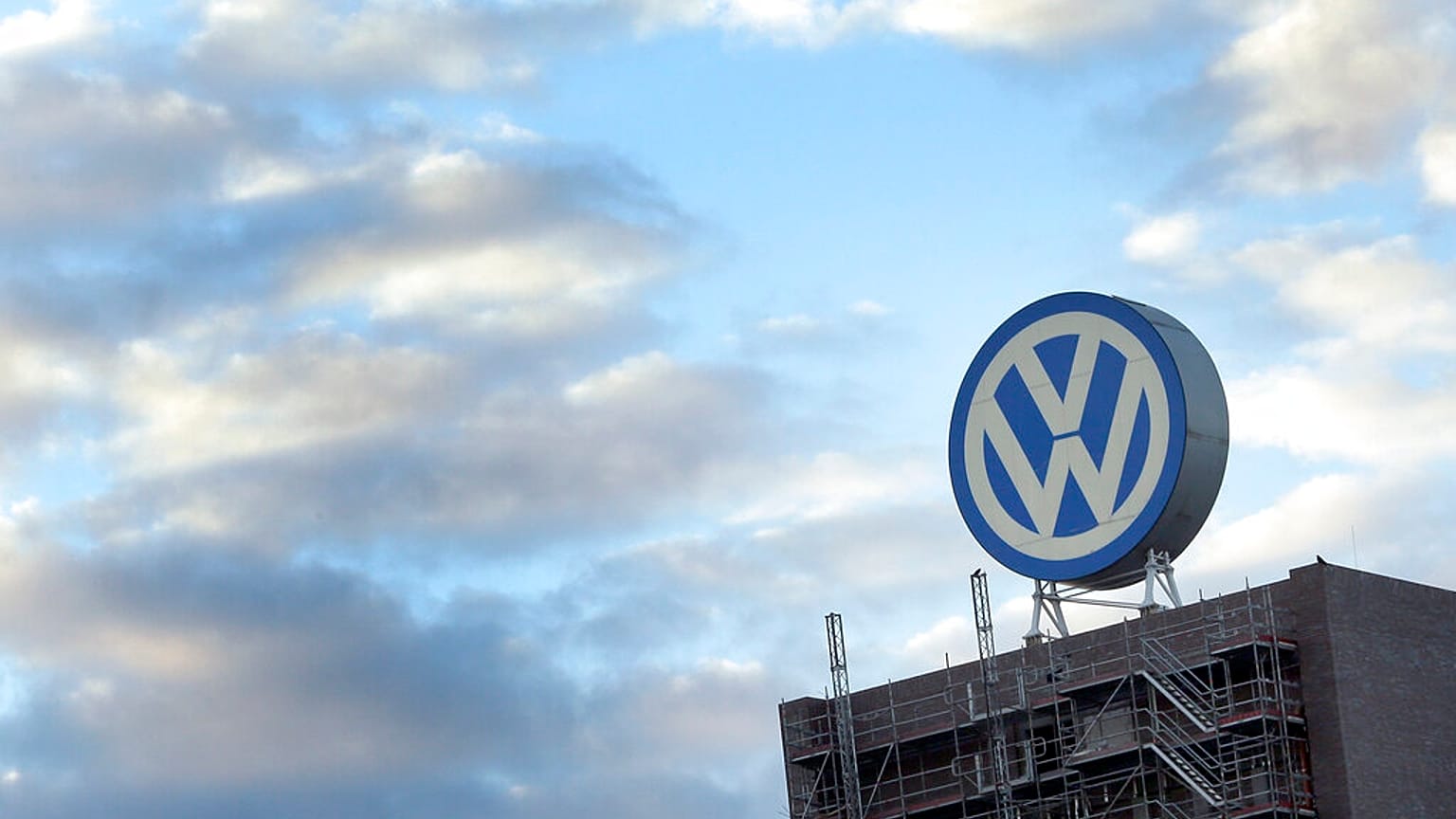













With Volkswagen planning to cut tens of thousands of jobs in Germany, Saxony’s Greens are calling for the state to buy into the carmaker and secure a seat on VW’s supervisory board.
German Green politician Wolfram Günther has floated the idea that the state of Saxony should buy a stake in Volkswagen, similar to the existing stake held by Lower Saxony.
 ADVERTISEMENT
ADVERTISEMENT
ADVERTISEMENT
"From a share of one percent, we would lay claim to a seat on the supervisory board," Günther, a former minister of state for energy, climate protection, environment and agriculture, told local outlets in Saxony.
"One percent of Volkswagen currently costs around half a billion euros. The state undoubtedly has the necessary funds for a stake of this size, especially if the shares are built up gradually," he continued in a statement published on Wednesday.
Volkswagen Sachsen GmbH, which runs plants in Zwickau, Chemnitz, and Dresden, employs more than 11,000 people and anchors a large local supplier ecosystem, making it a cornerstone of Saxony’s economy.
This comes at a time when Volkswagen is going through a cost-cutting and restructuring drive with tens of thousands of job cuts planned by 2030.
Saxon plants are set to bear the bigger brunt of the cost-cutting, with significant reductions planned for the Zwickau plant, for example, and the production of two key model lines to be transferred to Wolfsburg in Lower Saxony.
Günther and Saxony in general have pushed for the German industrial region to focus on climate tech and e-mobility. VW’s Zwickau plant was the group’s first factory to switch entirely to electric car production.
The Greens are a key player in the Saxon parliament in Dresden and the local CDU-CSU minority government already relied on Green support to push through a two-year budget, which the Greens could use to leverage a 1% stake in VW.
"I am in talks with all the key people, from the local chambers of industry and commerce to the state government," Günther said.
While VW's main decision-making hub is in Wolfsburg in Lower Saxony, the fallout from job losses could have dire effects in Saxony.
Lower Saxony holds 11.8% of VW’s share capital, 20% of the voting rights, and has the ability to block key decisions thanks to a specific legal backstop.
In 1960, when Volkswagen was privatised, the Bundestag adopted the federal Volkswagen Act, a special law that allowed the federal government and, in particular, the Land of Lower Saxony to retain a blocking minority and far more influence at VW than ordinary shareholders.
It originally capped any shareholder’s voting rights at 20% and requires more than 80% of share capital to back major decisions, compared with 75% at other German firms.
Parts of the law have since been softened after EU court challenges, but in practice Lower Saxony’s roughly 20% of voting rights still gives it an effective veto over key moves at VW.
The Alternative for Germany (AfD) is the second-largest party in the Saxon parliament, especially in Chemnitz and many other Saxon towns.
Analysts have long linked the party’s strength in eastern Germany to frustrations over deindustrialisation, perceived neglect and fears about declining living standards in East Germany — all of which could be sharpened by large-scale job losses at VW and its suppliers.