













China’s latest tech IPO surge shows that US attempts to slow Beijing’s tech ambitions are fuelling an AI race at home.
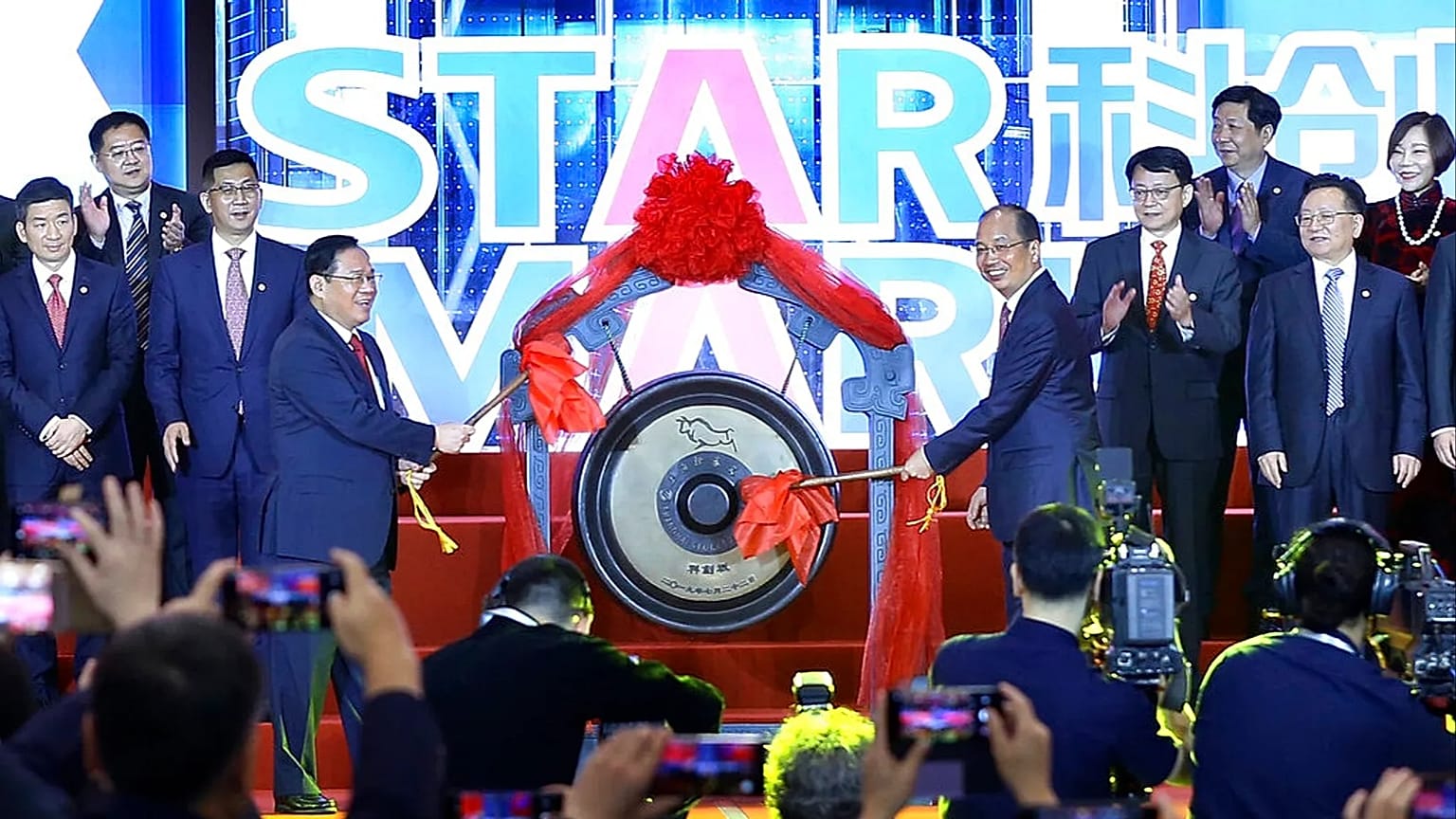
A leading Chinese AI chipmaker, Moore Threads, shot up by 425% in its Shanghai trading debut after raising 8 billion yuan (€970 million), marking the biggest first-day pop for a major IPO.
 ADVERTISEMENT
ADVERTISEMENT
ADVERTISEMENT
It marks one of the largest offerings since China overhauled its listing rules in 2019, when Beijing introduced a Nasdaq-style registration system on its STAR Market to make it easier for high-tech companies to go public.
Founded in 2020 by Zhang Jianzhong, a former senior Nvidia executive in China, Moore Threads is viewed as a second-tier domestic chipmaker. This is because its GPUs remain less advanced, less power-efficient, and less widely deployed than those of Huawei’s HiSilicon or leading AI-chip designer Cambricon, which dominate China’s high-end data-centre and AI-training markets.
China’s semiconductor stocks have surged this year as the United States maintains sweeping controls on advanced chip exports to the country.
Washington’s export-control regime, first designed under the administration of former President Joe Biden, restricts Nvidia, AMD and other American firms from selling their most sophisticated AI processors to China and targets loopholes that allowed “China-only” cut-down chips to slip through earlier rules.
The justification is that limiting access to high-end technology is meant to slow China’s progress in military AI, cyber operations, and mass surveillance, therefore protecting US national security.
In the short term, these curbs have largely shut China out of the world’s most advanced US-made accelerators, forcing them to train and deploy large language models on less capable, less efficient hardware. That widens the performance gap with US rivals as global competition in generative AI intensifies.
Yet the longer-term effects run in the opposite direction. By denying Chinese firms access to top-tier foreign chips and chipmaking tools, Washington has intensified Beijing’s long-standing drive for semiconductor self-reliance.
The response by Chinese leaders has been to implement subsidies and emergency financing, helping tech giants such as Tencent, Alibaba and ByteDance to phase out Nvidia where possible and accelerate the use of domestic alternatives.
That combination has created a vast, protected home market for Chinese chipmakers. Even when domestic products lag Western advanced processing, they enjoy a protected market where China can focus on local demand and that of companies in non-US markets such as in the global south. It's similar to the Huawei effect, where US bans led to initial disruption followed by rapid, state-backed substitution and catch-up.