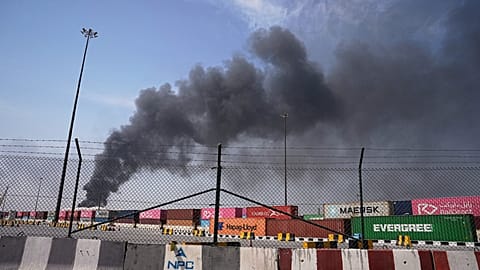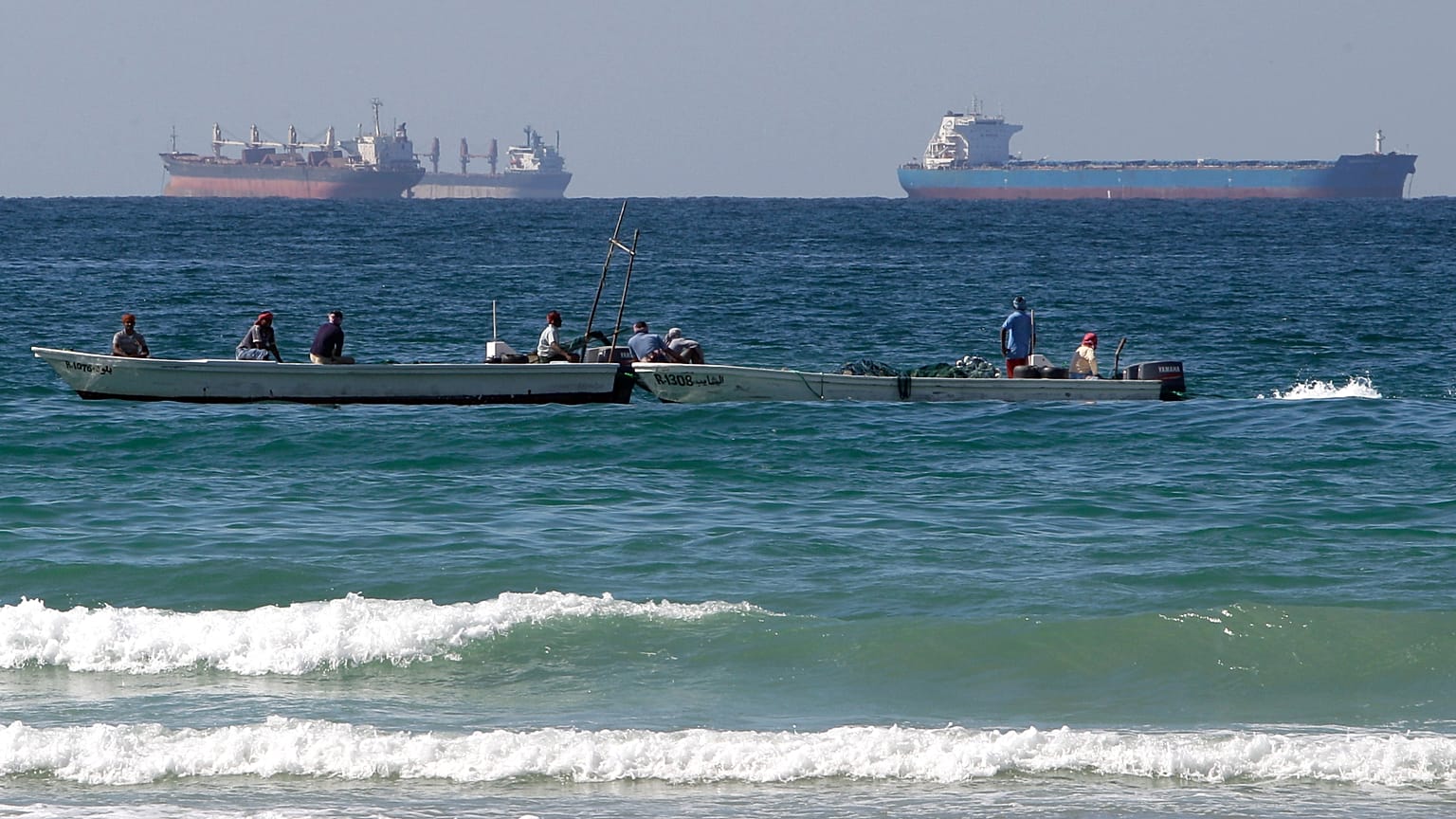













An oil tanker has been struck near the Strait of Hormuz, marking another attack in the area that triggered an explosion and left one crew member dead.
An oil tanker flying the flag of the Republic of the Marshall Islands was attacked by a drone boat 52 nautical miles (96.3km) off the coast of Muscat, according to Oman’s Maritime Security Centre (MSC).
 ADVERTISEMENT
ADVERTISEMENT
ADVERTISEMENT
The vessel, named MKD VYOM, was carrying approximately 59,463 metric tonnes of cargo and the attack triggered an explosion in the main engine room resulting in a fire. One Indian crew member was killed.
There were 21 people of multiple nationalities on board, including 16 Indian, four Bangladeshi and one Ukrainian national. Oman’s MSC evacuated the crew using the commercial vessel MV SAND, which flies the flag of the Republic of Panama.
It has not been specified who attacked the vessel.
Oman authorities stated they are monitoring the condition of the damaged tanker and issuing the necessary warnings to ships passing through the same maritime area in the Gulf of Oman, near the Strait of Hormuz.
The incident reveals escalating danger in the maritime region as crude oil prices soared on Monday morning. Traders are betting that oil supplies from Iran and elsewhere in the Middle East will grind to a halt.
The price of a barrel of US benchmark crude is up 7% trading at $72, while Brent crude also climbed 7% to $78.4 a barrel, at the time of writing.
On Sunday, Oman’s MSC had already reported a first attack against a Palau-flagged oil tanker off the coast of Musandam. The statement on the incident did not specify who or what attacked the ship that was reportedly under US sanctions.
Shipping giants suspend operations
Over the weekend, US and Israeli strikes on Iran prompted Iranian naval warnings prohibiting commercial passage through the Strait of Hormuz.
Although no formal international closure has been issued by recognised maritime authorities, the threats and direct attacks on vessels skyrocketed war-risk insurance, and extreme security risks have caused a near-total halt in shipping operations.
Major container shipping lines have moved swiftly to protect crews and assets.
Maersk, Hapag-Lloyd and CMA CGM each announced the suspension of all vessel transits through the Strait of Hormuz until further notice, directing ships in or heading to the Persian Gulf to safe anchorages and rerouting many services around the Cape of Good Hope while also pausing Suez passages.
MSC has instructed all its Gulf-region vessels, and those in transit, to proceed to designated safe shelters and has temporarily suspended worldwide cargo bookings to the Middle East.
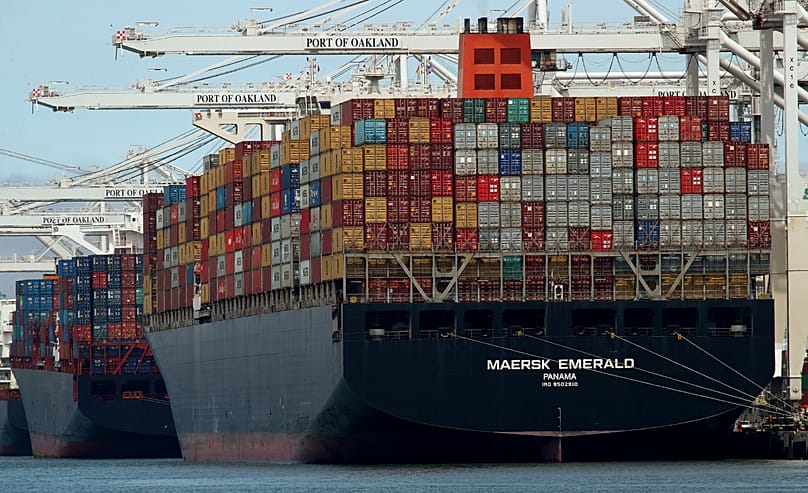
Japanese lines NYK, Mitsui O.S.K. Lines and Kawasaki Kisen similarly halted all Hormuz operations, with vessels standing by or anchored in safe waters outside the strait since Saturday night.
On the oil and gas side, several unnamed oil majors, tanker owners and trading houses have suspended crude, fuel and LNG shipments via the strait.
Independent ship-tracking data from several sources including Reuters confirm a roughly 70% drop in overall vessel traffic through the waterway as of late Saturday, with activity in the main shipping lanes down 40-50% by Sunday.
At least 150 crude and LNG tankers have dropped anchor in open Gulf waters beyond the strait, clustered off the UAE, Saudi Arabia, Qatar and other regional ports.
The strait itself is not under a permanent or universally recognised blockade, but commercial operations have effectively paused for the time being due to the combination of risks and insurer pullbacks.
This has interrupted roughly 20-30% of global seaborne oil trade and a substantial share of LNG flows, with the situation remaining fluid and expected to persist until regional security stabilises.