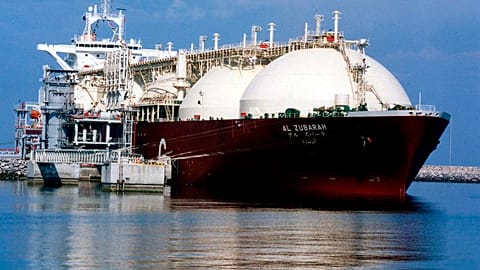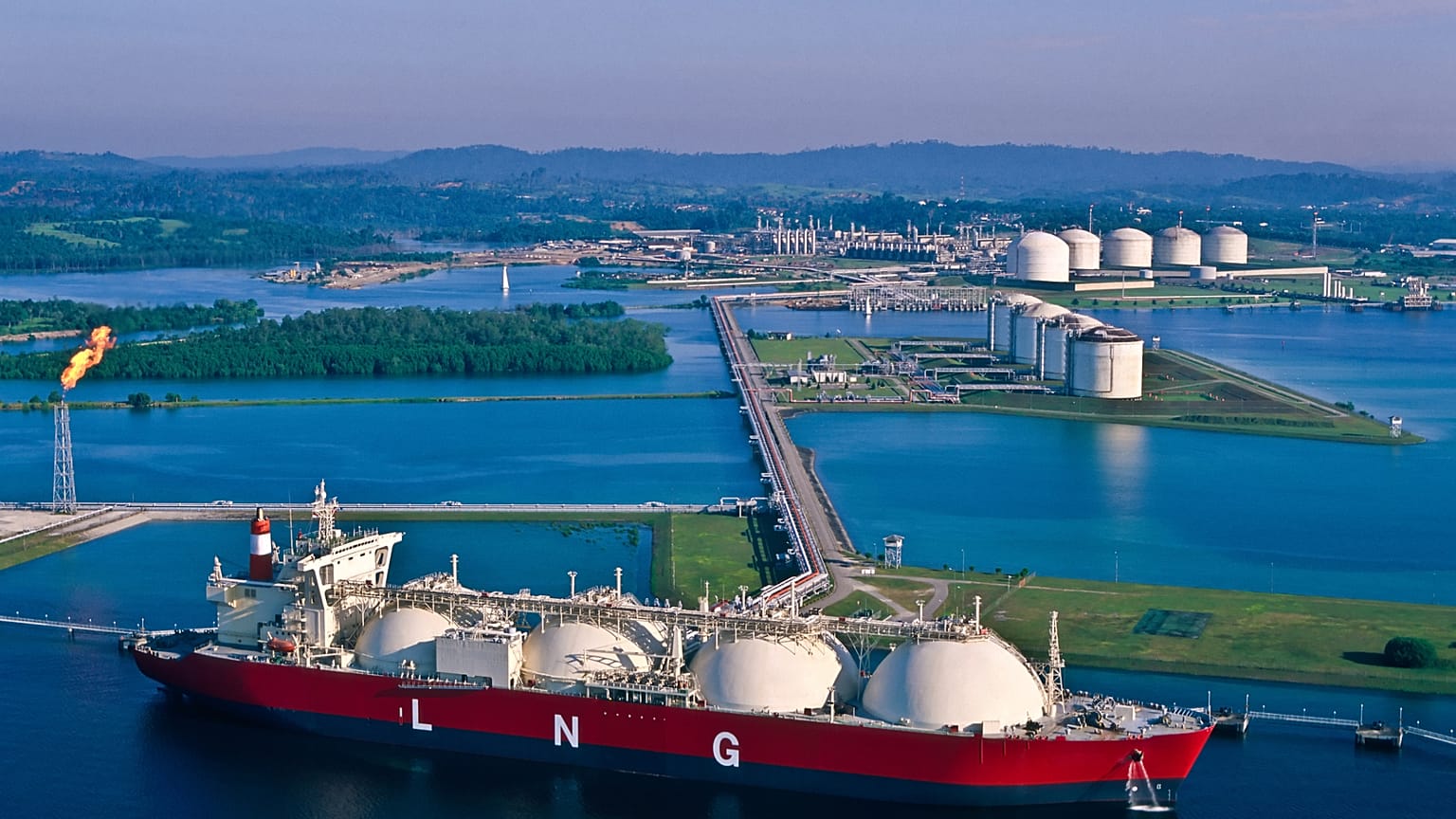













Iranian attacks have led to the suspension of Qatari LNG production and major shipping disruptions through the Strait of Hormuz. Which EU countries could be the most affected?
Although the European Commission says there are no immediate gas shortages, the Dutch TTF benchmark — the primary pricing reference for natural gas across Europe, used by traders, utilities and governments to set contracts — has surged in recent days, reflecting market anxiety over tighter global LNG supply.
 ADVERTISEMENT
ADVERTISEMENT
ADVERTISEMENT
Qatar's Energy Minister, Saad al-Kaabi, told the Financial Times that war in the Middle East could “bring down the economies of the world” hitting growth and increasing energy bills due to shortages.
The Qatari minister also added that even if the conflict ended immediately, Qatar would take "weeks to months" to normalise deliveries, after the shutdown of Ras Laffan, the LNG export complex struck by Iranian drones this week.
With EU gas storage levels at around 30%, according to Gas Infrastructure Europe, the bloc is entering a critical period for refilling inventories ahead of next winter.
The situation revives painful memories of the 2022 energy shock, caused by the Russian invasion of Ukraine, but occurs against a backdrop of much greater diversification away from Russia's pipeline gas.
The European Commission convened emergency coordination groups on Wednesday and stated that US LNG deliveries, which now make up most imports, along with Norwegian pipeline gas, are keeping supplies stable for the time being.
EU Energy Commissioner Dan Jørgensen has also highlighted the value of increased deliveries from Azerbaijan via the Southern Gas Corridor.
However, some EU countries are particularly exposed to the disruption either because they are major LNG importers, rely heavily on Qatari supplies or have unusually low reserves.
EU countries with most to lose
In 2025, the EU imported over 140 billion cubic metres of LNG, according to the Brussels-based think tank Bruegel.
The US was the largest supplier of LNG to the EU, accounting for almost 58% of total LNG imports, which tripled between 2021 and 2025.
The largest LNG importers in the EU are France, Spain, Italy, the Netherlands and Belgium.
Of the five, Italy and Belgium face the greatest pressure due to their heavier reliance on Qatari supplies.
According to analytics platform Kpler, Qatar accounted for around 30% of Italy’s LNG imports and 8% of Belgium’s last year.
Whereas France and Spain, for example, have stronger access to Norwegian supplies among other providers.
Additionally, while Poland is not among the EU’s top five importers of LNG, 17% of its gas imports came from Qatar in 2025, meaning the country faces a similar challenge of reliance.
Belgium may face the biggest problem in terms of reserve levels. The country’s gas storage stands at around 25.5%, below the EU average of 30%, which further complicates efforts to replace Qatari volumes.
Italy and Poland also have significant exposure to Qatari LNG although their storage levels are comparatively higher, at 47% and 50% respectively.
Overall, these countries are likely to be more exposed to price volatility as they compete for alternative cargoes on the global spot market.
Baird Langenbrunner, a research analyst at Global Energy Monitor, warned that the shutdown of Qatar’s Ras Laffan LNG export complex could have a significant market impact, noting that few immediate substitutes exist for these volumes.
EU countries that saw this coming
In stark contrast, other EU countries appear far better insulated from the current turmoil.
In particular, Portugal stands out positively, having sourced no gas from the Middle East since 2020, when its last small Qatari delivery totalled just 129,000 cubic metres.
According to the Portuguese Directorate-General of Energy and Geology, its main suppliers in 2025 were Nigeria and the United States, with secure routes far removed from the Strait of Hormuz.
The country is also maintaining exceptionally high storage levels at over 76%, and experts say it could relatively easily increase US LNG deliveries if needed.
Spain also benefits from more diversified sources, and reserves are at around 56%, placing it in a comfortable position.
This variation across the bloc highlights how national energy strategies implemented since 2022 are now producing very different levels of vulnerability.
Short-term fixes won't solve a long-term addiction
Brussels has signalled it is ready to activate solidarity measures if the situation worsens.
Options under discussion include coordinated demand-reduction targets, accelerated joint LNG purchasing programmes, temporary price safeguards and financial support mechanisms for the most affected member states.
The European Commission has stressed it will continue close daily monitoring with national governments and is prepared to fast-track state-aid approvals or facilitate cross-border storage sharing where required.
Chris Bernkopf, CEO of Podero, a Vienna-based energy flexibility software company that works with major European utilities including E.ON and TotalEnergies, voiced the same call many experts are making for a faster shift to renewable alternatives.
“The real problem was not, and is not, the pricing system; it’s the gas dependence underneath it,” he said.
“The solutions are less dramatic but more durable: build more renewable energy backed by storage, manage demand smartly and use digital tools to coordinate household devices like heat pumps and electric vehicles to reduce strain on the grid.”
Bernkopf argues that while short-term measures such as price freezes can protect households through a crisis, they do not fix anything structural.
Genuine energy security and lower prices, he insists, will come only from expanding renewables, improving grid flexibility and reducing overall reliance on imported fossil fuels.
The coming weeks will test both national preparations and the effectiveness of EU-wide solidarity at a time when geopolitical risks to energy supplies have once again been laid bare.