

















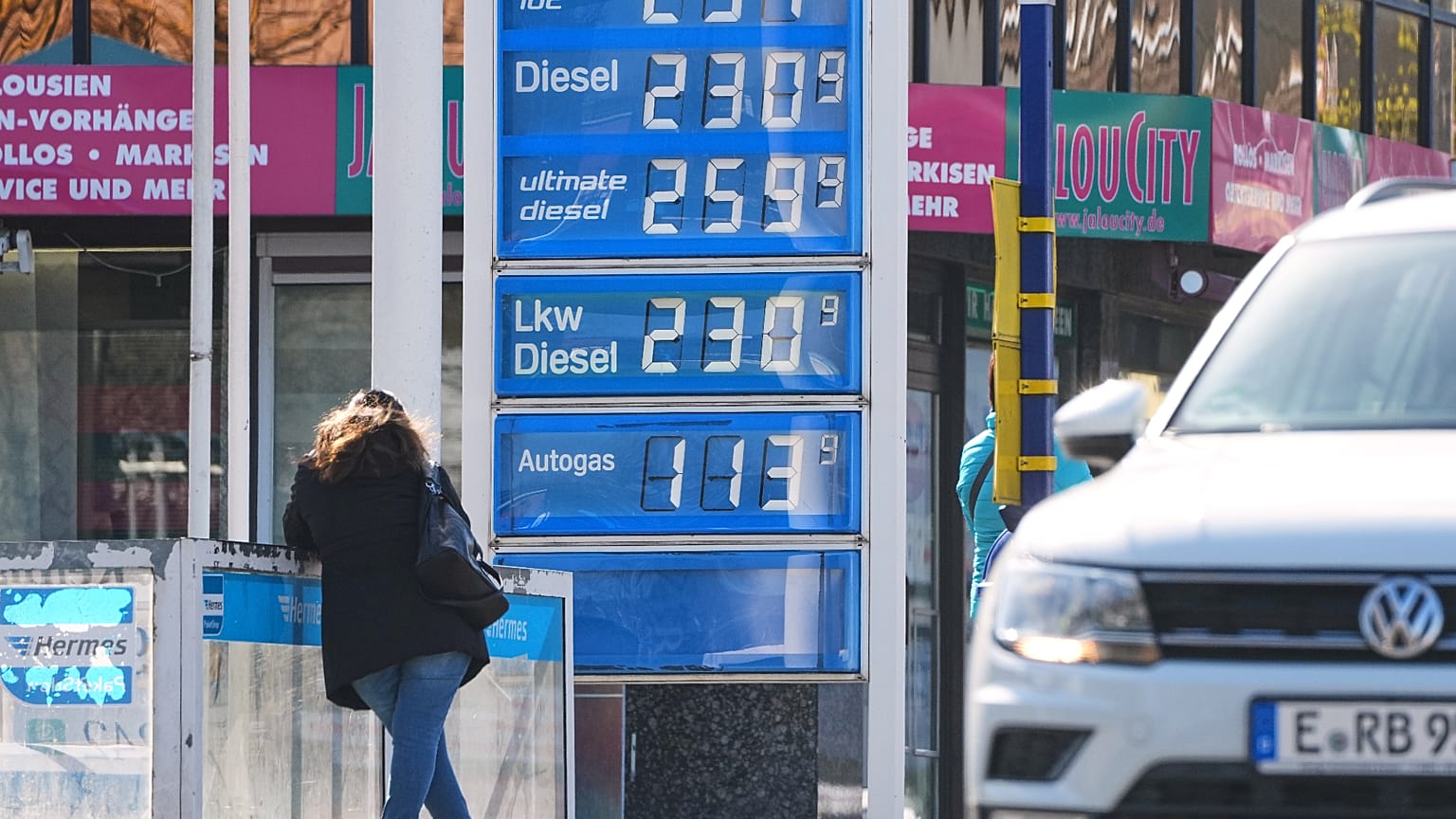













The EU has deepened energy ties with the US while seeking to reduce its exposure to geopolitical shocks. Yet US plans to limit diesel exports expose how quickly commercial dependence can become a strategic vulnerability.
A United States ban on diesel exports would not necessarily leave Europe’s fuel stations empty overnight, but it could push up prices, forcing European governments into another round of emergency intervention just as households, farmers and hauliers are feeling the effects of the wider energy crisis.
 ADVERTISEMENT
ADVERTISEMENT
ADVERTISEMENT
The prospect of Washington keeping those barrels at home is especially uncomfortable for Brussels, which acknowledged the bloc’s dependency on US diesel after ditching Russian energy. The Commission said the issue was being discussed with EU countries and the industry.
The bloc is already facing a fuel shortage after the war with Iran disrupted supplies from the Middle East, while Russia has also restricted diesel exports.
Meanwhile, European diesel prices have more than doubled since the beginning of the year and were about 38% higher year-on-year in mid-September, while refineries around the world are operating close to full capacity.
Analysts argue that a potential US ban would remove a crucial supply source from an already exceptionally tight global market.
“For Europe, the immediate effect is higher prices. North-West Europe would have to bid up to pull in replacement cargoes, and it would be bidding against the Mediterranean, Latin America and West Africa for the same limited pool of barrels,” Zameer Yusof, an energy analyst at market intelligence platform Kpler, told Euronews.
The EU has become far more reliant on US diesel since the loss of Russian supplies. The US has supplied around 180,000 barrels a day (b/d) of the EU’s roughly 580,000 b/d of extra-EU diesel imports this year — about 32%, up from 17% in 2025.
The dependence is even more striking in North-West Europe, where US supplies account for around 200,000 b/d out of 350,000 b/d from outside the region — roughly 57%, compared with 37% last year, according to Kpler figures.
That concentration means a partial US export ban could still have a sizeable impact on prices.
However, removing 30% of US supplies would not necessarily mean European diesel prices rise by 30%, or by a corresponding fraction, Kpler argues. Buyers would be forced to compete aggressively for replacement barrels, potentially pushing prices sharply higher.
France hit first
Within the EU, France appears to be the most vulnerable country. French President Emmanuel Macron said on Thursday that the proposed ban would be “catastrophic”. The country is heading to the polls in 2027, with the energy crisis fuelling far-right rhetoric.
Before the Trump administration touted a diesel ban, the French leader asked the Commission to temporarily relax fuel specifications so European refineries could produce more diesel and jet fuel. He also urged Brussels to coordinate a second release of emergency oil reserves.
A US export ban would strengthen that argument: if Europe cannot count on imported refined fuel, it needs to squeeze more output from its own refineries. However, European refineries cannot manufacture hundreds of thousands of additional barrels overnight.
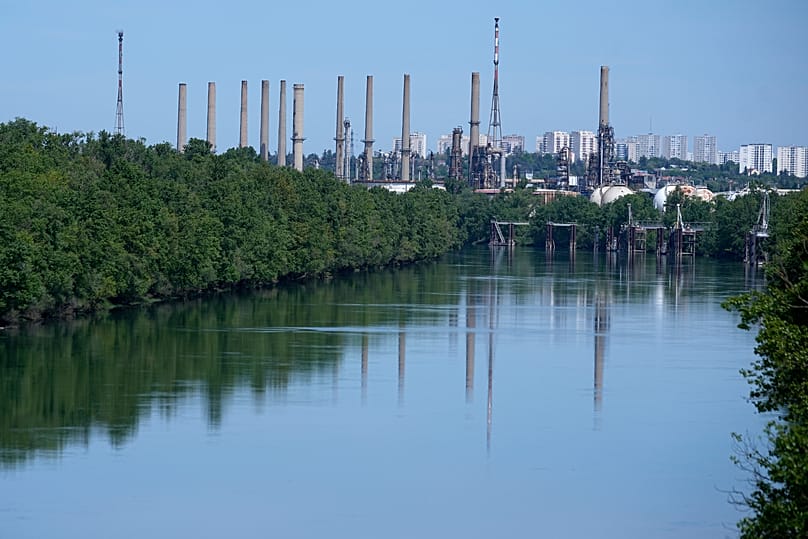
Paris imported about 63,000 b/d of US diesel this year, around 36% of its diesel imports. Its dependence is compounded by refinery closures at Grandpuits and Donges, leaving the country structurally short of diesel, Kpler warned.
The UK is also heavily exposed, importing about 50,000 b/d from the US, or 26% of its diesel imports, Kpler said. The closure of the Grangemouth refinery has increased its reliance on imports.
However, there is one cushion. Diesel is among Europe’s most heavily stored oil products, meaning inventories could absorb at least part of an initial disruption. That could prevent an immediate shortage, although it would not eliminate the underlying price pressure if the ban were to last.
Southern European markets have somewhat more protection from domestic and Mediterranean refining. Italy gets only around 4% of its diesel imports from the US, while Spain gets about 19%. Portugal is barely exposed. Spain’s Cartagena, Bilbao and Huelva refineries provide an important domestic supply buffer.
Europe has few obvious replacements
The bigger problem is what happens after the initial stocks are used. Europe cannot simply replace American diesel with another major supplier.
“India is the only credible substitute, but its export availability has been affected sharply,” Yusof said.
Indian exports have already fallen sharply — from around 582,000 b/d last year to 352,000 b/d this year. Indian diesel shipments to Europe have declined even more dramatically, from about 163,000 b/d to roughly 50,000 b/d.
Indian refiners are instead finding better returns in East Africa and Southeast Asia, while questions over Russian crude used in some Indian refineries also complicate European trade.
China and South Korea cannot realistically fill the gap either. Their diesel shipments to Europe this year were tiny — roughly 1,000 b/d from China and 2,000 b/d from South Korea.
China faces EU restrictions on products made from Russian crude, while South Korea’s exports are tied up by established contracts in Asian markets and its overall export availability has declined.
Time to rethink the definition of energy security
The diesel episode exposes a deeper weakness in Europe’s energy strategy.
The EU’s current predicament raises questions about whether the bloc needs larger strategic stocks of refined fuels, more resilient European refining capacity and stronger mechanisms for coordinating fuel supplies during a crisis.
Asked whether it was considering a second release of strategic oil reserves, the International Energy Agency had not responded at the time of publication.
The Commission’s decision to discuss the issue through its oil coordination group suggests Brussels is already treating it as an energy security question rather than a mere commercial dispute.
Meanwhile, the proposed US diesel ban appears to be driven in part by domestic political pressure. US diesel prices are nearly $7 a gallon, creating pressure on the Trump administration to demonstrate that it is doing something about the cost of living ahead of the November midterms.
US Energy Secretary Chris Wright has been sounding out refiners about a voluntary restriction on exports as an alternative to a blanket 90-day ban.
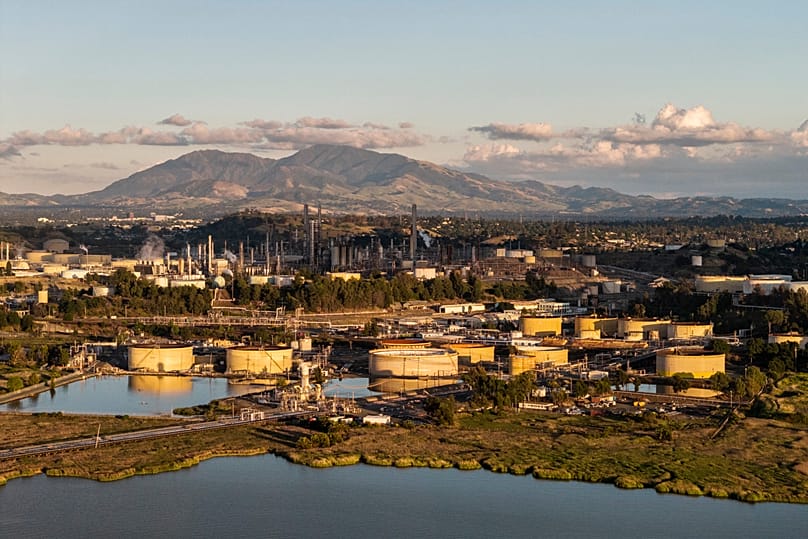
A briefing from the Energy Policy Research Foundation (EPRF) argued that a US diesel export ban would likely backfire, since refiners are already running at full capacity and cannot produce more without new capacity.
“Cut off from export markets, Gulf Coast refiners would see storage fill and margins fall, and many would reduce runs to catch up on maintenance postponed during the crisis. Because gasoline and diesel are produced together, the result would be less gasoline, diesel, and jet fuel, and higher pump prices,” the EPRF briefing said.