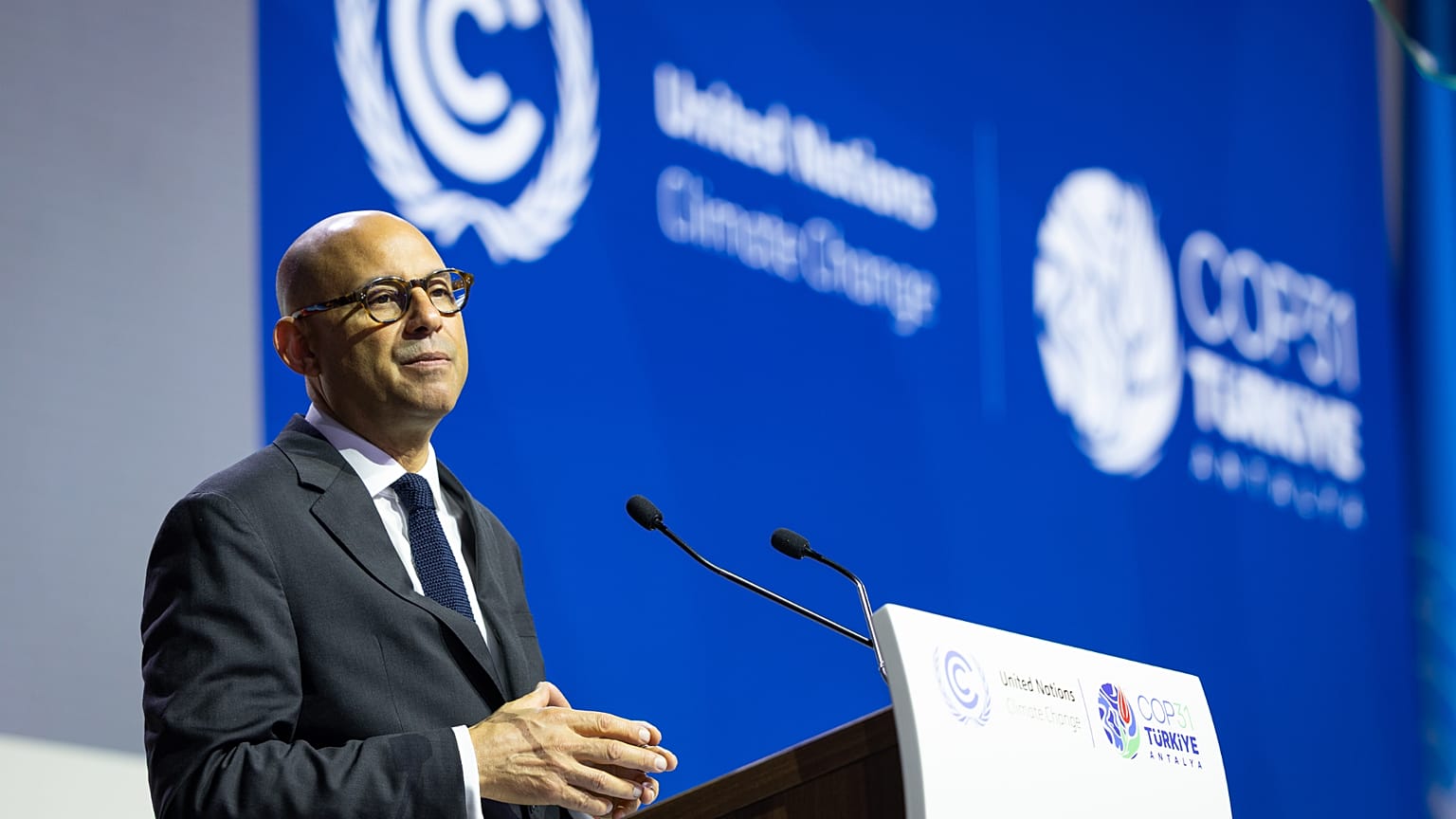













The United Nations climate chief warns that countries must protect health systems, as climate change poses a growing threat to public health during the climate change conference, COP31, in Turkey.
World leaders and experts have gathered in Antalya, Türkiye, for the United Nations COP31 summit, running from 9 to 20 November, where the health effects of climate change are playing a central role in the discussions, according to Simon Stiell, UN Climate Change Executive Secretary.
 ADVERTISEMENT
From air pollution to extreme heat, climate change poses a growing threat to people’s health worldwide.
“The climate crisis is now a global health crisis of pandemic proportions”, said Stiell, adding that climate disasters are battering health systems and infrastructure, and assuring that health would again be a central issue at this year’s summit.
“At this COP, nations face a choice: electric or shock. Rewire the global economy for the electric age or accept ongoing fossil fuel cost pain for families, firms, and governments, and of course that includes health systems”, Stiell said.
Burning fossil fuels and human-caused climate change are linked to an estimated 3.3 million deaths annually through outdoor air pollution and extreme heat, according to the Lancet Countdown 2026.
The past 12 years have been the warmest on record, with the last four – including 2026 – ranking as the four warmest, according to a new World Meteorological Organization report published on 9 November.
Rising temperatures, drought and heavy rainfall can contribute to heat-related illness and mortality, wildfire smoke and poor air quality, malnutrition and food insecurity, injuries, and changing risks of water- and vector-borne diseases such as cholera, malaria and dengue.
“Climate risk finds every vulnerability in a health system and widens it”, Stiell said, citing effects ranging from power cuts to hindered water sanitation.
Stiell said that health should always be “at the heart of climate action” and that the ministries responsible for it must be involved in adaptation discussions.
“Every national adaptation plan should be able to answer some essential questions: Can clinics stay open through a heatwave? Do they have safe water after a flood? Can health workers spot an outbreak before it spreads? Will those most at risk get the care they need?,” he added.
Yet adaptation is not the only answer. “No health system can be made resilient to an endlessly warming world,” Stiell noted, calling on countries to ensure that health is embedded in how climate plans are designed, financing decisions are made and progress is measured.