

















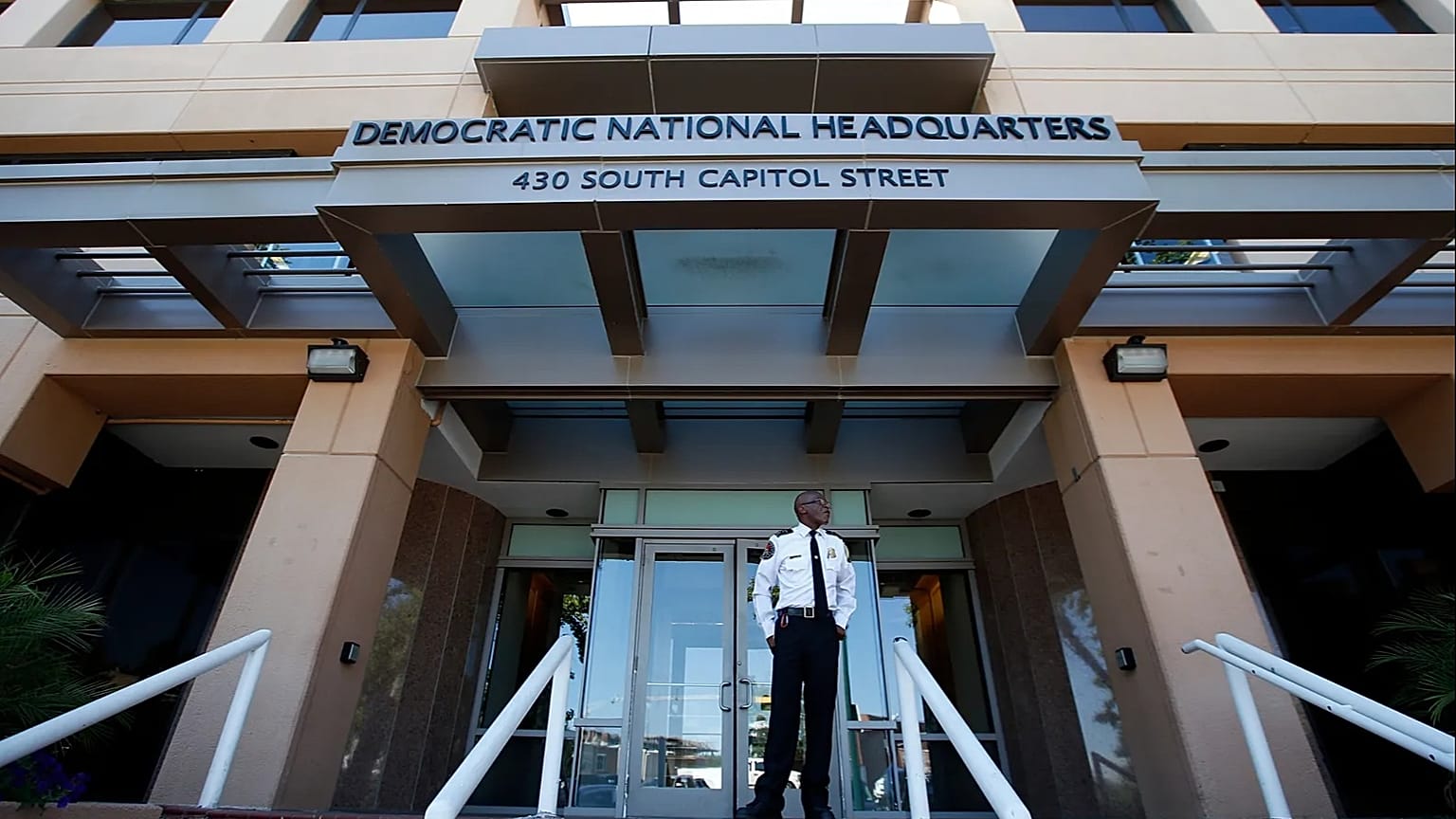













A string of recent primaries across the US have thrown new light on the deep divisions between the party's political factions. Is opposition to Trump enough to unify the coalition?
With just over two months to go before the US's midterm elections, Democrats face a problem that goes beyond the familiar question of how to beat President Donald Trump: they are still arguing over what the Democratic Party should actually stand for.
 ADVERTISEMENT
ADVERTISEMENT
ADVERTISEMENT
The divide between progressives and moderates has been visible throughout this year’s primary season. But in recent weeks, it has become harder to dismiss as an internal family quarrel.
Progressive insurgents have scored a series of significant victories, while establishment Democrats have responded with growing anxiety about whether candidates identified with the left can win in November – particularly in swing districts and Republican-leaning states.
The irony is that both camps believe they have learned the same lesson from the agonising 2024 defeat.
For progressives, the lesson is that moderation has failed. They argue that Democrats spent too long defending the status quo, speaking in cautious technocratic language and relying on opposition to Trump rather than offering voters a compelling economic alternative.
Their answer is a much more aggressive populism: lower healthcare costs, higher wages, stronger unions, action against corporate power and a political system less dependent on wealthy donors.
For more moderate centrists, the lesson is almost the opposite. They argue that Democrats cannot afford to frighten voters in competitive states by embracing candidates or rhetoric that Republicans can portray as socialist, anti-business or culturally extreme – in their view, all recipes for disaster.
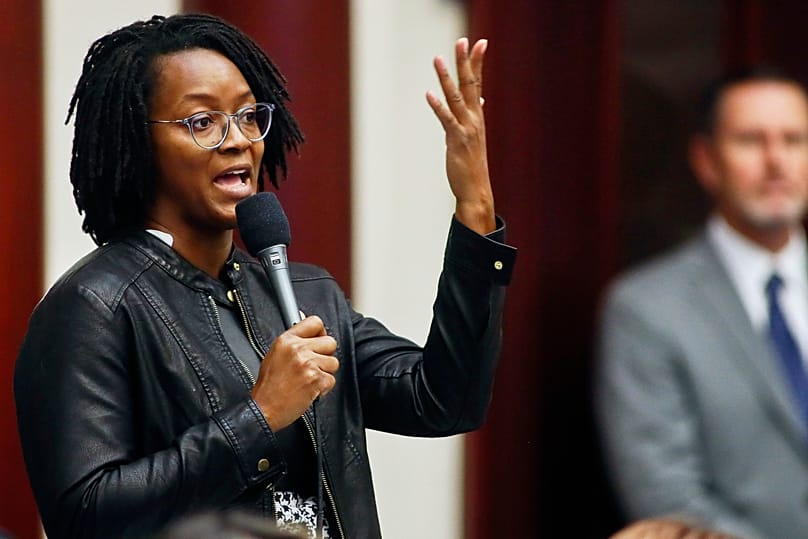
That argument has been given fresh ammunition by the primary results. In Florida, democratic socialist Angie Nixon pulled off a huge surprise victory over moderate Alex Vindman in the Democratic Senate primary.
In Michigan, progressive Abdul El-Sayed defeated establishment-backed Haley Stevens. And in California, progressive Aisha Wahab overcame heavy spending from outside groups to win a special congressional election.
To progressives, these are not isolated upsets. They are evidence that Democratic voters are rejecting the old party establishment.
But there is a crucial distinction between winning a Democratic primary and winning a general election – and that is where the moderates' argument begins.
Florida, once the ultimate swing state, is perhaps the clearest test. Nixon's victory energised the Democratic left, but she now faces an extraordinarily difficult general election in a state that has moved decisively toward Republicans in recent years.
Her candidacy has already triggered an argument within Florida's Democratic leadership over how closely the party should associate itself with democratic socialism.
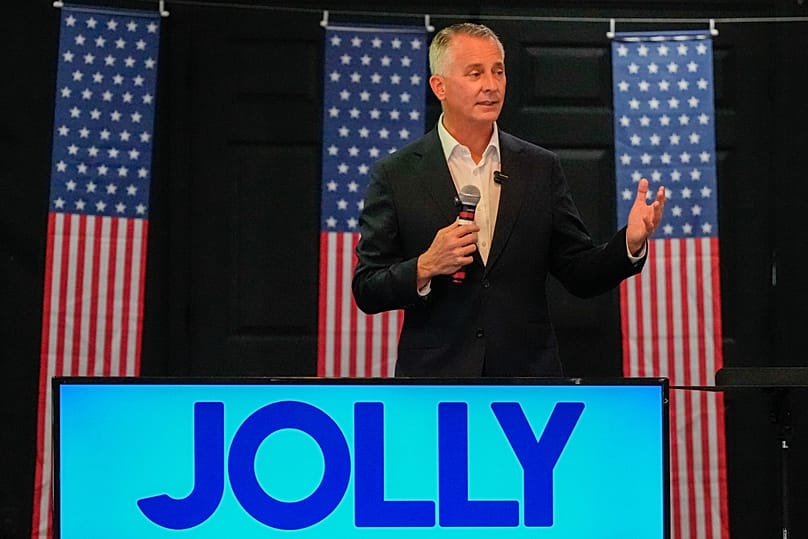
In an ironic twist, the day Nixon was elected senate candidate in Florida, Democrats in the state also chose a conservative and former Republican, David Jolly, to be their candidate for governor.
The question for Democrats is now not simply whether progressive ideas are popular. Many “leftist” economic positions are remarkably popular across the electorate; recent Reuters/Ipsos polls found that two thirds of independents support raising taxes on corporations and billionaires and providing government-provided healthcare coverage for all Americans.
Other polls suggest that paid family and medical leave are also remarkably popular across the American political spectrum, as are a raise to a $15 federal minimum wage and putting in place AI regulations to protect workers.
The more difficult question is whether voters who support those policies will actually vote for candidates who carry the progressive label.
That distinction matters because the Democratic coalition is changing. Recent research suggests that the 2026 Democratic primaries are not necessarily showing a wholesale ideological shift to the left; rather, they reflect a growing appetite for economic populism and dissatisfaction with the party establishment.
Democratic voters can still describe themselves as moderate while supporting policies traditionally associated with the progressive wing. At the same time, they appear less receptive to some of the cultural issues associated with the left like transgender rights, racial justice or aggressive climate policies.
That creates an unusual political opening – and a strategic headache.
The Democrats may have discovered that their most potent message is neither traditional liberalism nor traditional centrism, but an economically populist politics that attacks corporate power while avoiding some of the cultural battles that have alienated swing voters.
The problem is that the party has not yet agreed on how to package it. And there is another complication: Trump, who remains the Democrats' most powerful galvanising issue.
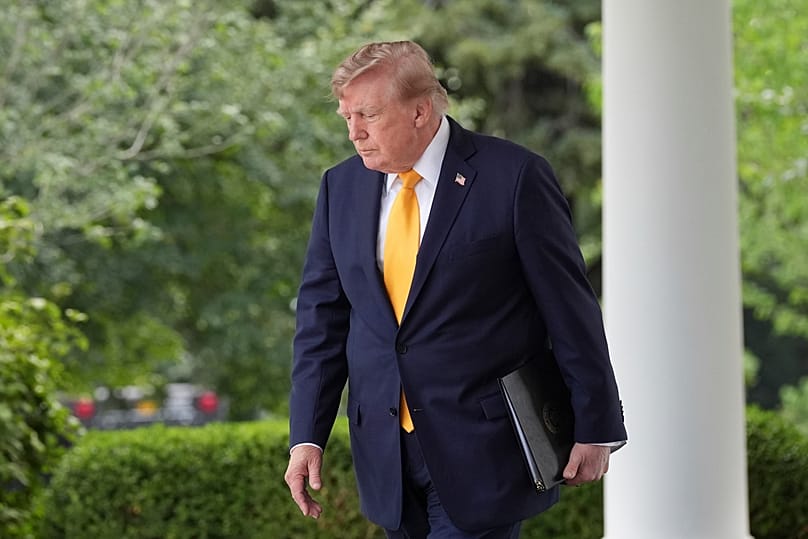
While the Republicans are already trying to use progressive primary victories to reinforce their argument that the Democratic Party is moving toward “socialism”, pointing to the likes of Nixon and El-Sayed as evidence that the Democratic Party is being captured by its radical left wing, the Democrats have a strong incentive to keep the election focused on Trump's unpopular record rather than on their own internal divisions.
That strategy could work. Democratic candidates currently enjoy an advantage on the generic congressional ballot, and economic concerns – particularly affordability – are dominating the political conversation. In other words, Democrats may be able to win despite their ideological argument rather than because they have resolved it.
But the deeper question is what happens after November.
If Democrats make significant gains in the House, or even retake the Senate, moderates will argue that voters rewarded candidates who concentrated on affordability, competence and opposition to Trump rather than ideological transformation.
Progressives will make a very different calculation. They will point to their primary victories and argue that the party's future lies in candidates willing to challenge Democratic orthodoxy and mobilise voters who have become disillusioned with the political establishment.
Either way, the midterms are becoming not just an audition for Congress, but a fight to establish the Democratic Party's post-Biden, post-Harris, post-Trump identity.
The stakes are particularly high because the next presidential contest is already looming in the background. The candidates and factions that emerge strongest from the 2026 cycle will have enormous influence over the battle for the Democratic nomination in 2028.
For now, however, there is a practical imperative: win in November. And that requires two very different Democratic parties to behave as one.
The progressives want a party that fights harder. The moderates want a party that frightens voters less. Both believe the other side's approach risks losing the election.
And that may be the central paradox of the 2026 midterms: the Democrats' greatest electoral opportunity may be their growing advantage on economic issues and voter dissatisfaction with Trump, while their greatest political vulnerability may be the unresolved argument over what they want to do with that opportunity.
Two months before Election Day, the Democratic Party has not settled that argument. The voters may have to settle it for them.