















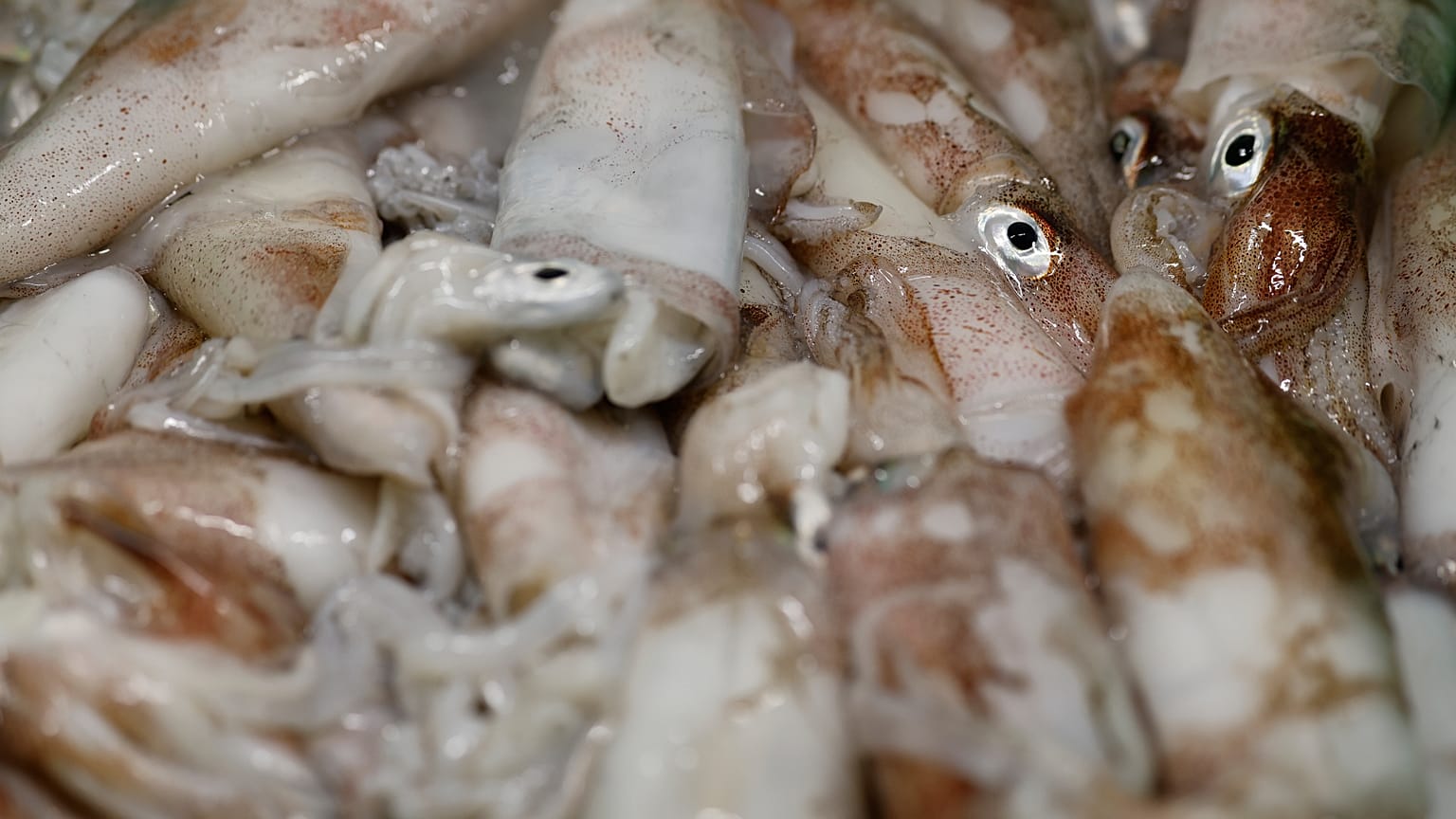













In the North Sea, cephalopods are appearing in growing numbers. Fishermen are landing more squid and octopus, a trend likely tied to rising sea temperatures.
When people think of the North Sea, they think of prawns, plaice or cod. But that picture is changing: cephalopods are increasingly spreading there. Researchers have observed that several species are now permanently present in the North Sea which used to appear there only as occasional visitors.
 ADVERTISEMENT
ADVERTISEMENT
ADVERTISEMENT
The North Sea is becoming a habitat for cephalopods
Rising water temperatures play a key role. Cephalopods have comparatively short life cycles and can therefore adapt quickly to changing environmental conditions. According to the Thünen Institute, various species have expanded their range over the past decades. The Thünen Institute is a German federal research institute that conducts research, among other things, on agriculture, forests, fisheries and the seas and provides scientific advice to the federal government.
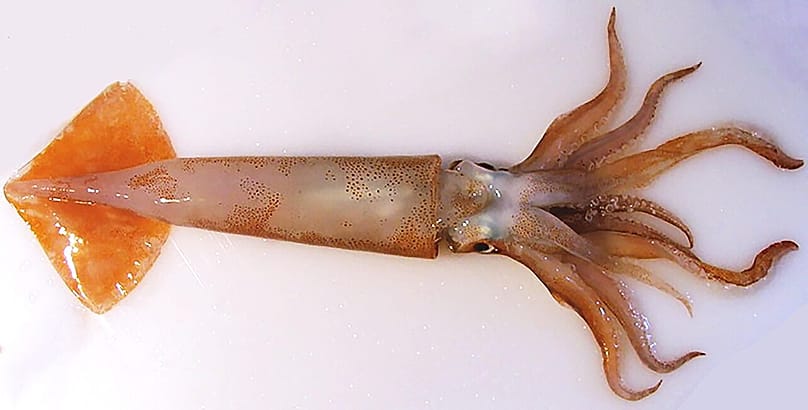
According to the institute, some squid are now reproducing in the North Sea and forming their own stocks there.
Species such as the short-finned squid Illex coindetii were still rare vagrants around 100 years ago. Today they live permanently in the North Sea and reproduce there.
This fits in with a fundamental change in these waters: 2025 was the warmest year since BSH measurements began at the Federal Maritime and Hydrographic Agency in 1969. The average surface temperature was 11.6 degrees, around 0.9 degrees above the long-term average.
The summer of 2025 was also exceptionally warm: with an average of 15.7 degrees, it was the warmest North Sea summer since records began. In parts of the western and south-western North Sea, temperatures were at times more than two degrees above the long-term average. Official data for this summer are not yet fully available, but the high temperature readings are expected to continue.
More cephalopods, fewer classic North Sea species?
The changes are not limited to cephalopods. As the water warms, cold-loving species such as cod come under pressure and shift their distribution areas. At the same time, squid are changing the food web: these voracious predators prey on fish such as herring, sprat, whiting and also cod.
Researchers are therefore investigating the extent to which growing squid stocks are affecting commercially important fish species.
It is not only squid that are benefiting from the warmer North Sea: octopus are also being sighted and caught more frequently. Recent reports from 2026 speak of significantly more octopus in the southern North Sea, especially off Belgium. Fishermen there report sometimes large catches.
In the German Wadden Sea, a live curled octopus (Eledone cirrhosa) was still a rarity in 2017.
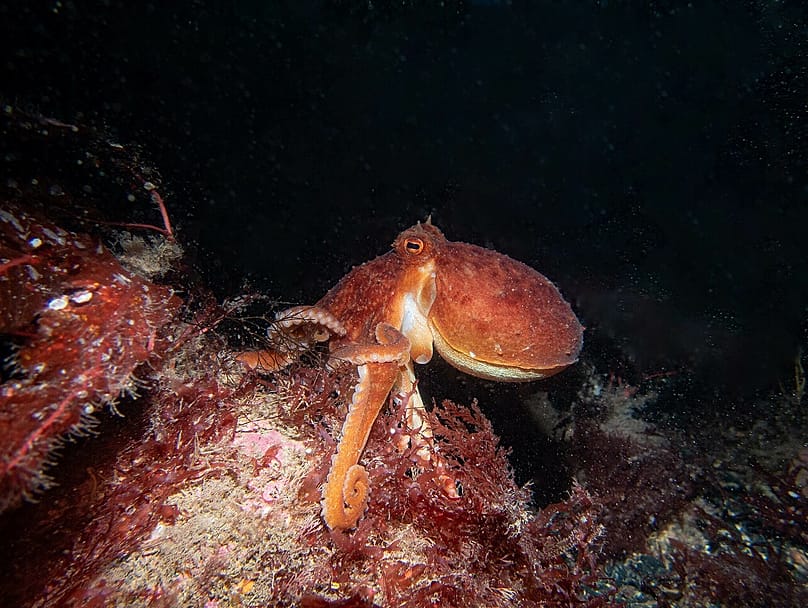
Today the curled octopus is still rare in the German Wadden Sea, but no longer completely unknown: BeachExplorer, a scientifically curated online database in which finds of animals, plants and other organisms on the coasts of the North Sea and Baltic Sea are documented, describes the species as "widespread in the North Sea", with individual records on the Wadden Sea coast.
The most important difference is that squid have ten arms and octopus eight. Squid also have an elongated body with fins and an internal gladius, while octopus have a rounded body without fins and without a gladius.
A gladius is a hard, calcareous or horn-like supporting structure inside a cephalopod's body. It gives the animal stability and helps it maintain its body shape.
Fishermen discover a new line of business
Squid fishing has now become one of the more important cephalopod fisheries in the North-East Atlantic. As traditional fish stocks change and fishing opportunities for other species have been restricted, fishermen are looking for new sources of income.
According to the Thünen Institute, squid landings in the North Sea have roughly tripled in the space of about 40 years. Up to 3,000 tonnes are now landed every year.
There are currently no specific catch quotas for North Sea squid, and the scientific basis for such regulation is still being developed.
At the same time, there is a problem: fishing for cephalopods has so far not been regulated in the same way as for many traditional commercial fish species. Researchers are therefore working on options for sustainable management.
Possible measures could include catch limits that are regularly adjusted to stock trends, supplemented by closed seasons or protected areas for key spawning grounds. This would require better data on stocks and on the impact of fishing on the ecosystem.
Even the spawning grounds are not yet sufficiently known. On one research cruise, for example, egg masses of squid were found. Exactly where the animals regularly spawn in the North Sea and which areas are particularly important for their reproduction has not yet been fully clarified.
No classic "invasion"
Describing the development as an "invasion" would not be entirely accurate. Cephalopods are indeed increasing significantly in the North Sea, but the trend is part of a broader ecological shift.
Cephalopods are therefore, in a sense, among the winners of the warming North Sea. What still seems unusual today could in future become a normal sight in Germany's coastal waters.