





























The US entered its 11th consecutive night of strikes on Iran, while Tehran expanded its offensive against Gulf states. Meanwhile, Pakistan stepped up diplomatic efforts in hopes of salvaging the interim deal between the two.
As the United States struck Iran for an 11th consecutive night, and Tehran expanded its offensive against Gulf States, Pakistan intensified its diplomatic efforts to salvage the interim agreement between the two sides after its collapse.
 ADVERTISEMENT
ADVERTISEMENT
ADVERTISEMENT
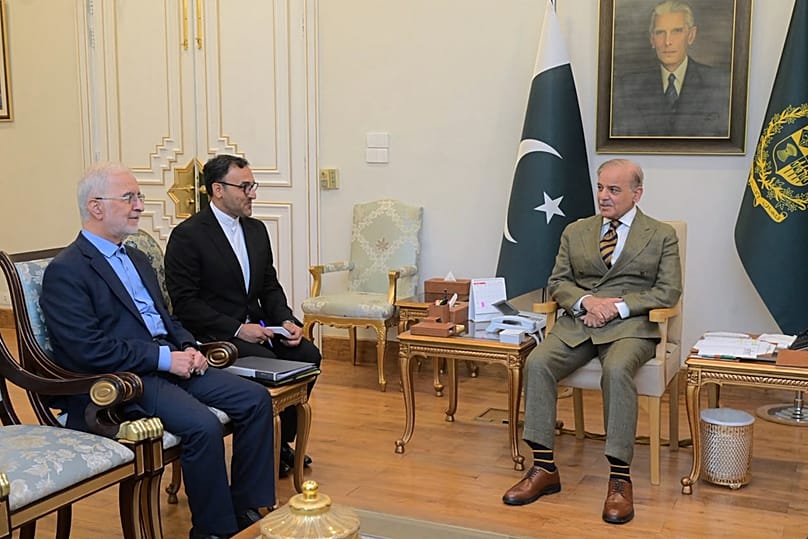
Pakistan's Prime Minister Shehbaz Sharif expressed "deep concern" over the escalating conflict, urging "all sides to exercise restraint and refrain from actions that could further destabilize the region," according to a statement by the Prime Minister's Office on X.
The statement comes as Sharif held close-door talks with Iran's Interior Minister Eskander Momeni on Tuesday. Momeni also met with Pakistan's army chief, Field Marshal Asim Munir, who played a key role in brokering last month's interim deal.
However, on Tuesday, US President Donald Trump said Washington had "no interest" in talks with Iran for now, while signalling further escalation by suggesting US forces could soon strike an area near Iran's main sites for uranium enrichment.
"They want to desperately meet. And until they're ready to meet in a meaningful way, we have no interest in meeting," he told reporters in the Oval Office.
It comes as the US military said it completed its 11th night of strikes on Iran early Wednesday, striking military assets.
"CENTCOM assets targeted Iranian military operations centers, maritime capabilities, aircraft hangars, drone storage facilities, and military logistics infrastructure to further degrade Iran's ability to threaten commercial shipping in the Strait of Hormuz," it wrote in a statement on X.
The US Central Command added that over the past three months, Iran attacked more than 30 commercial vessels transiting the waterway.
On Tuesday, a tanker came under attack, forcing the crew to abandon the vessel. Iran's Revolutionary Guards claimed responsibility for this attack.
Meanwhile, Iranian state media reported several explosions across Iran, and said its air defence was triggered near Tehran.
"News sources reported that air defence activity was heard in the west, east and northeast of Tehran," state TV posted on Telegram.
On its end, Iran has kept up its attacks against US allies, striking targets in Bahrain, Jordan and Kuwait. Earlier, Tehran also warned it would bomb its own territory rather than allow US forces to occupy it.
The war between the US and Iran has lately become a battle for control over the Strait of Hormuz. Both sides have also targeted civilian infrastructure in an effort to gain leverage.
The critical waterway carried roughly a fifth of the world's crude oil and natural gas before the conflict erupted. On Wednesday, the price of Brent crude, the international benchmark, rose to $92 per barrel.
The Iran war cost the United States $37.5 billion
US Defence Secretary Pete Hegseth told Senate on Tuesday that the Iran war cost the United States $37.5 billion (€32.9bn), an increase from the previous estimate of nearly $29 (€25.4bn) billion in mid-May.
Hegseth defended the Trump administration's request request for $67 billion (€58.7bn) in supplemental funding to cover the costs of the Iran war, calling the request "urgent" and "necessary."
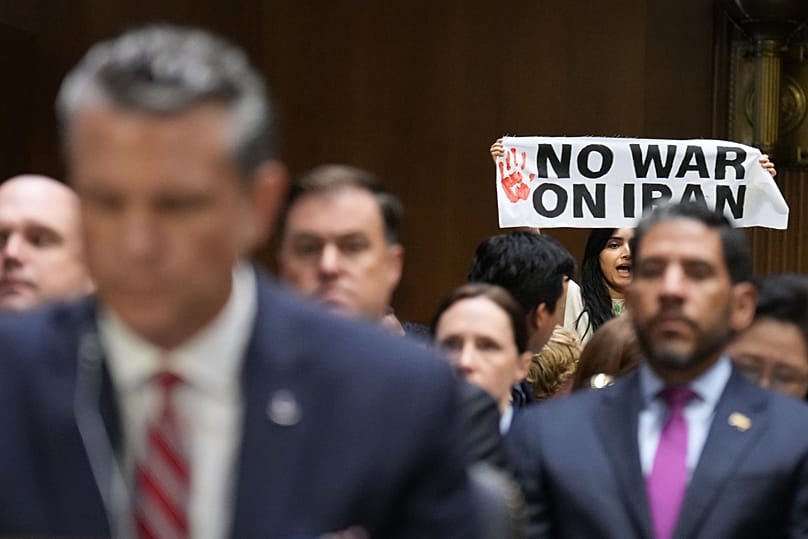
Hegseth's testimony during the Senate committee was briefly interrupted by protesters. Several Republican lawmakers have repeatedly expressed concern that the prolonged war in Iran could act as a growing political liability for US President Donald Trump and the Republican party ahead of midterm elections.