






























Iran launched waves of attacks across the Gulf in response to US airstrikes the night before, signalling the Islamic Republic’s refreshed strike capabilities, while claiming sole control of the Strait of Hormuz. The Gulf states are once again on the frontlines of the growing US-Iran confrontation.
In scenes reminiscent of the first days of the US-Iran war, Iran unleashed waves of major, simultaneous missile and drone attacks across the Gulf on Sunday morning, targeting Qatar, the UAE, Bahrain, Kuwait, Jordan and Oman, following another night of US airstrikes across southern Iran, in response to a new Iranian military strike on a ship in the Strait of Hormuz.
 ADVERTISEMENT
ADVERTISEMENT
ADVERTISEMENT
Following the attacks, Iran’s Revolutionary Guard (IRGC) warned that “the time for restraint is over” and that new US attacks "will result in even more devastating responses," while insisting it alone must control the navigation through the Strait of Hormuz and declaring it closed for navigation on Sunday.
“The era of one-sided deals is OVER,” Mohammad Bagher Ghalibaf, the speaker of Iran’s parliament and a main negotiator, proclaimed in a statement on X, adding that “we told you: keep your word or pay the price. Reality is knocking,” in reference to Iran's claim of sovereignty and control of the Strait of Hormuz and the US-Iran framework deal to end the war.
As the parallel war of words rages on, US president Donald Trump told NBC on Sunday that “we bombed the hell out of them last night,” just days after he said he thought that the US-Iran agreed framework deal to end the war was over.
Tehran signalled on Sunday that it has rebuilt some of its ballistic missile and drone striking capabilities and that it is now actively following up on its threats that any further US strikes can trigger Iran attacking the Gulf countries and the US targets on their territories, as it did during the first weeks of the war.
The Gulf states once again found themselves on the frontline – or the grey area - of the growing confrontation between Iran and the US with the Strait of Hormuz as the focal point of diplomacy now conducted by matching, escalating military action.
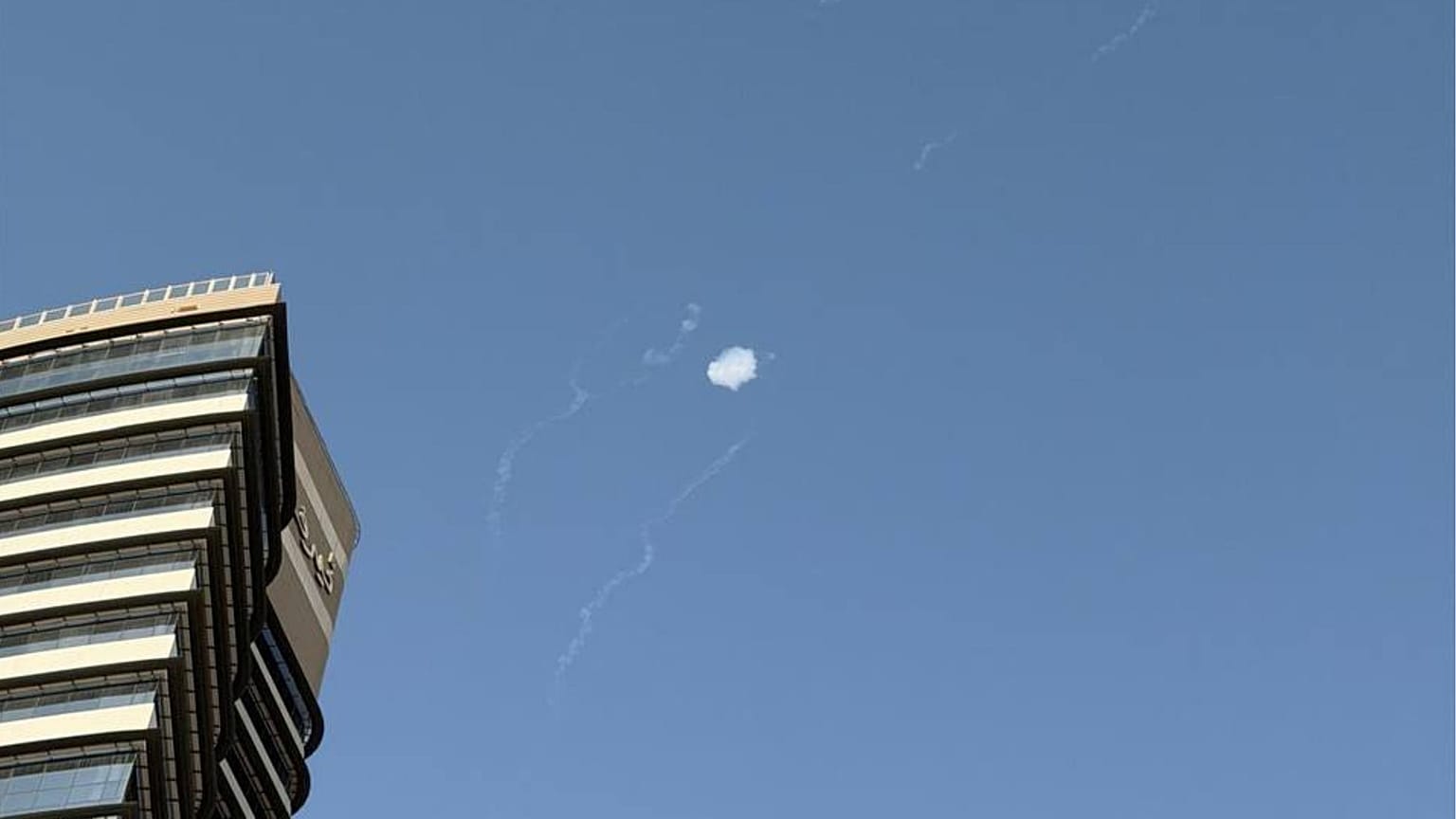
Euronews’ Qatar bureau journalists reported two waves of Iranian attacks within two hours on Sunday morning, observing several Iranian ballistic missile interceptions above the city, followed by loud booms and shockwaves across the capital, at the same scale as the first days of the Iran war.
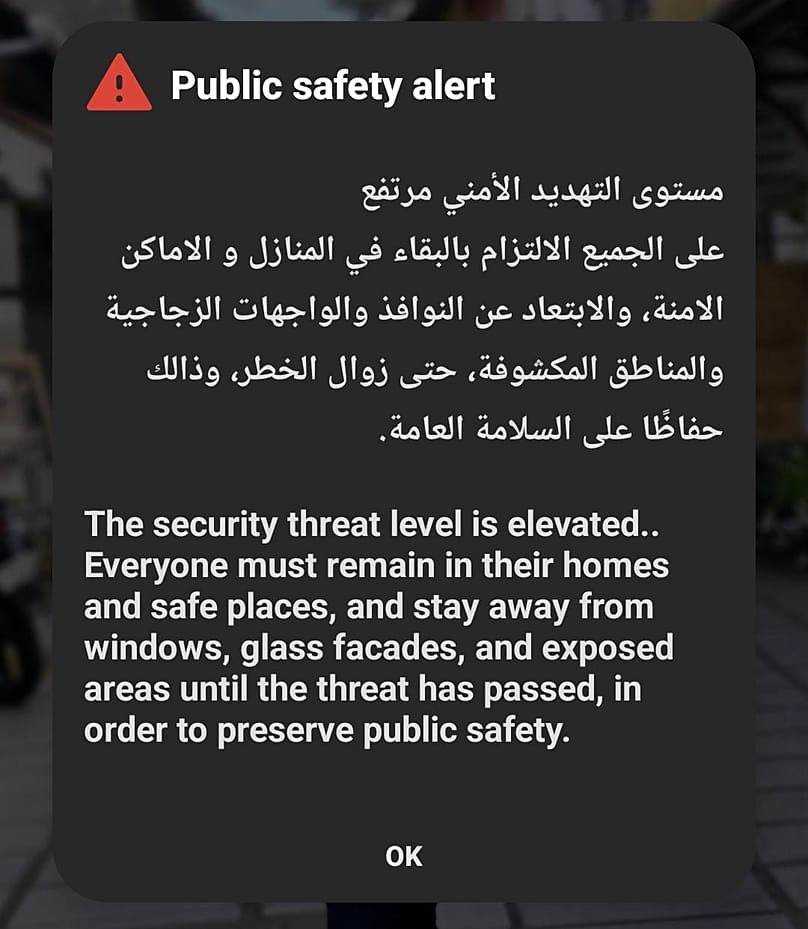
National emergency air raid alerts rang out twice on mobile phones in Qatar, the first at 05:36 local time and the second one at 07:13 for the second wave, as Qatar’s Interior ministry urged residents to shelter indoors, stay away from windows, raising the country’s security threat level to high, once again.
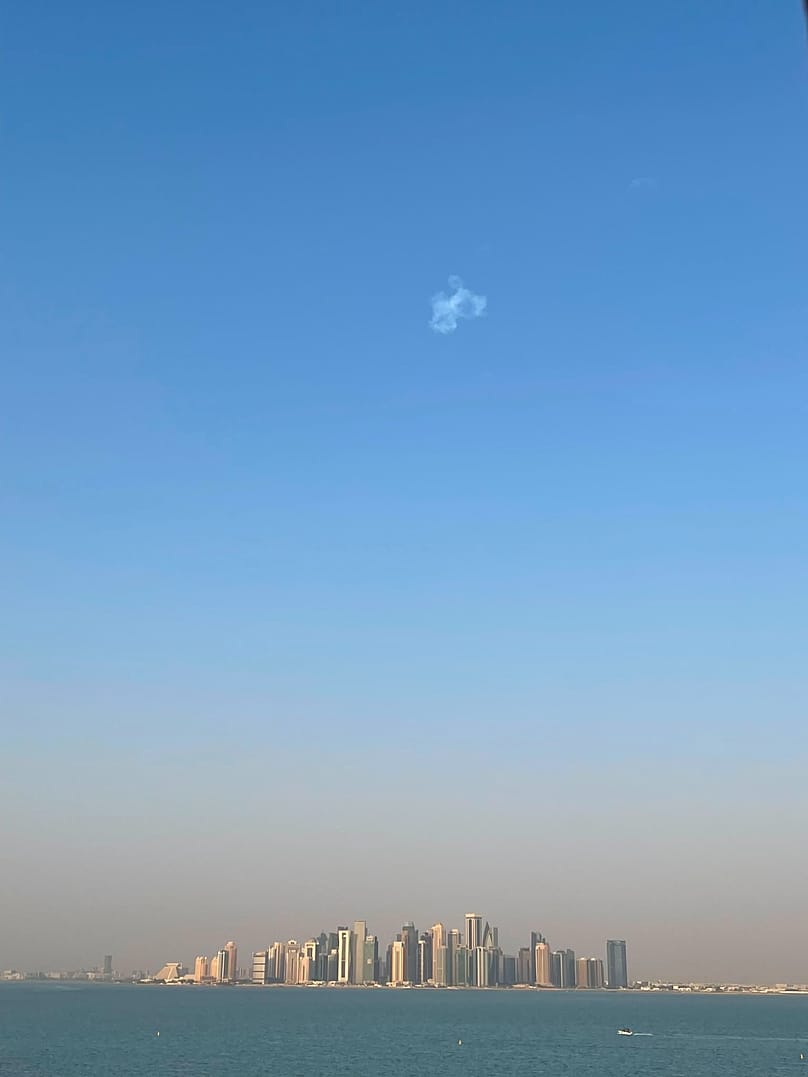
Qatar announced that it intercepted the incoming ballistic missiles and later announced that three people, including one child, were injured by falling debris from interception operations and were being treated in hospital.
Iran's Revolutionary Guard (IRGC) announced that it targeted the Al-Udeid US airbase in Qatar, the largest in the region, claiming that it destroyed a command center and an aircraft maintenance facility, but neither Qatar, nor the United States commented on the Iranian claims.
Euronews journalists in the Gulf observed a sense of disbelief to the early morning raids, in a combination of resilience and calm with the eerie feeling of “here we go again” and that the war is here to stay after all, despite all the efforts to mediate and push for a resolution of the conflict which has massive economic consequences for the Gulf nations.
Qatar’s Foreign Ministry condemned the Iranian attack, stating that “the continuation of these aggressions represents a dangerous escalation that will complicate efforts aimed at containing tensions, undermine political and diplomatic endeavours aimed at achieving security and stability in the region, and holds the Islamic Republic of Iran fully legally responsible for these aggressions and all their repercussions and consequences.”
It also called on all belligerent parties for a “serious return" to negotiations, a constant demand by the Gulf countries.
“The necessity of an immediate and complete cessation of all military actions and aggressions that threaten the security and stability of the region, refraining from anything that could expand the scope of escalation, and a serious return to the path of dialogue and negotiations, and adherence to the understandings achieved through diplomatic efforts,” Qatar’s foreign ministry statement said.
At the same time, the UAE announced that its air defence systems were engaging Iranian missiles and drones, urging residents to shelter as well, while reassuring them that the explosions being heard were the result of air defence interceptions of Iranian missiles, Euronews journalists from the UAE reported during the attacks.
Later on Sunday, the UAE Ministry of Defence announced that the threats were outside the country’s borders and that its tracking systems were at the highest levels of readiness to engage any Iranian attack.
In parallel, Kuwait's army command announced that it was engaging "hostile aerial targets," urging residents to shelter, Bahrain said it activated its air defences to respond to Iran's attacks, while Iran also claimed it attacked the Prince Hassan airbase in Jordan, destroying a number of facilities.
In a rare move as to its intentions, Iran claimed it also struck American naval assets in the port of Duqm in Oman, just the day after Iran’s Foreign Minister Abbas Araghchi visited Muscat for talks on the Hormuz shipping lanes and navigation framework amid Tehran’s continuous efforts to convince Oman to establish a joint maritime mechanism to control the waterway.
Oman did not confirm Iran’s Sunday strikes claims, but said that the attack targeted facilities in the Al Wusta and Musandam Governorates, which could indicate the deep-water port of Duqm, linked to US military assets and operations as well as a regional maritime focal point, and the port of Khasab with its strategic position for operations in the Strait of Hormuz.
The US embassy in Muscat issued shelter in place guidance for US citizens in the two governorates, urging them to consider commercial departure options.
The Sultanate of Oman announced that after the attacks it summoned the Iranian ambassador “to hand him a formal note of protest following the targeting of sites in the Governorates of Musandam and Al Wusta by unmanned aerial vehicles,” and to voice “the Sultanate of Oman’s profound dismay at these irresponsible acts.”
Hours before Iran unleashed its attacks across the Gulf, the US military’s Central Command CENTCOM said it hit some 140 targets in Sunday’s strikes in Iran including missile and drone launch sites, ammunition dumps, communication equipment and other sites, aiming to weaken Iran’s ability to threaten shipping in the Strait of Hormuz.
The US strikes were conducted in response to a new Iranian attack on a Cyprus-flagged container ship in the Strait of Hormuz on Saturday, setting it ablaze and forcing its crew to abandon it. One sailor was reported missing.
Iran said at least nine different cities in five provinces were attacked by the United States and semi-official Iranian news agencies reported that a navy officer was killed.
The US has launched three rounds of airstrikes targeting Iran in the last week over Iranian attacks on ships heading through the strait using a route off Oman, seeking to avoid the Islamic Republic’s territorial waters.
Later on Sunday Iran claimed that the Strait of Hormuz is now totally closed “until stability is restored,” and that any ship attempting to cross would be attacked, but US Central Command CENTCOM contradicted Tehran claims, saying that the strait is still open to navigation through the US-established southern transit corridor in Omani waters.
“As soon as stability and calm are restored all requests will be reviewed based on the schedule, and the necessary permits will be issued,” Iran’s Persian Gulf Strait Authority said in a statement on Sunday, blaming “the recent illegal movements of the United States military forces in the region”.
Mohsen Rezaee, an advisor to Iran’s supreme leader, repeated Iran's Hormuz doctrine on Sunday, stating that “Hormuz acts as a strategic deterrent, and Iran will protect the country’s interests and security by relying on its defence capabilities and national strength,” the Tasnim news agency reported.
The Strait of Hormuz is “one of the components of the country’s deterrence and plays a decisive role in ensuring security and national interests,” the Iranian official said.
CENTCOM contradicted Tehran by announcing in a statement that “Iran does not control the Strait of Hormuz. It remains an international waterway. US forces are positioned and prepared to keep it that way.”
US president Donald Trump told the US media on Sunday that the Strait of Hormuz is “open” to navigation and that Iran had agreed to what he called a “perfect deal for us” by which “they gave up everything.”
“Within an hour, they launched a drone at a ship,” Trump added blaming Iran’s “sick” leadership and as a result the US “bombed the hell out of them last night.”