


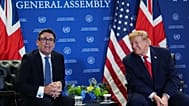














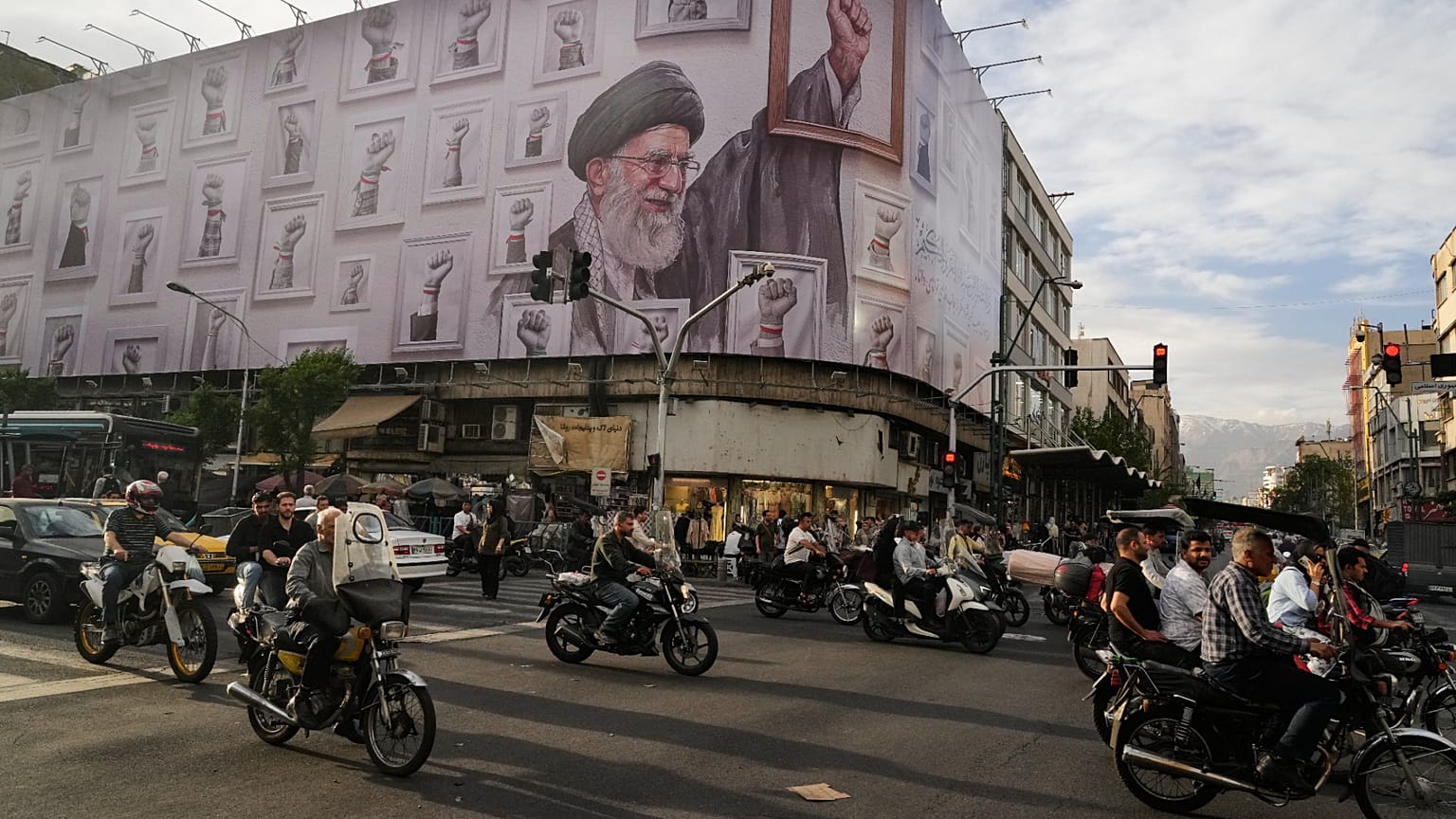













Shortly after the first high-level US-Iran negotiations ended, discrepancies emerged over what the two sides actually agreed, as Tehran moved to directly contradict US Vice President JD Vance’s statements, prompting US President Donald Trump to reject Iran's claims.
Within hours after the US-Iran negotiations concluded in Switzerland, Iran’s leadership moved to contradict Washington on multiple points while cautiously operating within the signed framework deal — or at least Tehran's interpretation of it — sparking US President Donald Trump's ire on Tuesday.
 ADVERTISEMENT
ADVERTISEMENT
ADVERTISEMENT
The US president dismissed what he said were Tehran's "false statements" on key unresolved issues that are preconditions to a long-term agreement between the two sides, including nuclear watchdog inspections, unfreezing funds and lifting sanctions, and Israel’s offensive against Hezbollah in Lebanon.
"Despite their protestations and false statements to the contrary, coupled with the drumbeat of the fake news, which is doing everything possible to make the US victory as small and insignificant as possible, Iran has fully and completely agreed to highest level nuclear inspections long into the future (infinity!!!)," Trump said in a Truth Social post on Tuesday.
"This will ensure 'nuclear honesty,'” Trump added. "If they did not agree to this, there would be no further negotiations."
The US president said that he "agreed to allow the Hormuz Strait to remain open with no further naval blockade" due to this and "other major concessions made by Iran".
"However, all ships are remaining in place should it be necessary to reinstitute the blockade, which seems, at this point, highly unlikely," Trump said.
Iran’s leaders have moved fast with their own rapid-fire diplomatic engagements, with Iran’s President Masoud Pezeshkian travelling to mediator Pakistan, while Iran’s chief negotiators — parliament speaker Mohammad Bagher Ghalibaf and Foreign Minister Abbas Araghchi — went to Oman for talks on what they called the joint management of the Strait of Hormuz.
Before departing Tehran, Pezeshkian said progress would depend on the "precise implementation" of commitments undertaken by all parties and warned against interpretations that go beyond the agreed text.
Iran and the US have begun implementing their recently agreed memorandum of understanding — marking the start of a 60-day diplomatic process aimed at reaching a permanent deal to end the Iran war — by establishing a joint oversight mechanism and four specialised working groups, despite major disagreements now surfacing.
Iran’s Foreign Ministry spokesman Esmail Baghaei contradicted US Vice President JD Vance on Tuesday by stating that no visits have been scheduled for International Atomic Energy Agency (IAEA) inspectors to examine Iranian nuclear sites bombed by the US last June.
Part of Iran's nuclear material stockpile, which the US accuses Tehran of attempting to purify to weapons-grade level, has been buried under the rubble since then. Iran has rejected having any plans of creating nuclear weapons, while insisting it has a right to maintain its stockpile of radioactive materials.
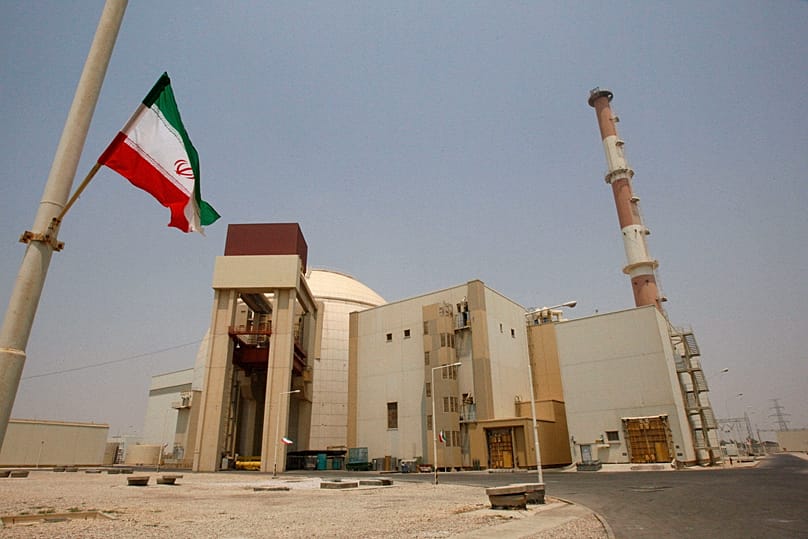
“Iran has no plans to allow IAEA inspectors to enter nuclear sites that were damaged during the war,” Baghaei said, adding that Iran made "no new commitments" on nuclear materials, a crucial long-term demand by Washington.
At the end of the negotiations in Switzerland on Monday, Vance said the talks had secured an agreement for the IAEA to inspect the sites, but Tehran declared on Tuesday that the “nuclear issue” talks would start only after all other clauses had been negotiated.
Baghaei said US claims on Iran’s nuclear commitments are "very damaging" and that IAEA inspectors, whom Iran calls "America's foot soldiers," would violate the MOU had they gone to Iran.
Tehran also claimed that Iran and the US “did not discuss our missile capabilities during the negotiations and we will not discuss this issue with anyone in the future.”
Ghalibaf, who also serves as Iran’s chief negotiator, further contradicted Vance, who claimed on Monday that "no money is being released to Iran."
Ghalibaf said on Tuesday that Tehran obtained the immediate release of $12 billion in frozen Iranian assets in two separate $6 billion tranches through Qatar’s mediation.
Iran also stated on Tuesday that it will decide how to use the unfrozen funds “with no restrictions on how they can be spent.”
Trump seemingly contradicted this in his Truth Social post on Tuesday, saying that "the money and/or sanctions that the US Treasury is releasing goes into escrow, controlled by the USA, and will be used for the purchase of food and medical supplies, exclusively from the United States, including corn, wheat, and soybeans from our great American farmers."
"These are things that are desperately needed by Iran. This is a humanitarian crisis, and I feel it is necessary to help, now, before it is too late. Talks are going well," Trump concluded.
Tehran has dismissed using the unfrozen funds for purchases from the US, saying it "no obligation to buy agricultural products from the United States" under the existing deal.
Hormuz never going back to how it was
On the reopening of the Strait of Hormuz, after the US said negotiators discussed “mechanisms” to ensure that the Strait of Hormuz remains open, chief Iranian negotiator Qalibaf said on Tuesday that “everyone should know that management of the Strait of Hormuz will never return to the way it was before the war."
Meanwhile, Iran’s Ambassador to the UN in Geneva Ali Bahreini said that “the main talks on the Strait of Hormuz will be between Iran and Oman, followed by parallel discussions with the parties to the MOU.”
Ghalibaf and Araghchi met with Sultan Haitham bin Tariq of Oman in Muscat on Tuesday to discuss the "joint management" of the Strait of Hormuz, with the former announcing after the meeting that Tehran and Muscat have formed a committee to administer the key waterway.
Oman and Iran said that arrangements for the Strait of Hormuz must respect both countries' sovereignty, reaffirming their commitment to keeping the waterway open to international shipping, according to the Oman News Agency.
The Strait of Hormuz is some 38 kilometres wide at its narrowest, meaning both Iran and Oman already operate the waterway, which normally carries one-fifth of the world's oil and LNG shipments, as well as other cargo.
Muscat had previously rejected Tehran's claims that it would introduce tolls on passing ships and implications that Iran would collect transit fees together with Oman, stating that no fees can be legally imposed because the Strait of Hormuz is a natural, not man-made, passage.
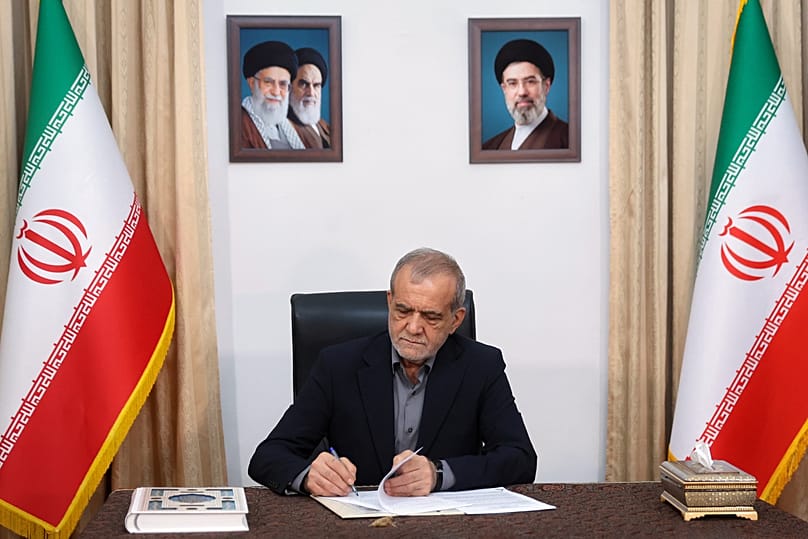
From Muscat, Araghchi flew to Islamabad to join Pezeshkian, while Ghalibaf is expected to visit China in the near future, as Tehran coordinates the implementation of the agreement with regional and international partners, the Iranian foreign ministry said.
Araghchi is also planning to visit Baghdad on Wednesday, according to the ministry.
Despite the sharp contradictions, Baghaei confirmed the creation of a "High Committee for Follow-up of the Implementation of the Memorandum of Understanding", comprising representatives from Iran, the US and the two mediator countries, Pakistan and Qatar.
According to Baghaei, the working groups have already begun their activities and will continue meeting in the coming days as implementation efforts move forward.
Meanwhile on Tuesday, navigation data from global maritime data company Kpler showed 39 vessels passed through the Strait of Hormuz on Monday, reaching its highest level since the outbreak of the war, but still far below the pre-war volume.
Of the 39 passing vessels, over a dozen were said to be Iranian tankers transporting Iranian crude oil towards Asia, following the lifting of the US sanctions and the US military blockade as part of the signed framework deal.
The US Treasury recently issued a general licence permitting the production, transportation and sale of Iranian crude oil, petroleum products and petrochemicals until 21 August.
In a separate post on Truth Social on Tuesday, Trump said that "19 million barrels of oil flowed out of the Hormuz Strait yesterday, an all time record."
"Oil prices are tumbling down, and the world is a much safer place," he added.
Between 17 and 20 million barrels passed through the strait per day in the years leading up to the Iran war, which began on 28 February with joint US-Israeli strikes on the country.
War in Lebanon still a hurdle
Tehran also reiterated its key position on Tuesday that “if Israel violates the MOU in any form, including by attacking Lebanon and Hezbollah in Lebanon, Iran will respond.”
In the initial talks, Iran and the US agreed to create a “de-confliction cell” to address the fighting in Lebanon between Israel and the Iranian-backed Hezbollah militant group.
Meanwhile, violence flared again in southern Lebanon on Tuesday, threatening the fragile ceasefire there as Israeli soldiers opened fire, killing two people, AP reported.
Iran has demanded that a full ceasefire in Lebanon be part of any comprehensive deal.
The latest Iranian statements, even if in contrast with those from the US side, do lack the previous fiery load of Tehran lashing out at Washington, mirroring US President Donald Trump’s point made on Monday night that " as long as they respect us, we’re not going to have any trouble.”
Former head of Israel’s military intelligence research department and Atlantic Council non-resident fellow Danny Citrinowicz said that said Iran's leadership had shown the same pragmatism under Ayatollah Mojtaba Khamenei as under his late father when the regime's survival was at stake.
“Contrary to the common perception in some Western circles, Iran’s leadership is not simply an irrational or isolated group driven solely by ideology. Rather, it has repeatedly demonstrated a capacity for ideological adaptation when necessary to secure the long-term survival of the Islamic Republic,” Citrinowicz said in a post on X.
“The regime’s leaders are willing to adjust tactics, policies, and even aspects of their rhetoric when doing so serves the broader objective of preserving the revolution and ensuring its continuity."
"In that sense, what we are witnessing is not ideological moderation, but strategic pragmatism: a leadership seeking to protect the system by adapting it to changing circumstances while safeguarding the principles it considers essential,” the Israeli analyst concluded.