


















The 2026 World Cup will be the first with 48 teams, 104 matches and three host nations. With record figures, extreme heat risks and Super Bowl-style spectacle, the North American tournament promises to break the mould.
The 2026 football World Cup will not only be the biggest in history; it also looks set to become one of the most unusual and ambitious tournaments FIFA has ever organised. From record-breaking numbers and extreme heat to a Super Bowl-style show, the 2026 World Cup is set to bear little resemblance to any previous edition.
 ADVERTISEMENT
ADVERTISEMENT
ADVERTISEMENT
Here are five unusual features that will define the tournament, to be held between 11 June and 19 July in the United States, Canada and Mexico.
1. First World Cup with 48 teams
For the first time, 48 teams will take part, up from the 32 at Qatar 2022. The new format will feature 12 groups of four teams and will increase the total number of matches from 64 to 104.
The expansion will also lengthen the tournament, which will now run for 39 days. The revamped format will also allow more teams from Africa, Asia and CONCACAF to qualify, as part of FIFA's attempt to broaden the competition's global representation.

2. Three countries to host the same World Cup
The United States, Mexico and Canada will share hosting duties for the tournament for the first time. Never before has a men's World Cup been split between three host nations.
In total, there will be 16 host cities across North America, from Vancouver to Mexico City and Miami. The United States will stage most of the matches, including all knockout ties from the quarter-finals onwards.
3. The Azteca Stadium will make history
The Azteca Stadium in Mexico City will become the first venue to host matches at three different men's World Cups, after the 1970 and 1986 editions. The tournament will kick off there.
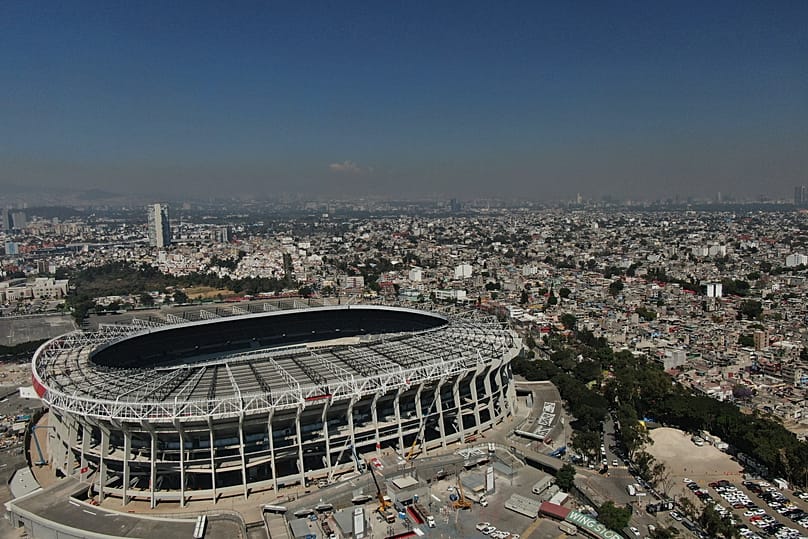
The Azteca also hosted two of the most memorable World Cup finals in history, won by Pelé's Brazil in 1970 and by Maradona's Argentina in 1986.
Pelé's legacy also remains very much alive at the stadium: Mexican authorities have recently installed a large statue of the Brazilian outside the ground ahead of the 2026 World Cup.
4. Heat, a concern for players and experts
One of the major talking points around the 2026 World Cup will be not only the football but also the weather.
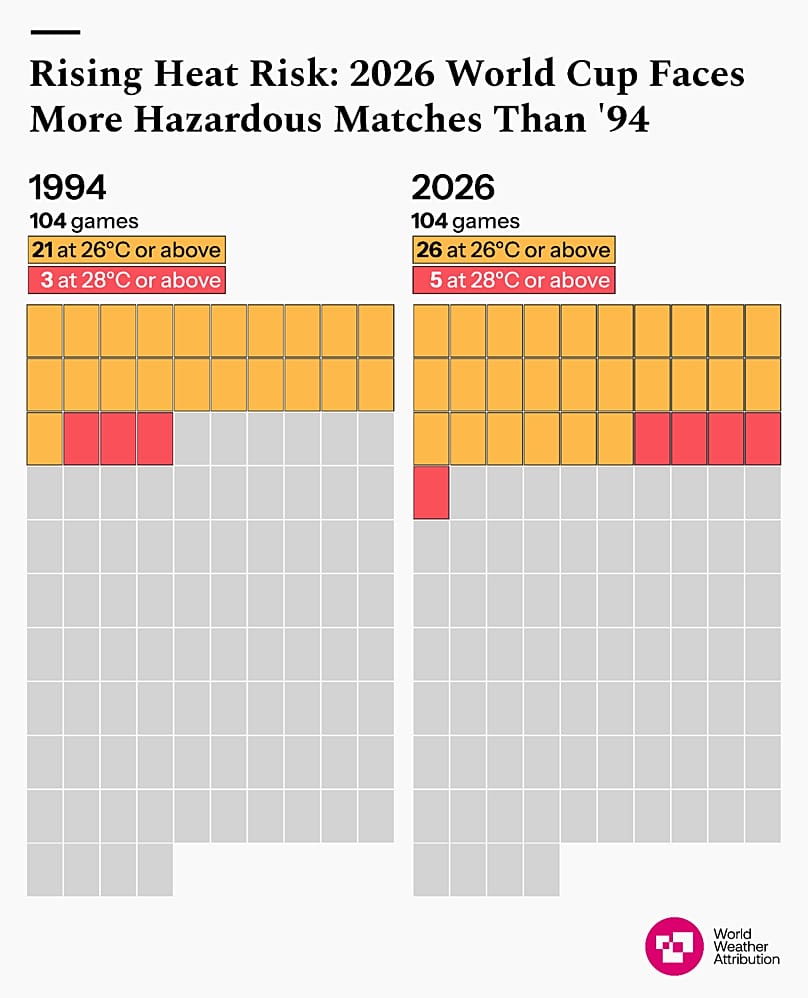
A report by World Weather Attribution (WWA), an international scientific initiative that studies extreme weather events, warns that nearly a quarter of the matches could be played in potentially dangerous heat for players and fans.
Cities such as Miami, Kansas City and Philadelphia are among those most exposed to high temperatures and humidity during June and July. FIFA is already considering cooling breaks and other protective measures.
In an open letter coordinated by the New Weather Institute think tank and the Cool Down Sport for Climate Action network, experts in health, sporting performance and climate have warned that these breaks are 'too short to have a significant impact on rehydration and cooling the body'.
In their letter, experts say that FIFA's current guidelines on heat are 'impossible to justify' and have urged the federation to adjust them in line with the recommendations of the International Federation of Professional Footballers' Associations (FIFPRO).
5. A World Cup ever more geared towards entertainment
FIFA is also looking at introducing a musical performance during the half-time interval of the final, inspired by formats common at major US sports events such as the Super Bowl.
The final will be played at New Jersey's MetLife Stadium, one of the United States' major sporting venues and a regular stage for concerts and large-scale events.
A musical performance is a first for a men's World Cup final, where entertainment has traditionally been concentrated before kick-off or in the opening and closing ceremonies.
According to FIFA, artists such as Shakira, Madonna and South Korean group BTS will headline the half-time show at the final, in a performance produced together with the organisation Global Citizen and featuring Chris Martin, the Coldplay frontman.