


















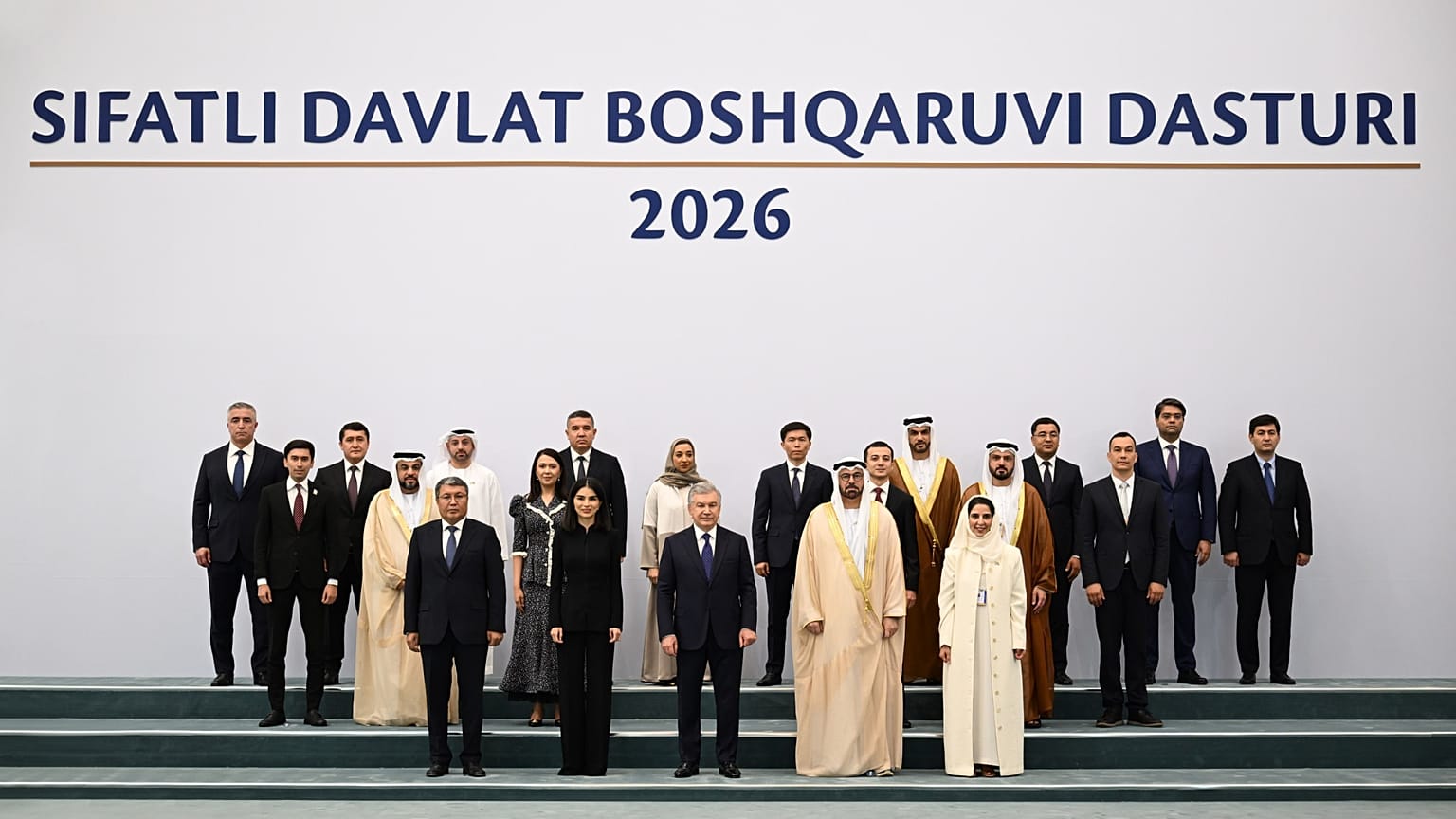














Joint Uzbek and Emirati evaluation teams reviewed ministries and agencies using criteria including transparency, digitalisation and service delivery. Officials say future assessments will place greater emphasis on measurable results.
Uzbekistan has expanded a UAE-backed programme evaluating the performance of state institutions, with 41 ministries, agencies and committees undergoing independent assessment this year, more than double the number reviewed in the previous cycle.
 ADVERTISEMENT
ADVERTISEMENT
ADVERTISEMENT
The assessments culminated in an awards ceremony in Tashkent attended by Uzbekistan President Shavkat Mirziyoyev and UAE Minister of Cabinet Affairs Mohammed Bin Abdullah Al Gergawi.
As governments around the world increasingly rely on performance indicators, digitalisation benchmarks and service delivery metrics to assess public institutions, Uzbekistan is using the programme to evaluate ministries, agencies and civil servants against a range of administrative criteria.
The programme is designed to measure how effectively state institutions operate and whether reforms are producing visible results for citizens. It is based on the UAE Government Excellence Programme and has operated in Uzbekistan since 2019 as part of a broader cooperation framework between the two countries on public administration reform.
“If government institutions resolve people’s problems and the pressing issues affecting them in a timely and fair manner, public trust in the state increases significantly,” Mirziyoyev said during the ceremony.
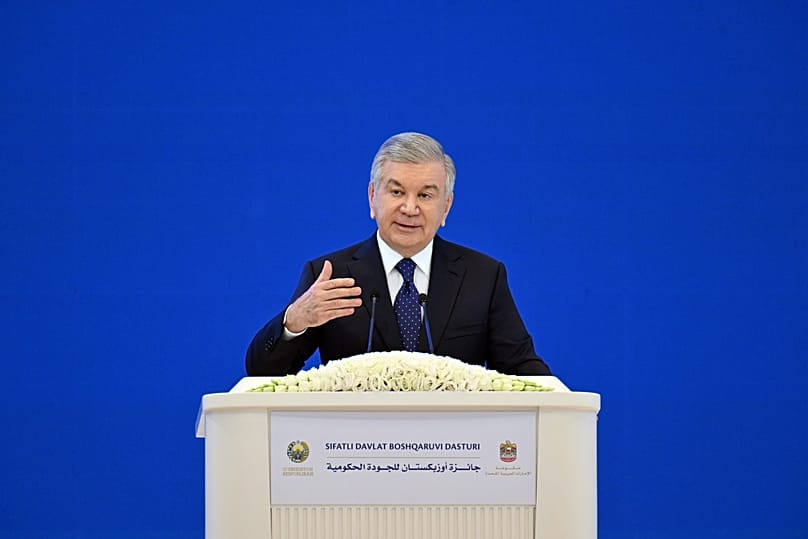
“Taking this into account, we are paying special attention to introducing new and advanced approaches in public administration.”
According to Uzbek officials, joint teams of local and Emirati evaluators spent several months reviewing ministries and agencies against criteria including digitalisation, transparency, internal management systems and public service efficiency.
Abdulla Abdukadirov, Director of Uzbekistan’s Agency for Strategic Development and Reforms, said the latest cycle significantly expanded the programme's scope.
“Last year it was 17. And this year, as you can see, the number was increased significantly because we decided to cover not only the big ministries, but also committees and agencies,” he told Euronews.
Abdukadirov said evaluators focused less on formal reporting and more on how institutions actually functioned.
“It was more about the digitalisation of the process and the transparency of the whole process of managing,” he said.
“Are they systematic? Are they digitalised? And is there any lack between the understanding of the tasks at different levels?”
From process to results
One example highlighted during this year’s assessment was the Ministry of Internal Affairs, which was recognised for public service delivery after significantly expanding the number of services available online.
Deputy Interior Minister Zafar Kurbanov said 55 of the ministry’s 62 services are now provided electronically, compared with around 20 services in 2020.
“This allows citizens to receive services within minutes through the government services portal,” he said.
The programme also introduced individual categories recognising civil servants, including awards for young professionals, HR specialists and women working in public administration.
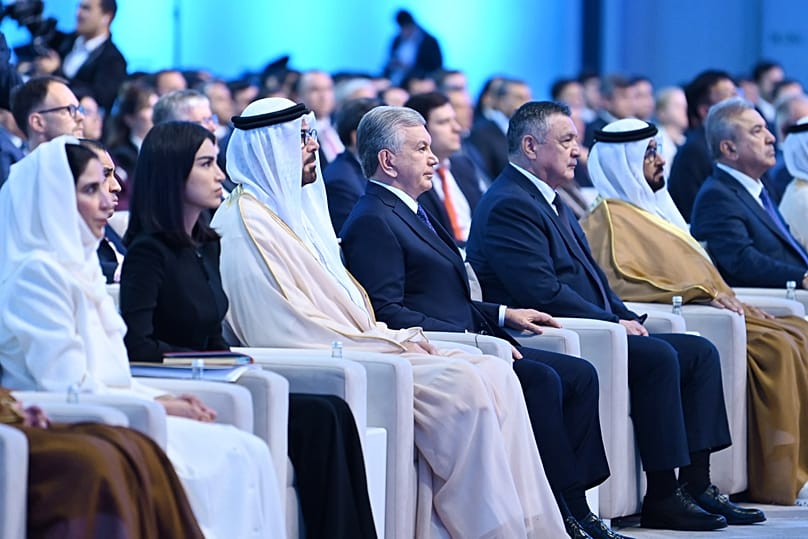
Officials say the broader objective is to encourage institutions to focus on measurable outcomes rather than administrative procedures alone.
In his address, Mirziyoyev said the principle of “working for results” would become central to the functioning of state institutions.
“From now on, the principle of working not for the process, but for the result, will become the main criterion in the activities of state institutions,” he said.
He also warned that ministries showing weak performance would face greater public scrutiny in future assessment cycles.
Reducing bureaucracy
A major focus of the programme is reducing bureaucracy and simplifying access to public services.
UAE Assistant Minister of Cabinet Affairs for Government Knowledge Exchange Mohammed Bin Taliah pointed to Uzbekistan’s recently launched “Zero Bureaucracy” initiative as an example of that effort.
“The programme focuses on eliminating bureaucracy in the country and in the government to improve people’s lives and make life better and easier,” he said.
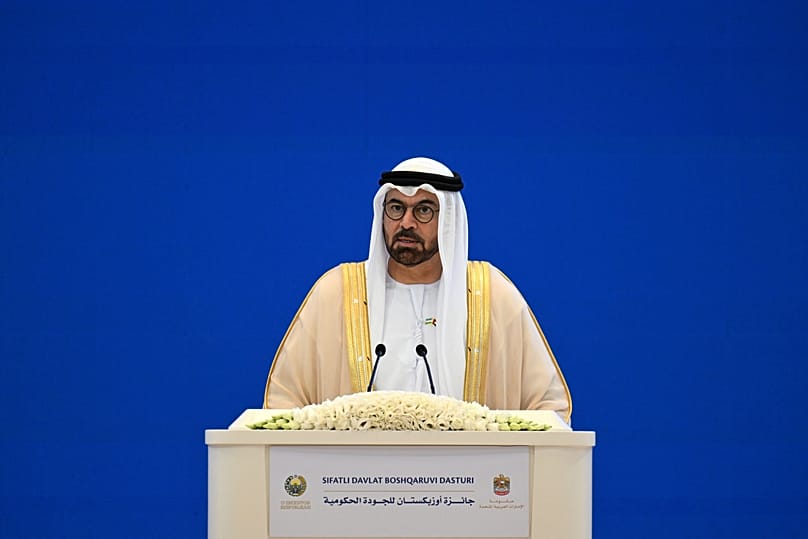
Al Gergawi described the Government Quality Award as part of a wider transformation of Uzbekistan’s administrative system.
“What we are witnessing today in the Republic of Uzbekistan under his leadership is a clear example of the results that can be achieved when political will becomes a work culture,” he said during the ceremony.
He added that the programme aimed to establish “a culture of excellence and innovation in the government sector”.
For some officials involved in the programme, the assessments also carried personal significance.
Director of the Innovation Office at Uzbekistan’s Ministry of Higher Education, Science and Innovation Akbarkhon Sobirkhonov said the competition gave him an opportunity to reflect on nearly a decade in public service.
“For me, this became a way to reflect on the work I have done over these nine years and also to plan the work I want to do in the future,” he said.
The next stages of the programme are expected to place greater attention on measurable outcomes at the regional and local levels, where many public services are delivered directly to citizens.