




























Elon Musk says 90% of driving will be autonomous in a decade. Here's why that's unlikely.
Tesla CEO Elon Musk predicts that self-driving cars could dominate roads in as little as five years, but as with all his bullish statements, they should not be taken too literally.
 ADVERTISEMENT
ADVERTISEMENT
ADVERTISEMENT
"Five years from now and certainly 10 years from now... probably 90% of all distance driven will be driven by the AI in a self-driving car," The billionaire said this week at the Samson International Smart Mobility Summit in Tel Aviv.
"So overwhelmingly, it'll be quite a niche thing in 10 years to actually be driving your own car," he added.
There has certainly been much progress in autonomous driving since artificial intelligence accelerated in 2022. But there are massive hurdles to the technology becoming mainstream on roads so soon.
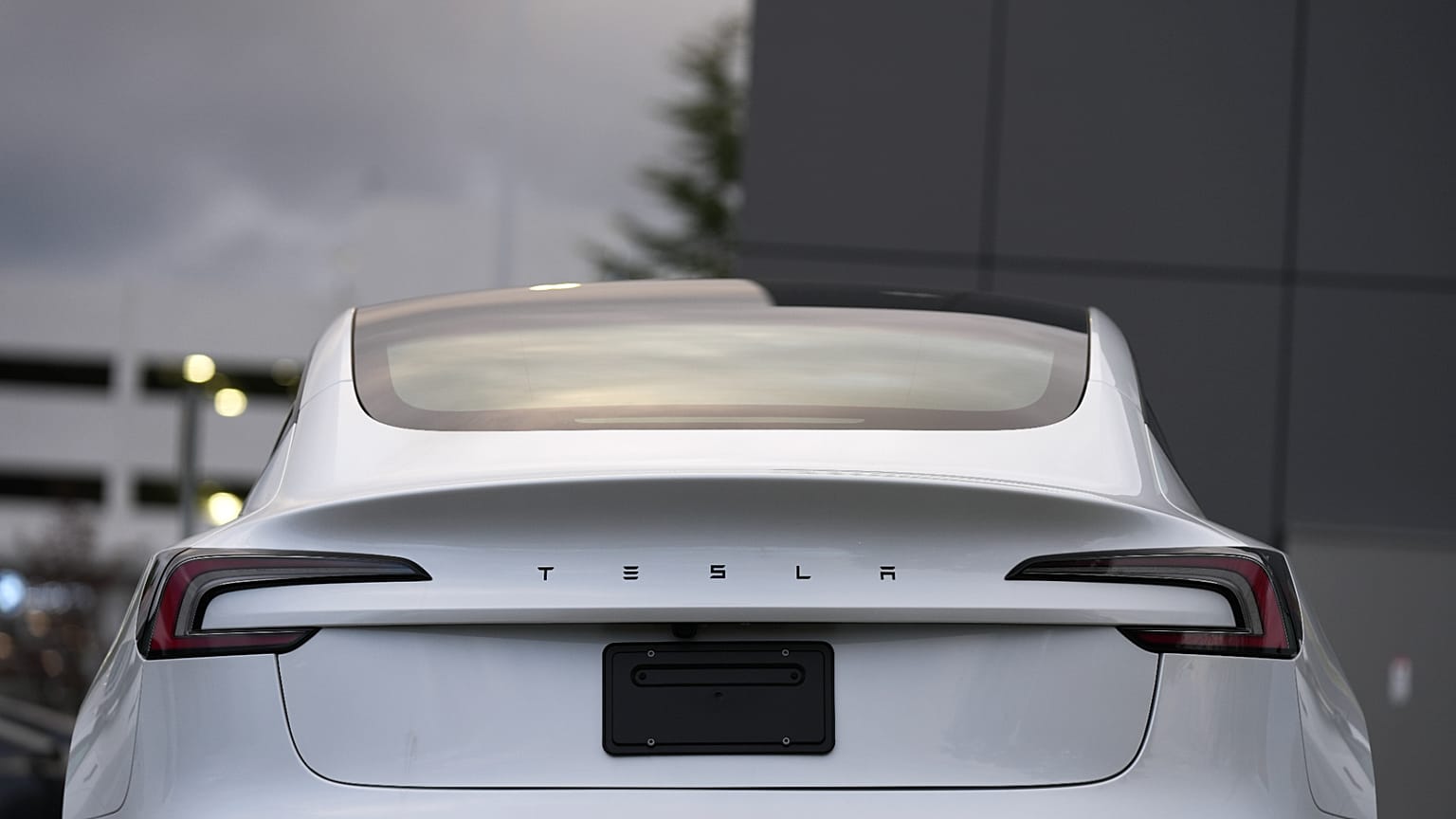
Tesla recalled over 200,000 vehicles in the United States due to issues with rearview camera images, which could increase crash risk, according to the National Highway Traffic Safety Administration (NHTSA).
Other companies do not fare much better. Waymo recalled some 3,800 robotaxis in the US after finding that the car could enter flooded roads at high speeds.
Why Musk's prediction is unlikely
Nvidia's vice president of the automotive team Ali Kani told Euronews Next in January that in Musk’s predicted time frame of five to 10 years, one of the main challenges for autonomous vehicles will be “long tail scenarios”—unexpected situations that systems have not encountered before.
Such an incident occurred last year when the robotaxi service Waymo was suspended for hours as vehicles struggled to read malfunctioning stoplights amid a power outage in San Francisco. Those in the driverless vehicles then found themselves stuck at darkened traffic lights.
Even if fully autonomous vehicles come onto roads, it will not be mainstream and will incur difficulties.
Do not expect a fully driverless world before the mid-2030s at the earliest, and even then it will be patchy and concentrated in specific markets and use case, according to a 2025 report by the World Economic Forum.
Full autonomy in personal vehicles won't be mainstream by 2035, the report found adding that it will still be a niche feature in only 4% of new cars. The closest thing to "mainstream" autonomy will be in robotaxis and autonomous trucks.
However, partially autonomous driving is already on our roads. Level 2+ driving, which means that the driver is still responsible for monitoring the driving environment, but the vehicle can steer, brake, and accelerate is currently more widespread.
Trials are already being announced in major European cities, including London, though the timeline for full regulatory clearance depends on how well the systems perform in real-world conditions.
The acceleration of autonomous driving
Europe currently allows Level 2 systems universally and has already approved Level 3 for controlled conditions. But this is not without its challenges, which have a lot to do with regulation.
Some states in the US and China though are racing ahead wih robotaxis. Level 4 is operational in robotaxis, which means the vehicle operates completely autonomously under certain conditions and humans do not need to be ready to get involved,
China is expected to adopt higher automation levels fastest, driven by consumer appetite and strong domestic manufacturers, according to the World Economic Forum report.
But level 5 autonomy (completely driverless under all conditions) is explicitly "not currently in sight," the International Energy Agency said in a report.
The report projects the global robotaxi fleet will grow to somewhere between 700,000 and 3 million vehicles by 2035, concentrated in 40–80 cities.
While Musk’s prediction may be a bit too optimistic, we are still likely to see the expansion of robotaxis alongside human drivers.