
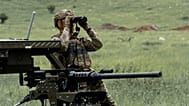






























Finnish preparedness and deterrence against Russian aggression - whether in the form of hybrid attacks, or full-scale invasion, is long-established state practice. Conscripts are trained to be expert snipers; ready for all eventualities at the country's 1,350 km frontier with Russia.
Male conscripts are trained by the army to be expert snipers, to be ready for all eventualities at the country's 1,350 km frontier with Russia.
 ADVERTISEMENT
ADVERTISEMENT
ADVERTISEMENT
At the heavily fortified Finnish border with Russia, Finnish border guards say they’re prepared for all scenarios from hybrid threats such as GPS jamming, drone overflights or weaponizing migration, Finland's deterrence is increasingly seen as a model for all of Europe.
"We're prepared to be part of Finnish territorial defence," Mikko Lehmus, a Finnish border guard tells Euronews.
"We train our conscripts for, if necessary, for all- out war," he says at the Raja-Jooseppi border point.
"Murmansk, home to Russia's nuclear fleet, lies 150-200 kilometres from the border on the Russian side, Lehmus points out.
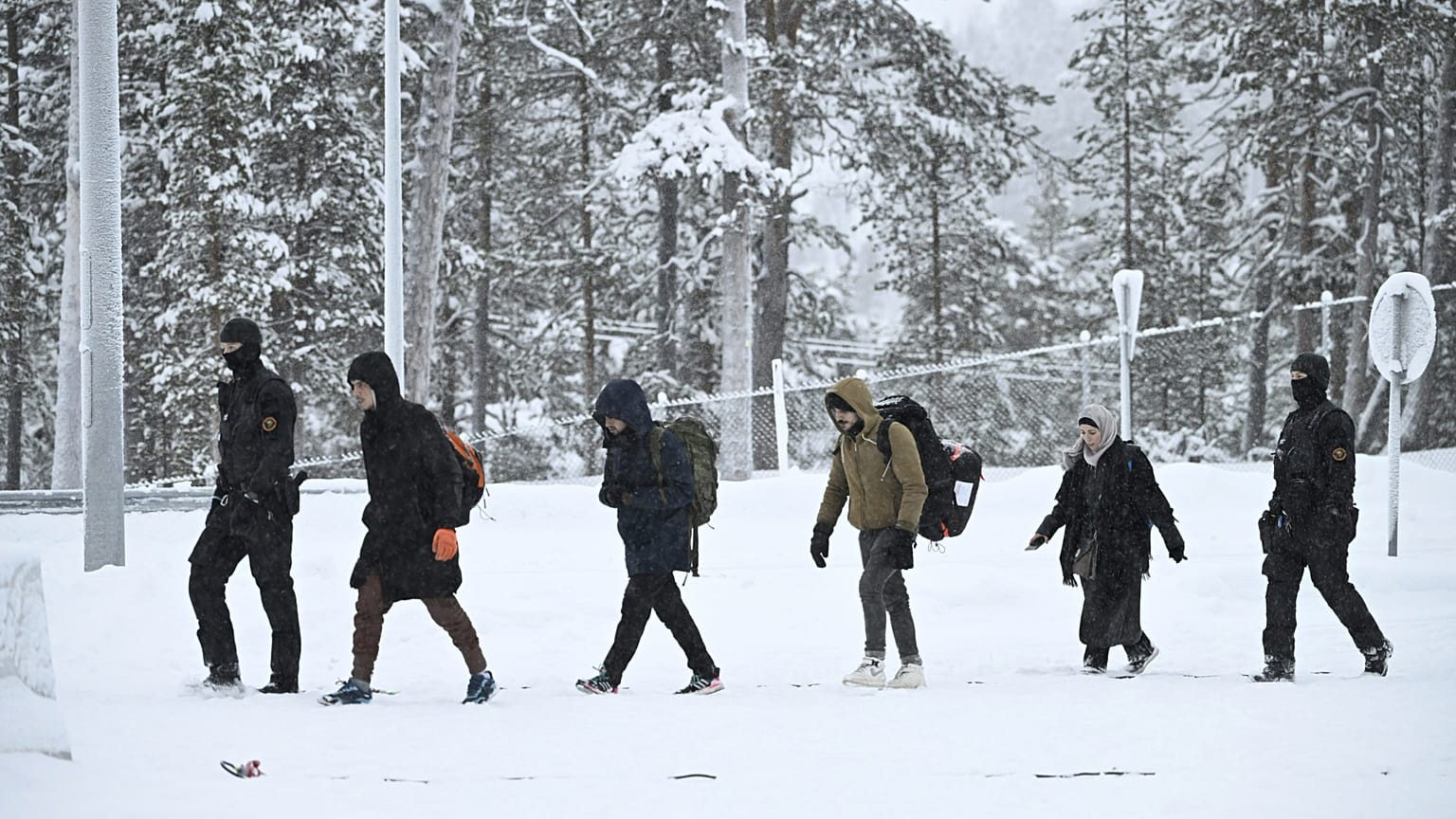
In 2023 Russia sent migrant civilians across the Finnish border as part of its hybrid war waged against Ukraine's allies, seeking to sow division and chaos.
The weaponisation of civilians at NATO and European borders was then a frequent tactic of the Kremlin.
Poland, Latvia and Lithuania responded to similar episodes at their borders with Russian-allied Belarus. Hundreds of migrants, including families with young children, some of whom were forced to cross from Belarus, according to EU and government officials of each country.
In Poland, at least two children, including a one-year-old baby, died from hypothermia after Polish authorities refused to allow the migrants access to healthcare or shelter, according to Polish medical workers, and Polish NGO the Polish emergency medical team.
Finland decided in November 2023 to permanently close its 1,350km border with Russia on foot of the push by Russia to send migrants into Finnish territory.
Helsinki also suspended applications for asylum processing, a provision under international humanitarian law for people seeking refugee status from war or persecution.
Legislation entitled the Act on Temporary Measures to Combat Instrumentalised Migration has since been extended until the end of this year.
Anna-Maja Henriksson was Finland's justice minister initiated the decision to permanently close the border.
"It was the right decision", Henriksson told Euronews at the Jooseppi frontier. “I sleep well at night,” because the whole point is that the Russians know that we have good border guards," she said.
"They (Russians) know that we Finns, we have always been prepared," she said.
Even in the short period of calm after the end of the Cold War where tensions between Russia and the West appeared at ease, Finland never let its guard down.
19-year-old conscript and sniper, Lauri Stenback said he never held a rifle before his 10-month military service but then discovered his "gift" for shooting.
"My first time shooting was in the army", Stenback told Euronews at the Finnish army barracks in Jooseppi.
"You start off with the basic assault rifle, and I found out in the army that I have a gift for shooting, so, that's how I got into this marksman role," he explained.
"We're training for reconnaissance", Stenback said. "If the war were to start, we would go over the border behind enemy lines and produce information and try and find valuable targets", he explained.
Meanwhile, Russia's war has also had serious consequences for indigenous, cross-border peoples like the Sami.
Descendants, of nomadic tribes and traditionally reindeer herders, today there are around 100,000 Sami people in Finland, Russia, Norway and Sweden.
But Russia's aggression in Ukraine has meant the Russian part of the community have been cut off from the rest. Some Sami men managed to successfully seek protection status in Norway after escaping forcible conscription into the Russian army, according to members of the Sami who spoke to Euronews.
"One of the terrible, terrible things is that, some of the Sami brothers on the Russian side have been forcibly conscripted to the Russian army, and sent to the war front in Ukraine," President of Sami Parliament Pirita Näkkäläjärvi told, Euronews in Lapland.
At least seven young Sami men have been killed in the war, fighting for Russia, she added. "It's a huge loss, in a small community about 2,000” in Russia.