

















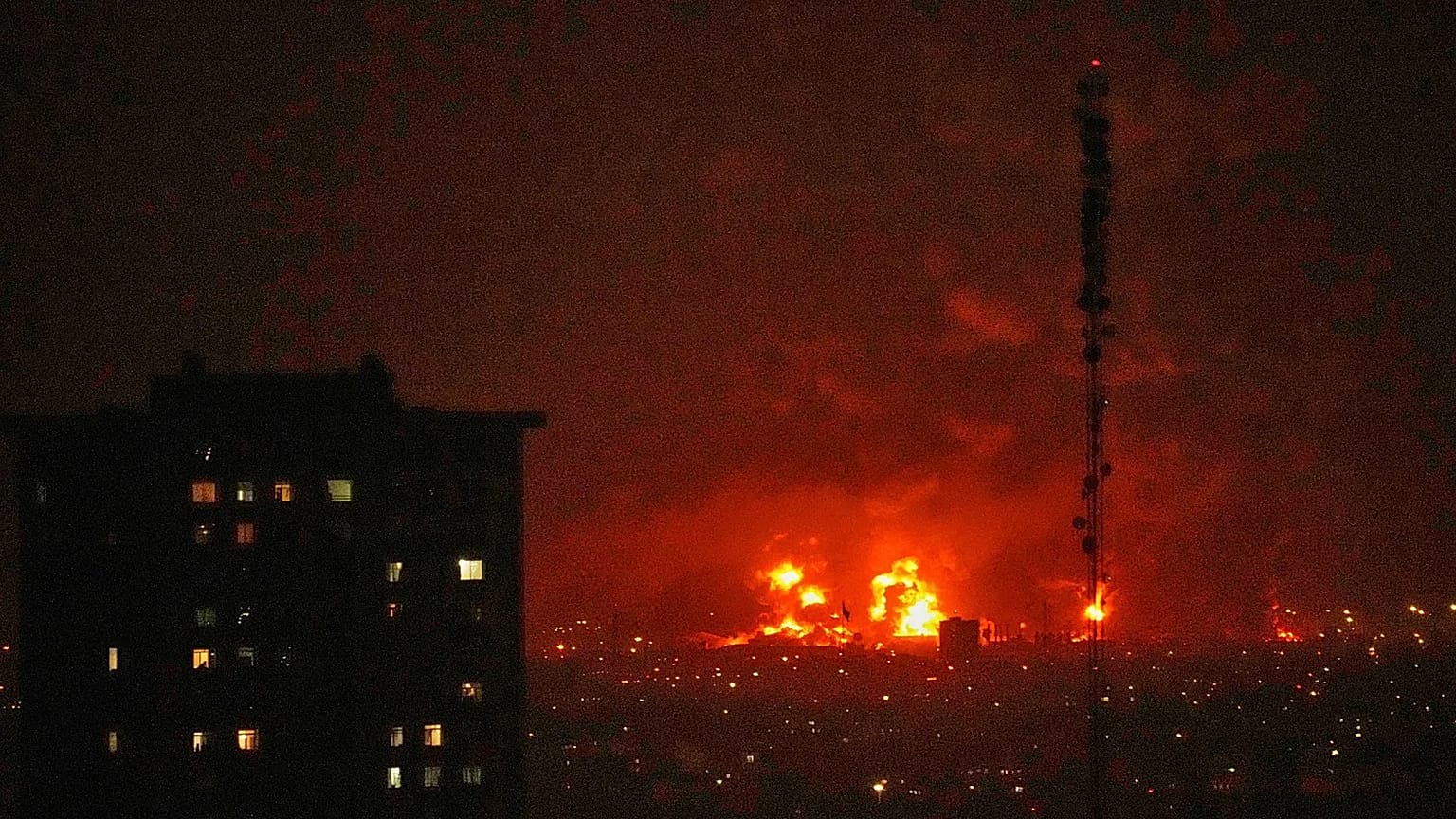














The United States and Iran are still engaged in peace talks, Karoline Leavitt said, despite Iranian state media saying Tehran had rejected Washington's plan to end the war.
US President Donald Trump is ready to "unleash hell" on Iran if Tehran does not accept a deal to end the war in the Middle East, the White House warned on Wednesday.
 ADVERTISEMENT
ADVERTISEMENT
ADVERTISEMENT
"If Iran fails to accept the reality of the current moment, if they fail to understand that they have been defeated militarily and will continue to be, President Trump will ensure they are hit harder than they have ever been hit before," Press Secretary Karoline Leavitt said at a briefing.
"President Trump does not bluff and he is prepared to unleash hell. Iran should not miscalculate again."
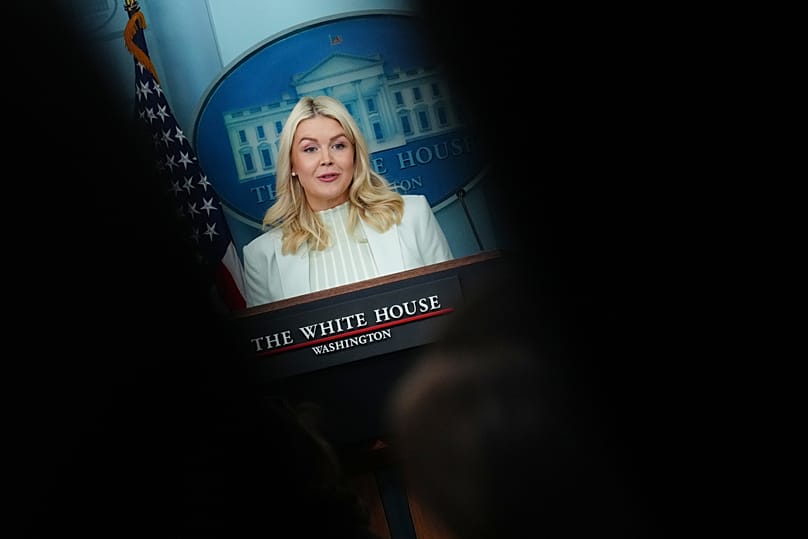
The United States and Iran are still engaged in peace talks, Leavitt said, despite Iranian state media saying Tehran had rejected Washington's plan to end the war.
"Talks continue. They are productive," she said, adding that there were "elements of truth" to media reports on the details of a 15-point US plan setting out demands on Tehran.
Leavitt's comments come after Iran rejected a US plan to pause the war earlier on Wednesday and launched more attacks on Israel and Gulf countries.
Iranian state-run television’s English-language broadcaster, Press TV, quoted an anonymous official as saying Tehran rejected Washington's 15-point proposal.
"Iran has responded negatively to an American proposal aimed at ending the ongoing imposed war," the official said.
"The end of the war will occur when Iran decides it should end, not when (US President Donald) Trump envisions its conclusion."
Earlier, two officials from Pakistan described the proposal broadly, saying it addressed sanctions relief, a rollback of Iran’s nuclear programme, limits on missiles, and the reopening of the Strait of Hormuz, through which a fifth of the world’s oil is shipped.
An Egyptian official involved in mediation efforts called it a "comprehensive deal" and said it also includes restrictions on Iran’s support for armed groups.
Mediators are pushing for possible in-person talks between Iran and the US, perhaps as soon as Friday in Pakistan, the Egyptian and Pakistani officials said.
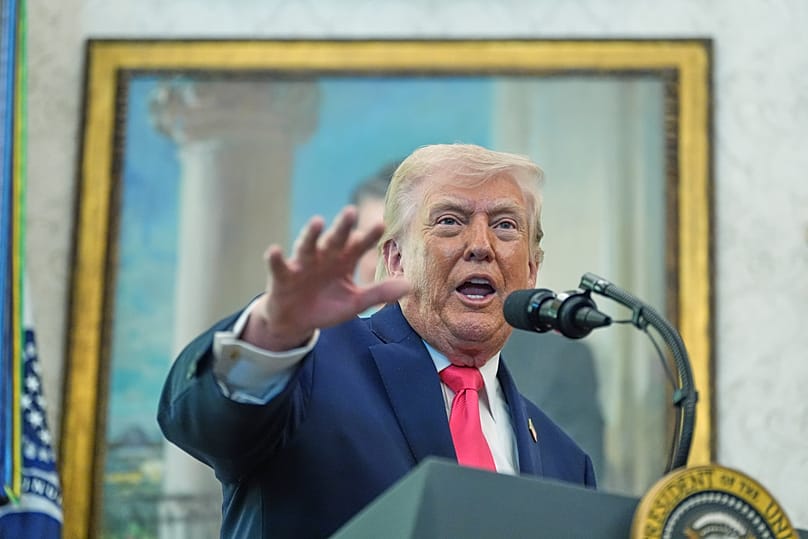
Trump has said the US is "in negotiations right now" and that the participants included special envoy Steve Witkoff, his son-in-law Jared Kushner, Secretary of State Marco Rubio and Vice President JD Vance.
He has not disclosed who from Iran they are in contact with, but said that "the other side, I can tell you, they’d like to make a deal."
Iran's counterproposal
Press TV presented the regime's own five-point plan from the official who rejected the US proposal.
It included a halt to killings of its officials, means to make sure no other war is waged against it, reparations for the war, the end of hostilities and Iran's "exercise of sovereignty over the Strait of Hormuz."
Those measures, particularly reparations and the continued chokehold on the Strait of Hormuz, will likely be unacceptable to the White House as energy supplies worldwide remain affected by the war.
Any talks between the US and Iran would face monumental challenges, and it is also not clear who in Iran’s government has the authority to negotiate or would be willing to, as Israel has vowed to continue killing the country's leaders.
Tehran said it remained highly cautious with the US, which launched strikes on Iran twice under the Trump administration, including with the 28 February strikes that started the current war.
"We have a very catastrophic experience with US diplomacy," Iranian Foreign Ministry spokesperson Esmail Baghaei told India Today on Tuesday.