















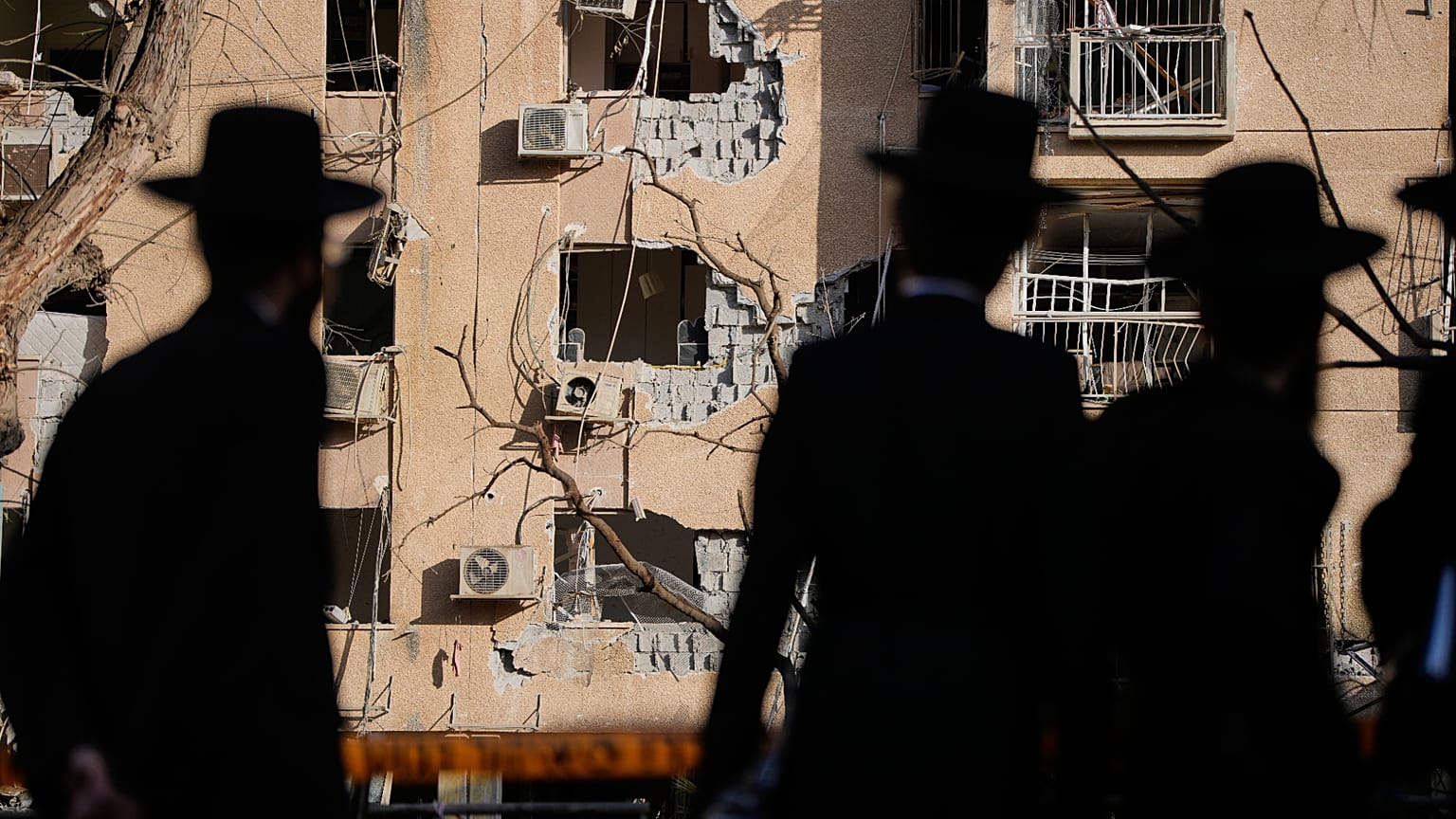














Israeli Prime Minister Benjamin Netanyahu visited the city of Arad, where 84 people were injured, according to first responders.
Iran has launched more than 400 ballistic missiles at Israel since the start of the war in the Middle East and the interception rate stands at 92%, an Israeli army spokesperson said.
 ADVERTISEMENT
ADVERTISEMENT
ADVERTISEMENT
“The ballistic missiles we saw yesterday are no different from the ballistic missiles we have intercepted in the past and that we will intercept in the future,” Lieutenant Colonel Nadav Soshani commented.
Israeli media attribute the failure to intercept the two missiles to chance.
Two Iranian missiles which could not be intercepted struck the cities of Dimona and Arad in southern Israel on Saturday night, injuring more than 160 people, including children, and causing extensive damage to property.
Dimona is home to a strategic nuclear research centre and lies about five kilometres from the impact site.
The strike on Dimona is a “response” to an attack on Iran’s nuclear facility in Natanz, Iranian television reported.
Netanyahu at the scene of the attack: 'Iran is a threat to Europe, it has struck Cyprus'
Benjamin Netanyahu, who visited the scene of the attack on Sunday morning, admitted it had been “a very difficult night in the battle for our future”.
The Israeli prime minister vowed to “personally target” every Iranian leader.
“We will strike the regime. We will strike the Islamic Revolutionary Guard Corps, this criminal gang,” he said. “And we will personally target them, their leaders, their installations, their financial assets,” he told reporters.
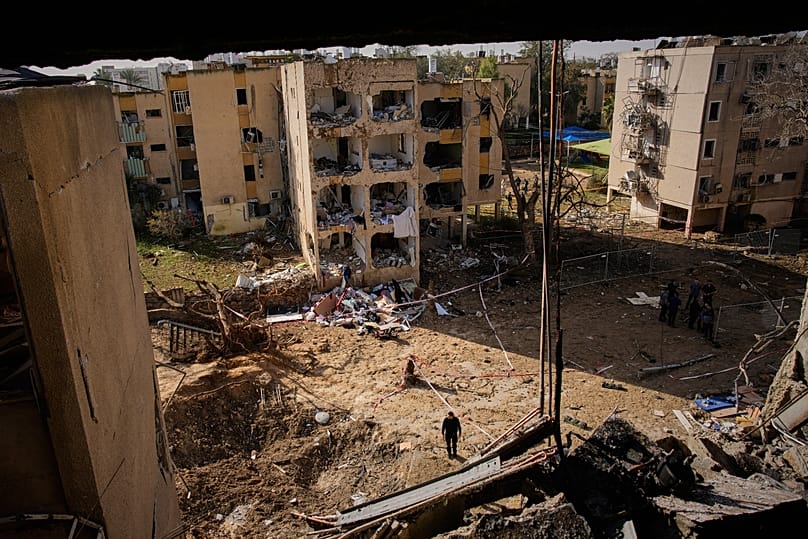
The Israeli prime minister once again urged the public “to rush to shelters” in the event of an alarm. “Here in Arad, it is a miracle that no one was killed.”
At the same time, he repeated that it is time for leaders of other countries to join Israel and the United States against Iran.
Benjamin Netanyahu also addressed European leaders specifically over Iran’s threats, “Now they have the capability to reach deep into Europe; they have already opened fire on European countries, on Cyprus… They are putting everyone in their sights,” he said.
Air-raid sirens and missile launches continued at a steady pace on Sunday morning in Israel, with at least six barrages, according to the Times of Israel. The salvos left one person wounded in the Tel Aviv area, according to Israel’s equivalent of the Red Cross, Magen David Adom (MDA).
Following the barrages fired by Iran at Dimona and Arad, Israel’s civil defence authorities reinforced protective measures in the south of the country, which had until now been spared missile attacks.
As in the rest of the country, public gatherings are now limited to a maximum of 50 people, on condition that a shelter is available in case of an attack. Schools nationwide have been ordered to remain closed on Sunday and Monday.
Tehran responds to Trump’s threats
Iran will completely close the strategically vital Strait of Hormuz if Donald Trump carries out his threats to target Iranian energy facilities, according to a statement from the Revolutionary Guards of the Islamic Republic.
Donald Trump warned on Saturday that he would “wipe out” Iran’s energy production facilities if Tehran did not fully reopen the Strait of Hormuz within 48 hours, signalling a major escalation less than a day after he had spoken of a “gradual winding down” of the war, now entering its fourth week.
In their statement, Iran’s Revolutionary Guards also said that companies with US shareholdings would be “completely destroyed” if Iranian energy facilities were targeted by Washington, and that energy facilities in countries hosting US bases would be considered “legitimate” targets.