





























The ruling, expected on 18 March, has been suspended pending a decision from the French courts on a similar case.
A Belgian court has suspended its ruling on a groundbreaking climate case between a Belgian farmer and TotalEnergies, two years after it was filed.
 ADVERTISEMENT
ADVERTISEMENT
ADVERTISEMENT
The hearings against one of the world’s biggest oil companies have been ongoing since 19 November, and a verdict was expected on 18 March.
However the commercial court of Tournai has delayed its ruling until 9 September, pending a decision on a similar French case which is set to take place at the end of June, according to French-language Belgian newspaper Le Soir.
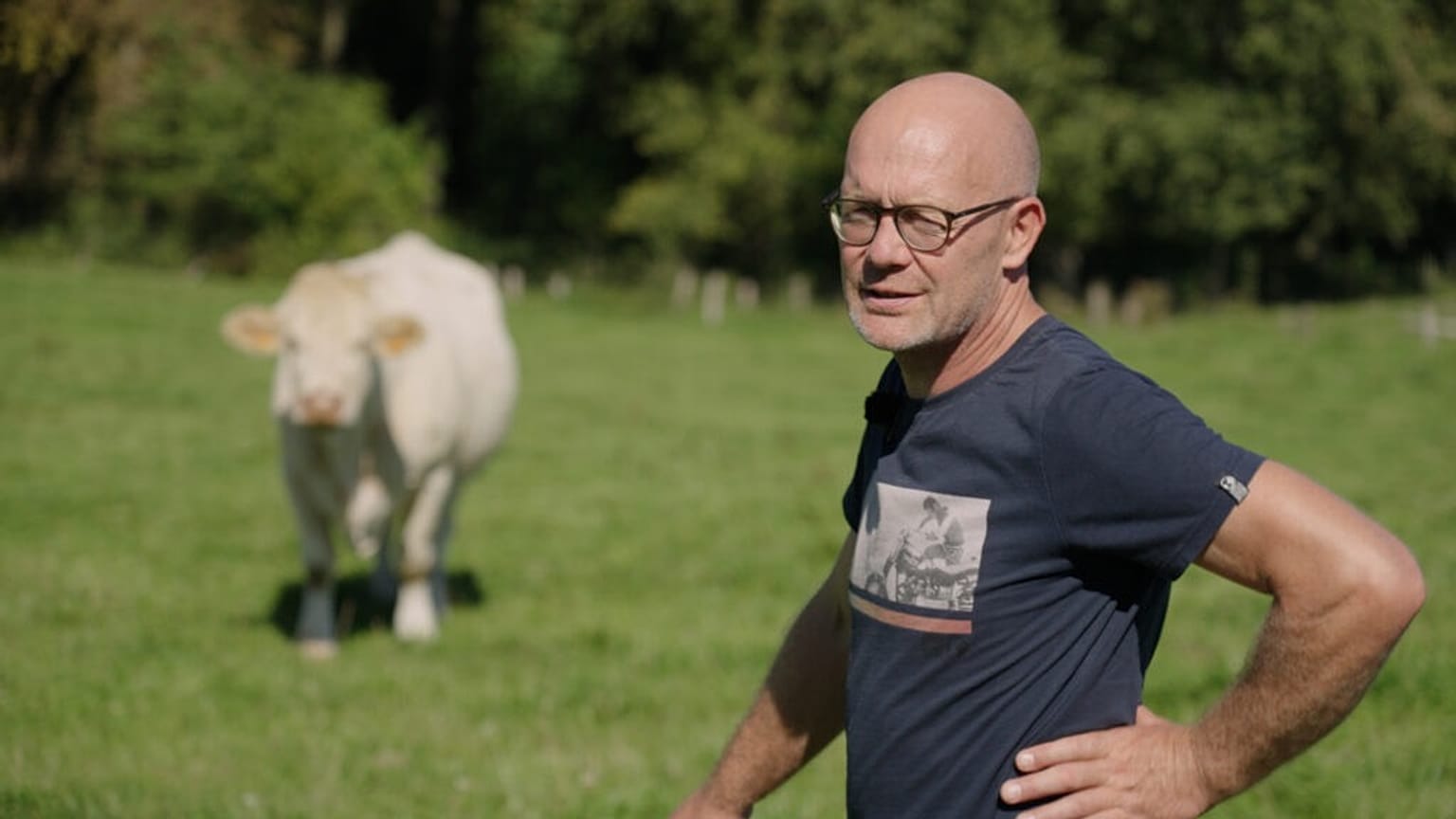
In March 2024, Hugues Falys from Hainaut in west Belgium took TotalEnergies to court to seek compensation for damage to his farm that he says is directly caused by climate change.
Backed by FIAN, Greenpeace and the League of Human Rights - and supported by the International Federation for Human Rights (FIDH) as part of its ‘See You In Court’ project - the David-vs-Goliath case is the first climate action targeting a multinational company in Belgium.
“We were expecting a decision today, but we remain confident about the next steps in the procedure,” said Falys and the organisations via Instagram following Wednesday's court proceedings, celebrating that court has "ruled that the Farmer Case is admissible".
‘The front line of climate change’
In a statement sent to Euronews Green in November, Falys argued that climate changehas had a “major impact” on his business.
The yields of his meadows and crops have been affected by climate-driven extreme weather eventssuch as heavy rainfall, droughts and heatwaves.
“Like all farmers, I am on the front line of climate change,” he added. “However, climate change is not inevitable. Those responsible must be held accountable.”
Falys says four extreme weather events damaged his farm between 2016 and 2020, and is seeking €130,000 in compensation.
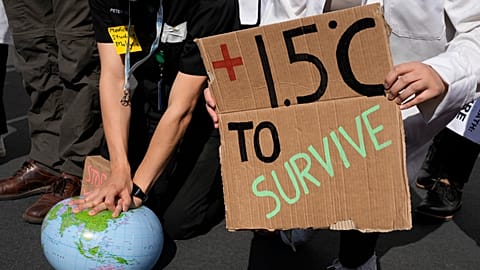
The three NGO plaintiffs in the case are calling on TotalEnergies to stop all new investments in fossil fuel projects, urging the courts to establish responsibility for the oil giant’s activities that “directly harm the climate system”.
What is TotalEnergies?
TotalEnergies is one of around 20 companies active in fossil fuel production that are responsible for more than a third of greenhouse gas emissions. It made headlines last year for unveiling a $100 million (€86.25 million) climate investment at COP30.
The French company describes its purpose as providing as many people as possible with energy that is “more affordable, more reliable and more sustainable”.
At the end of 2025, TotalEnergies confirmed an almost four per cent increase in its hydrocarbon production, which extracts and refines hydrocarbons like crude oil and natural gas from the Earth.
This exceeded the company's own guidance of three per cent growth. It also contradicted recommendations from institutions such as the Intergovernmental Panel on Climate Change (IPCC), which says hydrocarbon production must decrease to limit global warming to 1.5℃.
TotalEnergies says, however, that it decreased its emissions by three per cent compared with 2024 – primarily by improving operational efficiency and methane control.
An ‘immediate stop’ to fossil fuels
"The solution to the climate crisis requires multinational companies to immediately stop new investments in fossil fuels to curb greenhouse gas emissions", said Gaëlle Dusepulchre of FIDH in November.
"We hope that the court will force TotalEnergies to invest truly in the green transition and to ensure that human rights are not endangered by climate breakdown."
In November, Euronews Green explicitly asked TotalEnergies if it plans on ending its investment in fossil fuels and if it accepts responsibility for climate-fuelled damage on Falys’ farm. The company did not reply.