















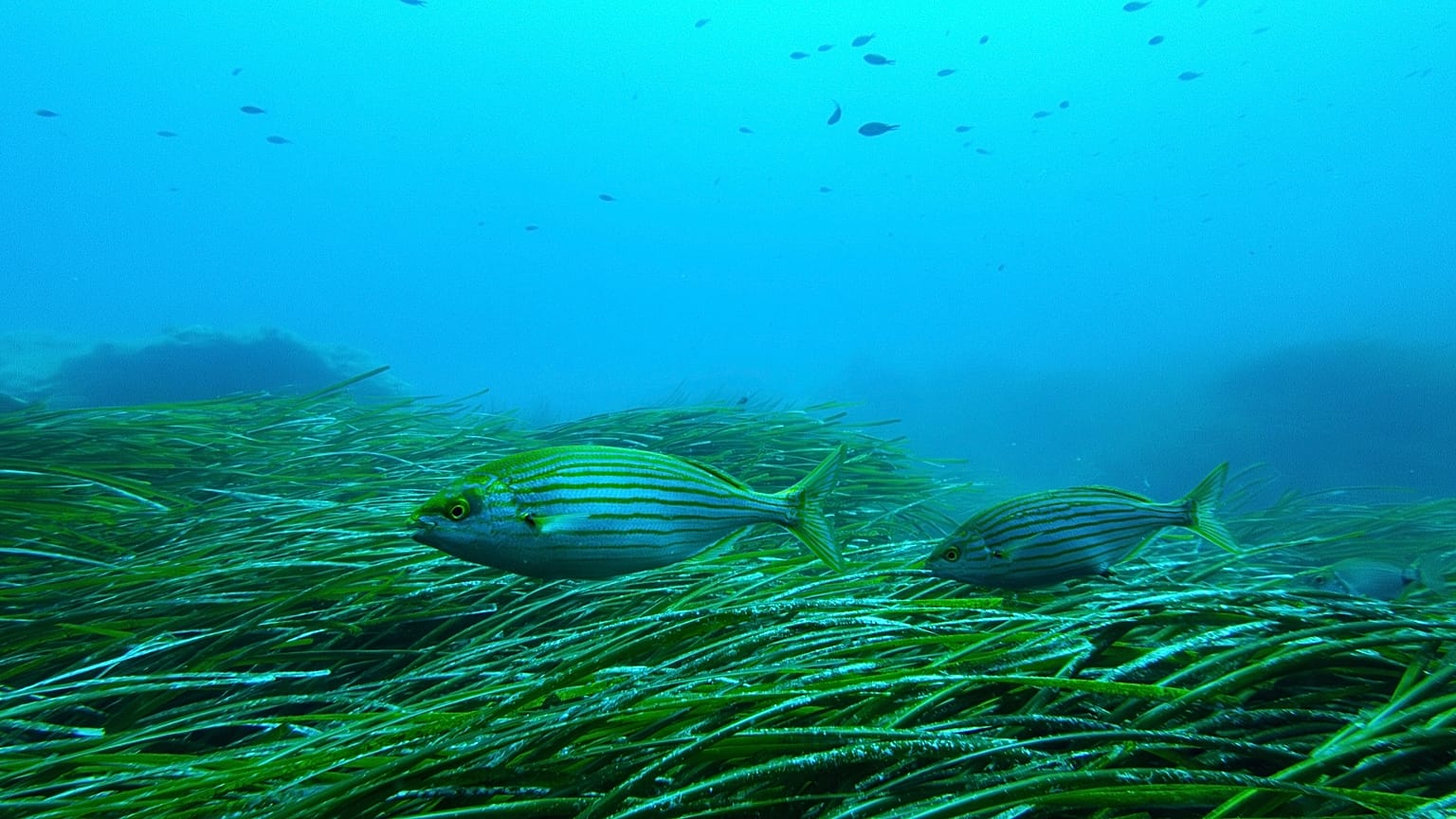














Anchors are damaging Posidonia seagrass, a key Mediterranean habitat that stores carbon, filters seawater and supports marine life.
New anchoring systems designed to protect Posidonia seagrass meadows – one of the Mediterranean’s most important yet fragile marine ecosystems – are being tested near Athens.
 ADVERTISEMENT
ADVERTISEMENT
ADVERTISEMENT
At Porto Rafti, a busy yachting harbour east of the Greek capital, divers are installing ecological moorings intended to reduce damage caused by traditional anchors dragging across the seabed. The initiative targets Posidonia oceanica, a marine plant considered essential for the health of Mediterranean waters.
For decades, anchors dropped by recreational boats have torn through the dense underwater meadows, uprooting plants and leaving scars across the seabed. The new system aims to provide a safer alternative for boats while protecting the habitat below.
How does the eco-mooring system work?
Commercial diver Makis Sotiropoulos demonstrated the installation of the eco-mooring system by drilling about three metres into the seabed before securing the anchor structure.
"We pull upwards to lock it in place before attaching a chain and a marker buoy," he told news agency AFP.
Once installed, the floating buoy allows boats to attach safely without dropping anchors that could disturb the seagrass.
The project is coordinated by Greece’s Ministry of Shipping and Island Policy, which hopes to expand the system across the country’s vast coastline. Greece has more than 13,000 kilometres of shoreline, and scientists estimate that roughly 70 per cent of its coastal seabed is covered by Posidonia meadows.
"When we establish a nationwide network of mooring buoys, then those with boats will be able to tie up safely, quickly and efficiently and at the same time the seabed will not be damaged," ministry secretary general Evangelos Kyriazopoulos told AFP.
A crucial ecosystem under pressure
Posidonia seagrass plays a critical role in maintaining marine biodiversity across the Mediterranean. The European Union classifies the habitat as a “priority ecosystem” because it supports a wide range of marine species.
Scientists say the plants also contribute significantly to climate regulation.
"Posidonia is among our best allies in the fight against climate change and deserves our full attention," said Maria Salomidi, a researcher at the Hellenic Centre for Marine Research (HCMR).
The meadows "capture and store carbon beneath their rhizomes [root stems], produce oxygen, filter and purify the water, and support biodiversity," she said.
However, divers monitoring the seabed report widespread damage caused by boat anchors.
"Very often I have observed anchors lying on Posidonia meadows," said Rouli Prinianaki, a diver and member of the NGO Aegean Rebreath, which is part of the campaign.
When anchors are raised, they often pull out entire root systems, leaving long-lasting scars across the seabed.
The Greek Organisation for Natural Environment and Climate Change (OFYPEKA) describes anchoring as “one of the most significant threats” facing the species.
Expanding protection measures
Around 40 ecological moorings have been installed in Greece in recent years, mainly in marine protected areas in the Ionian Sea and near the island of Alonissos.
But environmental experts say the number remains far below what is needed during peak tourist months.
Fifteen eco moorings have been installed in Alonissos "but they are not enough for the thousands of boats in summer," said Spyridon Iosifidis, a fish specialist at the OFYPEKA directorate for the Sporades island group.
Researchers say Greece must accelerate the installation of eco-moorings and adopt stronger legal protections for seagrass habitats.
Athens "needs to legislate to protect seagrass meadows and allow them to regenerate" following the example of the Balearic Islands in Spain and the French Mediterranean coast, said WWF Greece biologist Vangelis Paravas.
According to HCMR data, the problem is particularly acute in areas affected by heavy tourism, including parts of the Ionian Sea, the Saronic Gulf and the Cyclades.
"The number of vessels has increased and there is neither monitoring nor information," said HCMR's Salomidi.
Despite the challenges, officials say eco-moorings could support both environmental protection and sustainable tourism.
"It is extremely important to develop such a network of mooring buoys across the country, both to protect the environment and to support the growth of maritime tourism," the ministry's Kyriazopoulos said.