




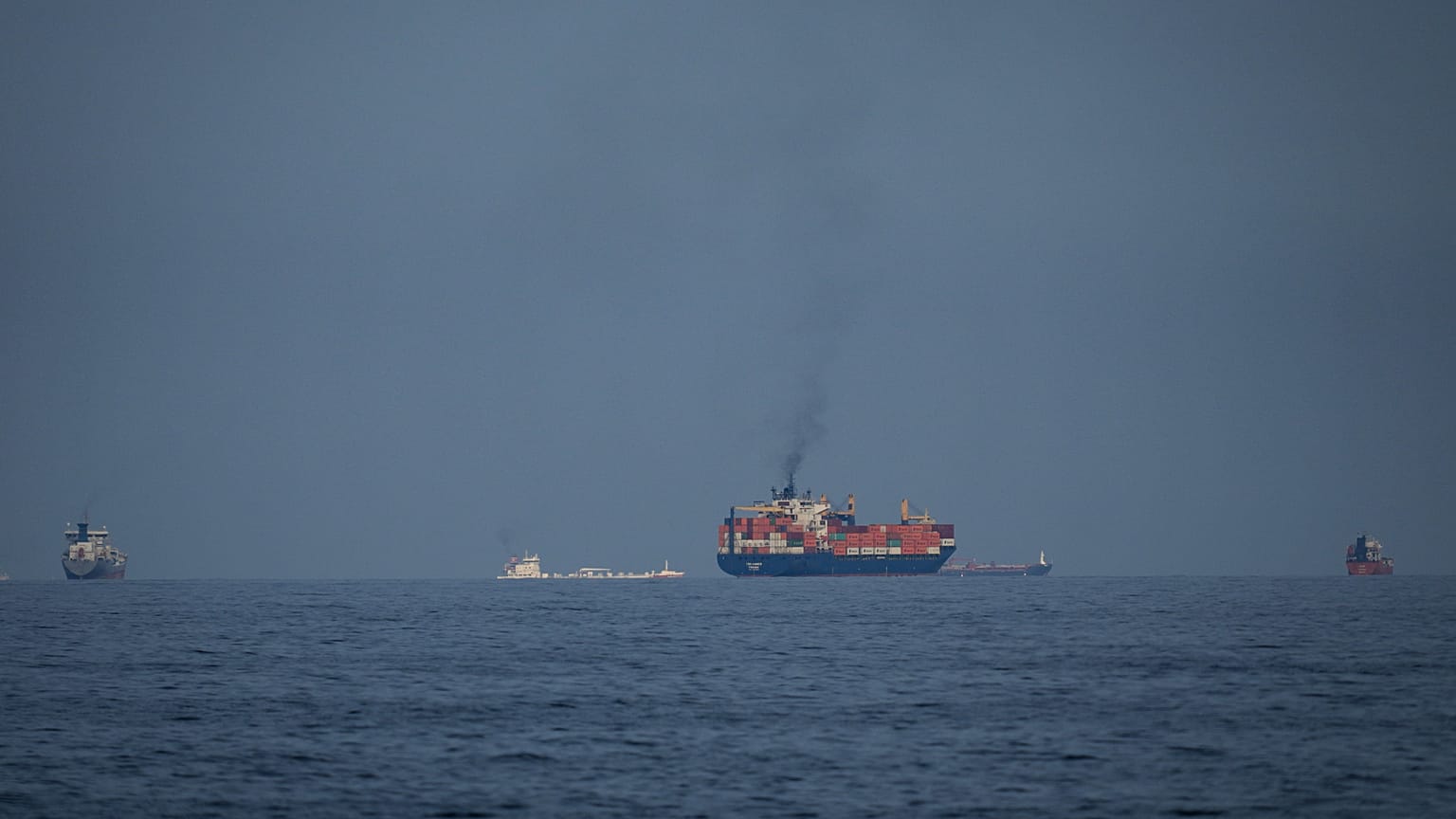













The latest attacks marked an escalation in Iran’s campaign aimed at generating enough global economic pain to pressure the United States and Israel to end the war that started 12 days ago. But there were no signs that the conflict was subsiding.
Oil prices soared back above $100 on Thursday as Iran's fresh attacks on supplies in the Middle East and threats to bring down the global economy overshadowed a record release of strategic crude by the International Energy Agency.
 ADVERTISEMENT
ADVERTISEMENT
ADVERTISEMENT
As the US-Israel strikes on the Islamic Republic approach their third week, the war showed no signs of subsiding, as Tehran continues to respond with more retaliatory attacks across the Gulf.
With hostilities showing no sign of ending, analysts warned $90-$100 a barrel could be the new normal for a while.
The IEA announced its largest ever release of oil from reserves on Wednesday, as its members agreed to unlock 400 million barrels, with 172 million coming from the United States.
However, the move was unable to overcome fears about the choking of energy supplies as Iran steps up attempts to disrupt supplies across the region.
The Strait of Hormuz, which carries a fifth of the world's oil, remains closed to almost all oil tankers, and Iran has vowed that not one litre of oil would be exported from the Gulf while its war with the United States and Israel continues.
A projectile struck a container ship near the United Arab Emirates, the UK maritime agency said on Thursday. "The container ship was struck by (an) unknown projectile causing a small fire onboard," the United Kingdom Maritime Trade Operations (UKMTO) said in a statement, adding the ship's crew had been reported as safe.
Two tankers in Iraqi waters were also reported struck after Baghdad had already said it was cutting output because of the crisis, with Kuwait and Saudi Arabia following suit.
At the same time, Bahrain reported Iran had carried out an attack on fuel tanks in the country, while Saudi Arabia said it had intercepted drones headed to Shaybah oil field.
Iran vows to hit US-Israeli economic and tech targets
Iran said it was ready for a long war of attrition that would "destroy" the world economy, after firing on two commercial ships and threatening any vessels from the United States or its allies.
The Revolutionary Guards warned Wednesday they would strike "economic centres and banks" linked to US and Israeli interests.
"The enemy has given us free rein to target economic centres and banks belonging to the United States and the Zionist regime," the military's central operational command, Khatam Al-Anbiya, said in a statement carried by state TV in response to reports of a strike hitting an Iranian bank.
Iran's Foreign Minister Abbas Araghchi said that "a branch of my country's oldest bank was bombed while full of employees".
"Our Powerful Armed Forces will exact retribution for this crime," he added on X.
Several major international businesses closed or evacuated offices in Gulf countries after the threats. US finance group Citi and British consultancy Deloitte evacuated offices in Dubai's financial centre, while PwC, another British consultancy, closed offices in Saudi Arabia, Qatar, the UAE and Kuwait.
The United States and Israel "must consider the possibility that they will be engaged in a long-term war of attrition that will destroy the entire American economy and the world economy", Ali Fadavi, an adviser to the Guards' commander-in-chief, told state television.
Israel and Iran exchange more strikes
Israel's military said multiple waves of Iranian missiles were fired at Israel early on Thursday and that air defences were deployed to intercept them.
Iranian media had reported that Iran's Revolutionary Guards carried out a joint missile operation against Israel with Tehran's Lebanese ally Hezbollah.
Israel said that it was in turn carrying out "wide-scale" strikes on Tehran and a Hezbollah stronghold in Lebanon's capital.
Hezbollah said early Thursday that it had launched missiles at an Israeli military intelligence base in the suburbs of Tel Aviv.
On two separate occasions Thursday, the Israeli military urged people in affected areas to head to shelters, as it said it "identified missiles launched from Iran toward the territory of the State of Israel".
"Defensive systems are operating to intercept the threat," the military said on its official Telegram channel both times.
After the first wave of missiles fired by Iran, the Magen David Adom emergency services said that there were no reported casualties following the missile fire, although paramedics were deployed to treat individuals who fell over on the way to shelters.
Strike on Beirut kills seven
As Hezbollah launched its strikes on Israel, Lebanon said an Israeli strike on central Beirut's seafront killed at least seven people early on Thursday.
The Israeli military said separately it had carried out strikes on Beirut's southern suburbs overnight against Hezbollah.
The Israeli military said in a post on Telegram that it "struck 10 terror structures in the Dahiyeh area (of south Beirut) within 30 minutes, including intelligence headquarters, a headquarters of the Radwan unit, and additional command centres."
Local media aired footage showing smoke rising along the seaside corniche road area after the strike in central Beirut, which state-run National News Agency said targeted a car.
"The Israeli enemy strike on Ramlet al-Bayda in Beirut led to an initial toll of seven dead and 21 wounded," the health ministry said in a statement.
It was the third attack in the heart of the capital since the Middle East war began as well as repeated Israeli strikes on the southern suburbs of Beirut where Israel said on Thursday it had hit 10 Hezbollah targets.
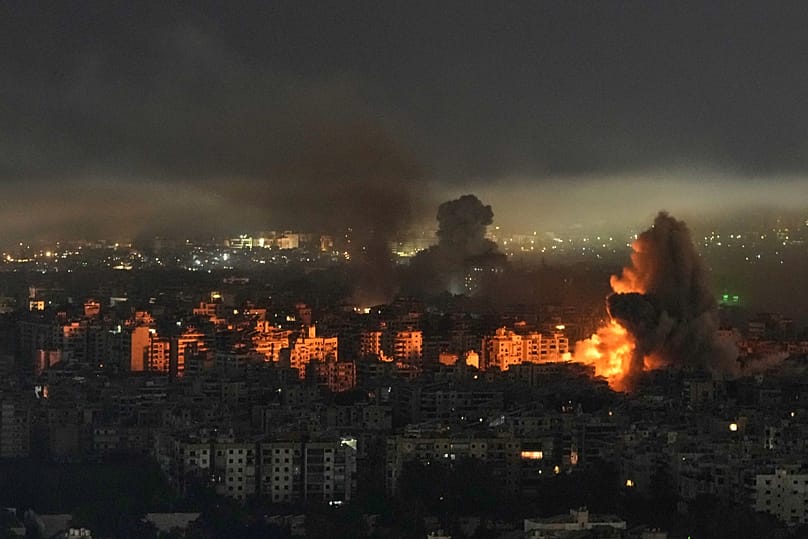
Lebanon was drawn into the Middle East war last week when Hezbollah attacked Israel in response to the killing of Iranian supreme leader Ayatollah Ali Khamenei in US-Israeli strikes.
Israel, which kept up its strikes in Lebanon even before the war despite a 2024 ceasefire with Hezbollah, has since launched air raids across Lebanon and sent ground troops into border areas.
Its offensive has killed more than 630 people, according to Lebanese authorities, while more than 800,000 people have registered as displaced, with around 126,000 of them staying in collective shelters.
Late Wednesday, French President Emmanuel Macron called for Israel to halt its ground offensive in Lebanon and on Iran-backed group Hezbollah to "immediately" stop attacks, after speaking with the country's president Joseph Aoun.