






























Iran intensifies missile and drone attacks across the Gulf, hitting near Dubai and Qatar as air defences respond, defying US President Trump’s claims that the war is winding down.
Iran unleashed an intense wave of strikes across the Gulf region on Wednesday morning, while continuing its stranglehold of the Strait of Hormuz, in an intense attacking upsurge signalling that the war continues unabated, despite US President Donald Trump’s statements on Tuesday night that the intervention was "pretty much" completed.
 ADVERTISEMENT
ADVERTISEMENT
ADVERTISEMENT
Euronews journalists in Doha and Dubai reported intensive waves of Iranian attacks on Tuesday night and Wednesday morning in the two capitals and across the region.
Two Iranian drones fell in the vicinity of Dubai International Airport on Wednesday morning, the second time after a similar strike on Saturday, injuring four foreign nationals, Euronews correspondents in Dubai reported.
The Dubai Media Office, which issues statements on behalf of the city-state’s government, said in a post on X that air traffic “is operating as normal” for the time being.
The attack was followed by a new wave of Iranian strikes being intercepted by air defence systems, after another night of UAE figher jets patrolling the city to seek Iranian missiles and drones and residents received two two air raid, seek shelter alerts on their mobile phones.
In another upsurge of attacks, Qatar was attacked by Iranian missiles twice on Wednesday morning and then at noon local time, after two other waves on Tuesday afternoon and evening.
Euronews journalists observed the Qatari air defence intercepting Iranian missiles above the city during Wednesday’s attack as the authorities urged everyone to seek shelter.

Saudi Arabia announced that it intercepted 6 Iranian missiles near Prince Sultan air base and intercept booms were reported near Dammam, a major Saudi city next to the Bahrain-Qatar border with a large airport used by foreigners seeking to leave the region.
Flightradar24 aviation tracking portal showed the airport operating normally on Wednesday morning.
At the same time on Wednesday morning, Kuwait’s National Guard said they shot down 8 drones, Bahrain sounded its air raid sirens, and Oman reported that two Iranian drones were downed at sea north of Al Duqm commercial port.
IRGC keeps sabre rattling
The intense wave of Iranian attacks in the region unfolds as Iran’s Islamic Revolutionary Guard Corps (IRGC) announced that it launched its “most intense and heaviest operation” since the start of the war, claiming that “the war will end only when the shadow of war is removed from our country,” according to state media.
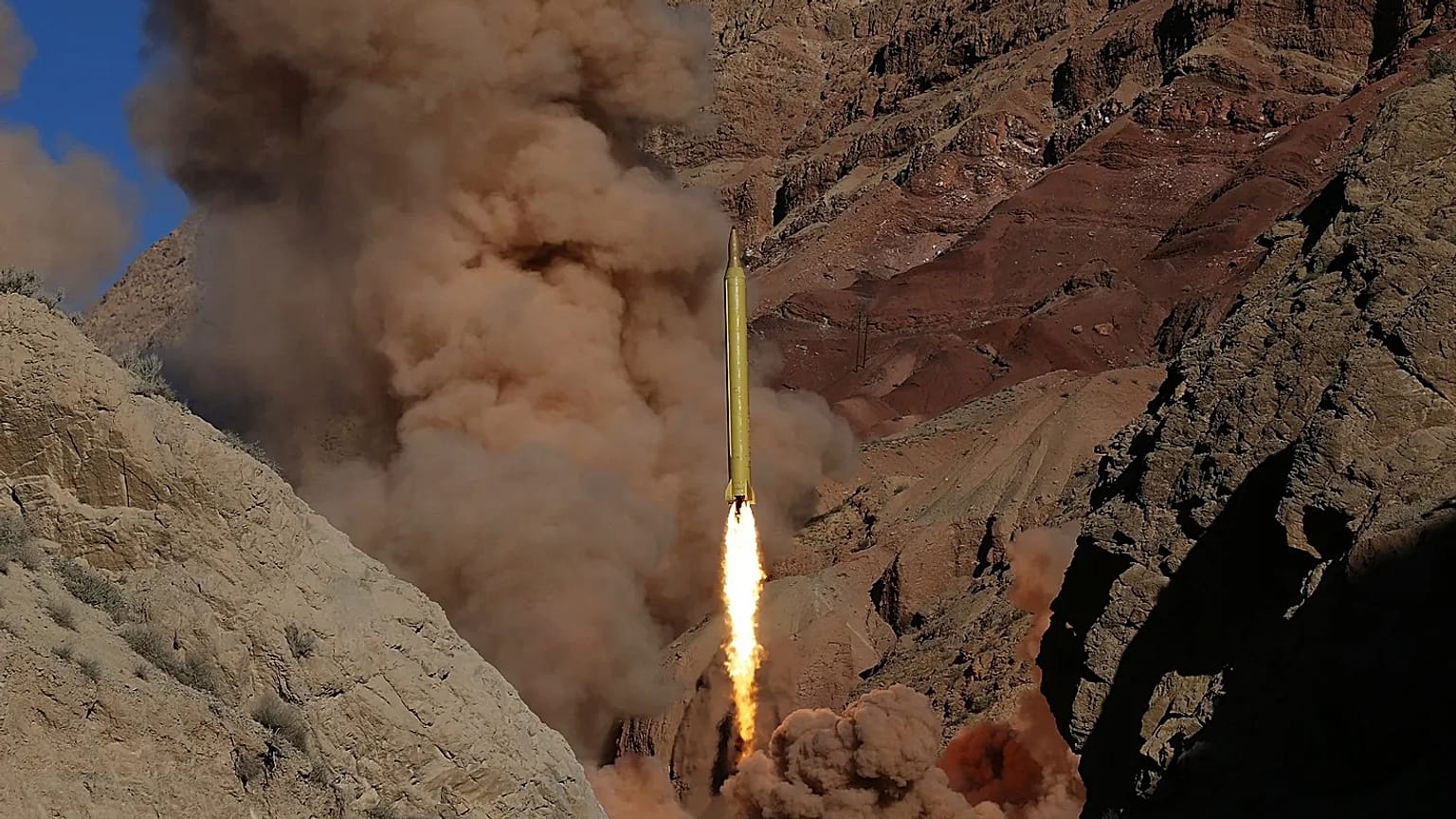
Iran claimed its overnight attack involved missile launches, including its long-range ballistic Khorramshahr missile, against targets in Israel and at US assets in the region, Iran’s state broadcaster IRIB reported.
Iran’s attacks and announcements come in contrast to Trump’s announcements over the last 48 hours, suggesting that the war was nearly over and that Iran has no means to fight anymore.
According to Trump, Iran has “no navy, no communications, they’ve got no air force,” the US president told CBS News.
“They’ve shot everything they have to shoot,” and “if you look, they have nothing left. There’s nothing left in a military sense,” Trump claimed, adding that “the missiles have been largely knocked out … the drones have been knocked out, and we’re hitting where they make the drones.”
The US Central Command released a combat video on Tuesday night claiming to show US forces destroying "multiple Iranian naval vessels, 10 March, including 16 minelayers near the Strait of Hormuz."
Hormuz crisis unfolding
In parallel, the unfolding Strait of Hormuz crisis continued on Wednesday with Thailand and the United Kingdom Maritime Trade Operations (UKMTO) centre announcing that a projectile hit the Thai cargo ship Mayuree Naree, setting the vessel ablaze just north of Oman.
Thailand’s Marine Department said a search was under way for three missing crew members and that 20 crew members were rescued.
Iran, which vowed not to allow “even a single litre” to be shipped to its enemies, did not immediately claim the attack, though it has been targeting ships in and around the strait, disrupting a waterway that sees a fifth of all oil and natural gas traded pass through it.
The UKMTO earlier reported on another attack targeting a vessel off Ras al-Khaimah in the United Arab Emirates.
The incident occurred after Trump announced on Tuesday night that the US “have hit, and completely destroyed, 10 inactive mine laying boats and/or ships, with more to follow," after the US claimed that Iran has begun laying mines in the narrow mouth of the Persian Gulf, the world’s most important energy transit point.
Some tankers, believed to be linked to Iran, are continuing to pass through the Strait of Hormuz, with some ships making so-called “dark” transits, meaning they aren’t turning on their Automatic Identification System tracks, which show where vessels are, AP reported.
Vessels carrying sanctioned Iranian crude often turn off their AIS trackers.
The security firm Neptune P2P Group said Wednesday that seven ships had passed through the strait since 8 March. Of those, five were linked to Iranian-associated shipping, it said.
As the cycle of violence continues unabated, Israel announced it had begun a new wave of strikes on Tehran in the early hours of Wednesday, with reports emerging of continuous airstrikes on Iran’s capital on Wednesday afternoon.
The Israeli military said it is simultaneously carrying out strikes across Iran as well as Hezbollah infrastructure in Beirut.
The war has killed at least 1,230 people in Iran, at least 480 in Lebanon and 12 in Israel, according to officials in those countries, according to AP.