































In 2024, 67 per cent of the energy used in Germany had to be imported, according to the Federal Statistical Office. This puts Germany above the EU average of 57 per cent of imported energy. According to experts, Germany could produce domestic gas.
Fears of soaring gas and electricity prices in Germany are growing. Around 20% of the world’s liquefied natural gas (LNG) is shipped through the Strait of Hormuz, according to the UN trade body UNCTAD. But since the start of the war in Iran, traffic through the narrow strait has ground to a halt.
 ADVERTISEMENT
ADVERTISEMENT
ADVERTISEMENT
Germany is heavily dependent on energy imports. Around two-thirds (67%) of the energy it consumes has to be imported, according to the Federal Statistical Office. The EU average is 57%.
However, there may be a way out of this dependence: "Germany could cover around a quarter of its natural gas needs from domestic production," explains geophysicist Hans-Joachim Kümpel. From 2007 to 2016 he headed the Federal Institute for Geosciences and Natural Resources.
Germany could extract around 20 billion cubic metres of gas a year using so-called fracking, the geophysicist says – and sustain that level for decades. There are major gas reserves in particular in Lower Saxony and North Rhine-Westphalia that could be tapped using this method.
Federal government weighing new gas production
In Germany, fracking (hydraulic fracturing), a technique for extracting natural gas from dense rock formations, is politically and socially highly contentious. Critics warn of possible damage to the environment and groundwater. They fear that pollutants could seep into groundwater during drilling.
Kümpel considers these concerns exaggerated. "The risks to groundwater and drinking water are vastly overstated in Germany," he says. He also argues that the technology has advanced significantly in recent years and has become safer and more environmentally friendly.
In Kümpel’s view, domestic production could even improve Germany’s climate balance. LNG first has to be cooled to very low temperatures, then transported over long distances and finally regasified – an energy-intensive process.
"Instead of producing 20 billion cubic metres of natural gas in Germany, 25 billion cubic metres have to be produced overseas, because the energy equivalent of five billion cubic metres is lost in transport." Simple calculations, Kümpel says, show that around ten million tonnes of CO₂ could be saved every year.

There is also another factor: methane leaks. Monitoring for these would likely be far stricter in Germany than in many producing countries. That alone, according to Kümpel, could save a further eight million tonnes of CO₂.
Meanwhile, there are efforts within the CDU to step up domestic gas production. The federal government should "no longer obstruct" gas extraction, economy minister Katherina Reiche (CDU) told newspapers in the Funke media group. Precisely in times of geopolitical tension, this needs to be discussed, she stressed, adding that policymakers must "very sensitively weigh up environmental interests against raw material supply".
The coalition partner takes the opposite view: "The attack on Iran and the reactions on global fossil markets underline that we must free ourselves from fossil resources as quickly as possible – by switching to renewables," Nina Scheer, the SPD’s energy policy spokesperson, told Euronews when asked.
The Greens are also firmly opposed to fracking: "Anyone who banks on fracking to reduce our gas dependence is also the kind of person who puts on swimwear when their boat has a leak," the Greens’ energy policy spokesperson, Michael Kellner, told Euronews. Instead, gas consumption must fall "by insulating walls, making it easier to switch to heat pumps and enabling industry to invest in clean production".
Electricity from new domestic gas-fired power stations could turn out to be more expensive than expected, according to a new study by the Forum Ökologisch-Soziale Marktwirtschaft (FÖS) commissioned by green power supplier Green Planet Energy. The researchers estimate a price of between 23 and 28 cents per kWh. Their calculation includes the costs of building, operating and later dismantling the gas plants. Power from new wind and solar installations costs less than 10 cents per kWh, the study says.
So-called fracking has been banned in Germany since 2017
In 2025, Germany imported 106 terawatt hours of natural gas via LNG terminals – around 10.3% of total German gas imports. The vast majority, 96%, came from the United States, where it is in most cases produced using fracking.
At a time when transatlantic relations are becoming increasingly strained, some experts see this as a risk to security of supply. To produce gas in Germany, however, the existing ban would first have to be eased.
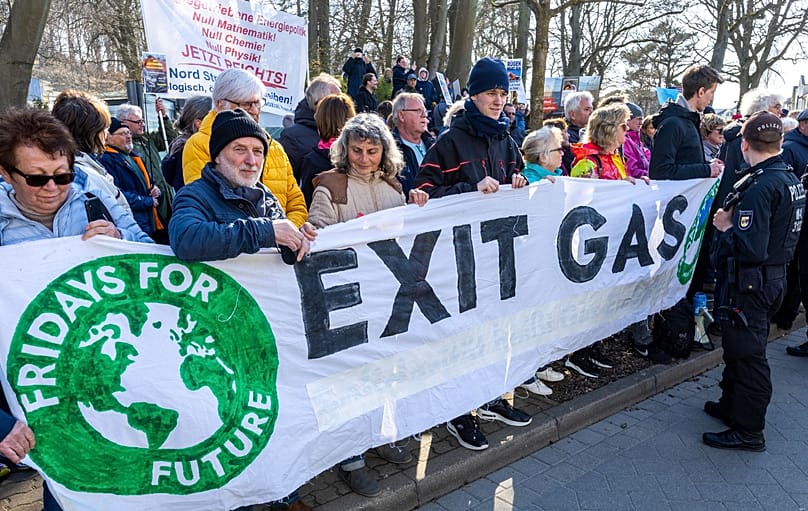
In 2017, the then black-red coalition government under chancellor Angela Merkel (CDU) largely banned unconventional gas extraction, also known as fracking. In fracking, shale gas is forced out of dense rock using a high-pressure water mixture.
By contrast, conventional gas extraction is still permitted under strict conditions. In that case, gas is extracted from porous rock formations, where it can rise to the surface more easily.
In many European countries, fracking is likewise banned or heavily restricted. In France and Austria the technique may not be used to extract natural gas. Fracking is permitted in Poland and Romania, by contrast, albeit subject to tight regulation.
Public opinion in Germany is divided on fracking. A representative survey carried out in 2023 by polling company Appinio for business weekly Wirtschaftswoche found:
48% of Germans consider fracking necessary to overcome the energy crisis. 38% regard the technology as dispensable. 14% are undecided.