




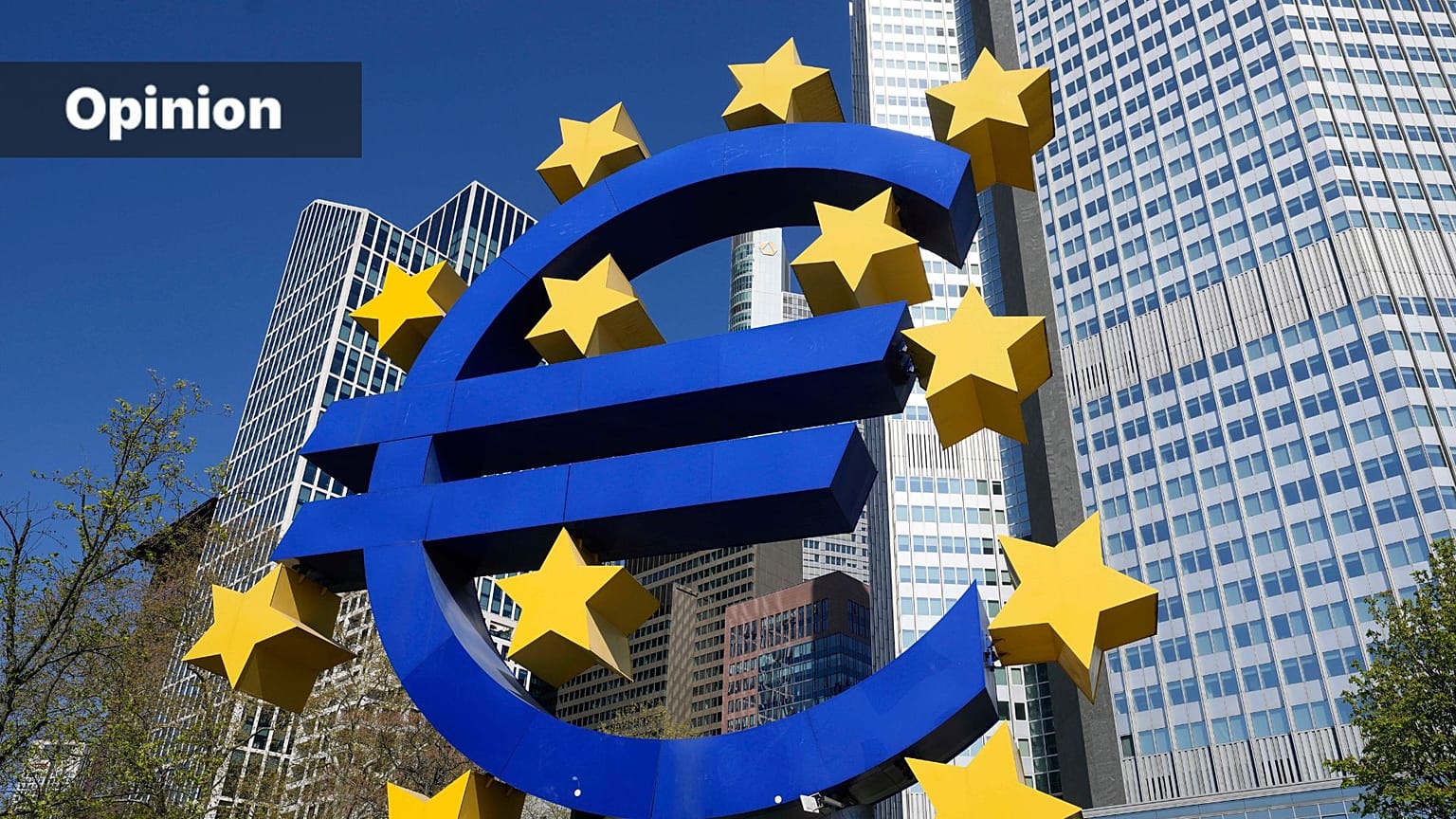













Instead of European savings flowing abroad, they could support European projects and innovations. The investment capacity and the technology are there. What remains is the political will to make Europe’s capital market truly single, says Beatrice Dumurgier, CEO Western Europe at Revolut.
In the midst of geopolitical tensions and economic uncertainty, Europe faces a paradox that is as frustrating as it is hopeful.
 ADVERTISEMENT
ADVERTISEMENT
ADVERTISEMENT
On one hand, we speak constantly about the financing gap needed to fund our green and digital transitions and to strengthen our defence capabilities.
We compare ourselves to the depth of US capital markets and wonder how we can compete without relying on foreign investors.
Europe is sitting on a goldmine
On the other hand, Europe is sitting on a goldmine. European households hold an estimated €33 trillion in financial assets.
Yet while US households keep roughly 13% of their wealth in cash, Europeans leave nearly 34% sitting in deposits.
While these deposits are crucial for bank lending, mortgages, and financing the economy under regulatory oversight, much of this capital does not flow directly into European capital markets.
The Savings and Investment Union (SIU) is designed to change that, allowing citizens to invest more directly in businesses and innovation.
It is an EU initiative to create a truly single market for investment, so that money can move across member states as easily as goods and people; by harmonising capital markets rules, simplifying cross-border investment, and making it easier for citizens to invest in European companies regardless of where they live.
This approach would allow Europe to mobilise its savings more directly for innovation, growth, and strategic priorities.

The cost of fragmentation
Europe needs an estimated €620 billion annually to finance its green and digital transitions, yet much of this capital sits in low-yield savings accounts.
While these accounts play an important role in funding bank lending, there is potential for this money to be channelled more directly into investments across Europe. However, cross-border investment remains difficult in practice.
Consider a simple example: an Italian citizen who wants to invest in a Dutch or Finnish company faces different tax reporting rules, withholding tax procedures, and investor protection frameworks.
For financial institutions, operating across borders means navigating 27 variations of consumer protection and tax systems.
Withholding tax reclaim processes can take months, and disclosure requirements differ even when the financial product is identical.
These barriers discourage both providers and citizens from engaging in cross-border investment.
While goods and people move freely across the EU, capital still encounters friction. Every euro blocked by these barriers reduces Europe’s ability to finance its own priorities: from energy grids to defence to scaling technology companies.
From savers to investors
Europe is undeniably a continent of savers. Household saving rates are nearly triple those of the United States. We naturally prioritise the stability of bank deposits. That caution has value.
But in a context of demographic ageing and pension gaps, relying overwhelmingly on savings accounts can erode purchasing power over time. Today, a typical household may keep €10,000 in a current or savings account earning minimal interest.

Over 20 years, inflation alone can significantly reduce its real value. By contrast, diversified long-term investments have historically generated higher returns - with appropriate risk and time horizons.
The challenge is not to encourage speculation, but to democratise access to investment tools that were once complex, expensive, or reserved for institutional investors.
As highlighted by leaders such as Mario Draghi and Enrico Letta, Europe cannot scale without innovation.
Citizens cannot become investors if the system remains opaque, costly, and paper-based.
In many member states, opening an investment account still involves lengthy forms, fragmented tax documentation, and high entry thresholds. Fees are often unclear, and cross-border investing can feel intimidating.
The technological bridge
Good news is, digital banks are making it easier than ever for Europeans to put their savings to work through investing.
Accounts can be opened in minutes using secure digital identity verification. Fees are transparent and significantly lower than traditional models.
New products, such as money market funds offering daily visible returns, give savers a bridge between savings accounts and long-term investments.
Customers can start with smaller amounts, experiment, and build confidence before committing larger sums, supporting better financial literacy and informed decision-making.
Automated tax and compliance reporting further reduces friction, making cross-border investing safer and easier. By contrast, traditional banks often require higher minimum investments, limiting accessibility.
A Portuguese user should be able to move part of their savings into a diversified European ETF as easily as sending a payment, without navigating multiple national systems.
Technology makes cross-border investment simple, fast, and cost-effective, while regulatory alignment ensures it is safe and consistent.
Fintechs to open borders
The future bank is not merely a place to store money. It is a gateway that enables citizens to allocate savings efficiently, diversify responsibly, and participate in Europe’s economic growth.
By integrating education, simplified products, low fees, and automated tools, digital banks and fintechs make investing accessible to everyone, not just high-net-worth individuals.

When financial products are transparent, affordable, and integrated into platforms people already use for everyday payments, barriers to participation fall dramatically.
According to the 2023 Eurobarometer, only 18% of EU citizens demonstrate high financial literacy - embedding education directly into digital tools can change that.
If the EU delivers on its simplification agenda and completes the SIU, fintechs and digital banks can scale this impact exponentially.
Instead of European savings flowing disproportionately into non-European markets, they could more easily support European energy projects, defence innovation, and home-grown technology champions.
The investment capacity is here. The technology is ready. Citizens are willing to engage when given simple, safe tools.
What remains is the political determination to remove remaining barriers and make Europe’s capital market truly single.
Beatrice Dumurgier is CEO Western Europe at Revolut.