






























The EU must be able to act. The principle of unanimity in foreign and security policy is an obstacle to this. A "European Security Council" could change this, say Hans-Gert Pöttering, former President of the European Parliament, and Klaus Welle, Martens Centre for European Studies.
Putin and Russia's criminal war of aggression against Ukraine has shaken the European peace order.
 ADVERTISEMENT
ADVERTISEMENT
ADVERTISEMENT
At the same time, US President Donald Trump's policies – from trade conflicts to open provocations in the transatlantic relationship – are causing growing uncertainty about the future security policy reliability of the United States.
In view of these global political uncertainties and challenges, effective action by the European Union is a matter of urgency.
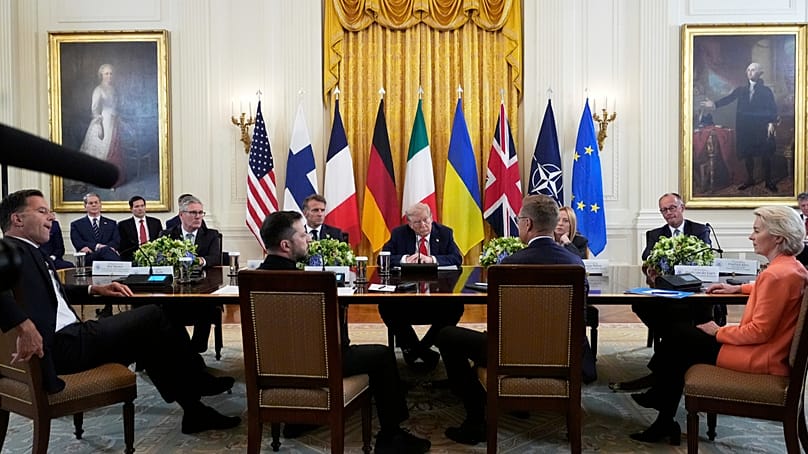
The principle of unanimity: a major obstacle
The principle of unanimity in foreign and security policy is a major obstacle to this. How can this structural obstacle to decision-making – which affects the core of the European Union's ability to act – be overcome?
Today, the European Council can already switch to majority decisions by unanimous vote. But not all 27 member states are prepared to do this.
This also effectively rules out a treaty amendment with the aim of enabling majority decisions. Moreover, experience with the Treaty of Lisbon has shown that such a process would take several years. The European Union does not have this time. A different path must therefore be chosen.
Europe must realistically assess its strategic situation
The prerequisite for this is that Europe realistically assesses its strategic situation and also considers the unthinkable in order to avoid it: a decoupling of the United States from Europe's security.
At the same time, it is not enough to rely on the normative power of law alone. International law and, in particular, European law as the basis of the European Union require effective protection through the ability to act together – in case of doubt, also through a credible military defence capability.
The states of the European Union that are prepared to do so should adopt an "intergovernmental agreement" – an agreement between the governments – that enables majority decisions in foreign and security policy.
The general legislative procedure can serve as a model for the decision-making procedure – 55% of the states involved in the "intergovernmental agreement", representing 65% of the population.
'European Security Council'
The circle of participants could form a "European Security Council", a union within the European Union, as it were, and take all relevant foreign and security policy decisions.
Nevertheless, the aim should always be to involve all 27 EU member states. If this does not succeed, action can still be taken with fewer states. This is more than a "core Europe" (who belongs to it, by the way?) and more than a "coalition of the willing" (which changes depending on the situation).
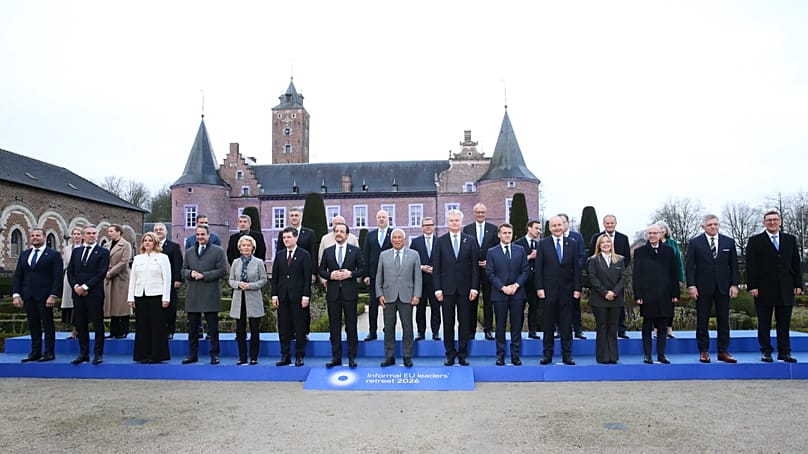
The "European Security Council" should include the heads of state and government of the states participating in the "intergovernmental agreement" as well as the presidents of the European institutions - European Council, European Parliament, Commission - and the High Representative for Foreign Affairs and Security Policy.
Remain Atlantic, become more European
This model should be compatible with the interests of the member states, because they remain the key players; and with those of the European institutions, because majority decision-making is an element of federal action.
Europe must become stronger. For Germany and the European Union, this means a clear strategic decision: The expansion of European defence into a defence union must become the priority of European policy alongside resolute support for Ukraine. Our American partners must be made aware that strengthening Europe militarily will strengthen the transatlantic alliance as a whole. Remain Atlantic, become more European.