




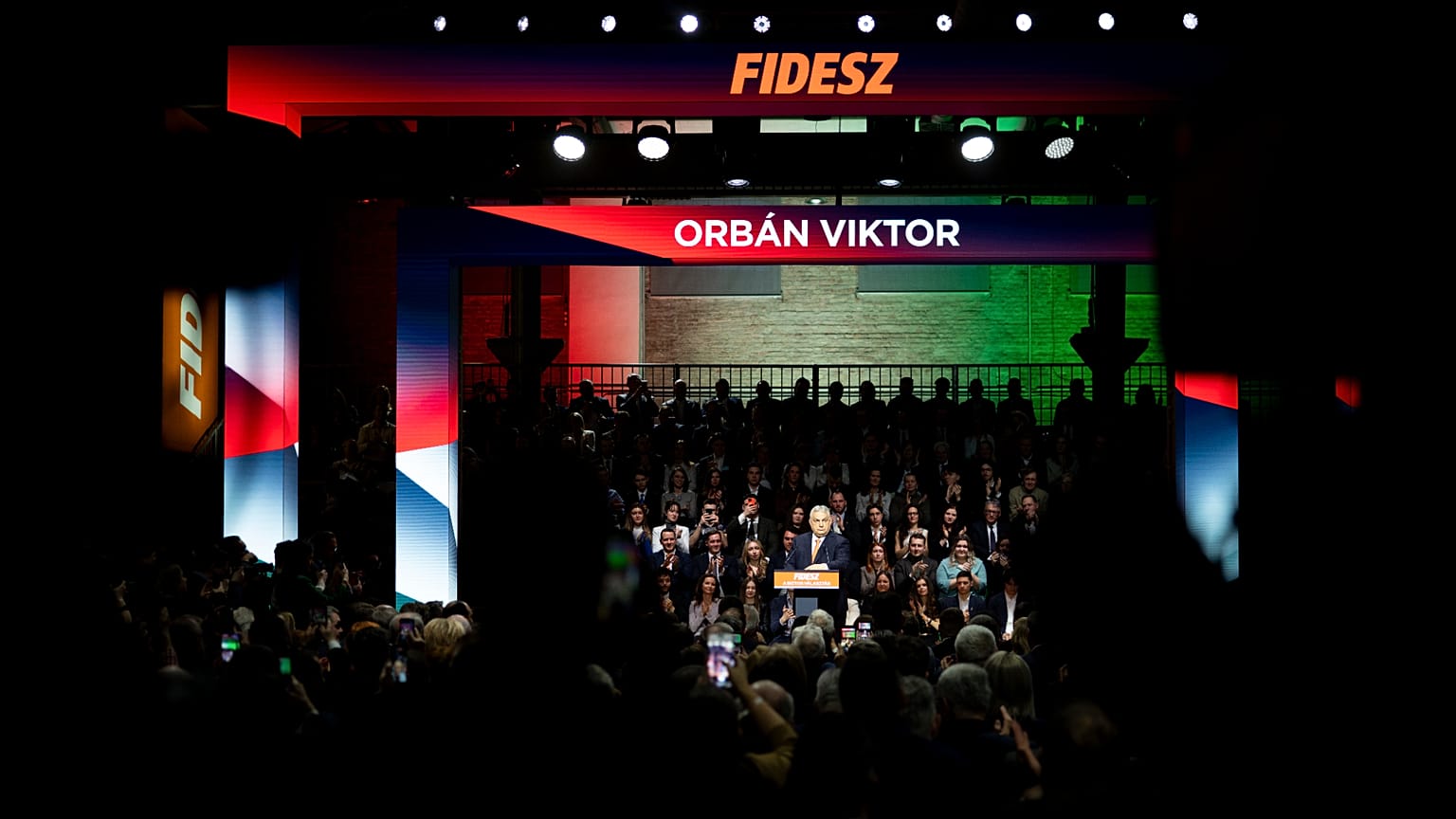













The central European country of 9.5 million faces a crucial vote in less than two months, with polls showing wildly different outcomes depending on who conducts the survey.
Hungary's parliamentary election on 12 April has produced sharply divergent polling results, with some showing the opposition Tisza Party ahead, while others report a comfortable lead for Prime Minister Viktor Orbán's Fidesz.
 ADVERTISEMENT
ADVERTISEMENT
ADVERTISEMENT
Medián's January survey found 40% support for Tisza, led by former Fidesz party member and MEP Péter Magyar, among the total population compared to 33% for Fidesz, maintaining the opposition party's lead from November.
Závecz Research reported 49% of certain voters would back Tisza compared to 39% for Fidesz, a 10-percentage-point advantage. The IDEA Institute found Tisza held an eight-point lead among the general population and a 10-point advantage among decided voters.
The 21 Research Centre measured Tisza's lead at seven points among all respondents, 10 points among those who could name a party preference and 16 points among certain voters in a survey conducted between 28 January and 2 February.
Other polling firms report markedly different figures. The Nézőpont Institute published results on Friday showing Fidesz at 46% compared to Tisza's 40%, with the far-right Our Homeland Movement at 7% and the Democratic Coalition below the parliamentary threshold at 4%.
The institute said Fidesz retained 200,000 to 300,000 inactive supporters who could be mobilised before election day, potentially improving the governing party's result. Tisza's supporters were already "hyperactive", leaving virtually no reserves to mobilise, according to Nézőpont.
The Centre for Fundamental Rights reported 49% of decided voters would support Fidesz compared to 42% for Tisza. The institute attributed the governing parties' advantage to steady government performance and firm stance against providing funds for Ukraine amid Russia's all-out war.
The Hungarian Social Research Institute found 51% support for Fidesz among active voters, compared to 41% for Tisza, with only the far-right Our Homeland Movement expected to cross the parliamentary threshold alongside the two main parties.
Methodological disputes
Political scientist Gábor Török noted that the 21 Research Centre and Nézőpont Institute measured identical support for Tisza at 35% of the total population, representing 2.7 million voters.
The divergence appeared in Fidesz support, with Nézőpont measuring 40% compared to 21 Research Centre's 28%, a difference of approximately 900,000 voters.
Sámuel Ágoston Mráz, head of Nézőpont Institute, attributed the discrepancy to methodological differences.
His institute classifies voters expected to participate who have not shared party preferences based on their other responses, he said. Those who appear sympathetic to Fidesz but mark themselves as undecided are counted as Fidesz voters.
Public opinion expert Gábor Tóka said methodological differences alone do not explain the gap between research centres. Political scientist Csaba Tóth said the differences appear more like researchers examining different countries rather than methodological variations.
Most government-linked polling firms conduct research tied to state or government contracts, according to political analysts.
In August 2025, Tamás Lánczi, head of the Sovereignty Protection Office, accused five independent pollsters who showed Tisza in the lead of "abusing" public opinion research and carrying out "foreign assignments".
Betting markets favour opposition
The Polymarket international blockchain-based prediction platform showed Orbán's chances of winning at 39% on Tuesday compared to Magyar's 57%.
Betting on the party race showed 63% expecting Tisza to win compared to 37% for Fidesz.
Hungary's Regulated Activities Supervisory Authority banned access to Polymarket in January on suspicion of illegal gambling.
It has also been banned by Portuguese betting regulators, as well as in Belgium, Poland and Switzerland, while France introduced a "view only" mode, according to reports.
The platform remains accessible via VPN, although in countries like Belgium trying to connect to Polymarket is also illegal.
Polymarket odds can swing heavily in one direction due to a sudden spike in bets made and the amounts invested.
Fidesz won two-thirds majorities in the 2010, 2014, 2018 and 2022 elections. The party received 54.13% of votes in 2022, the highest share by any party or alliance since 1990.