
















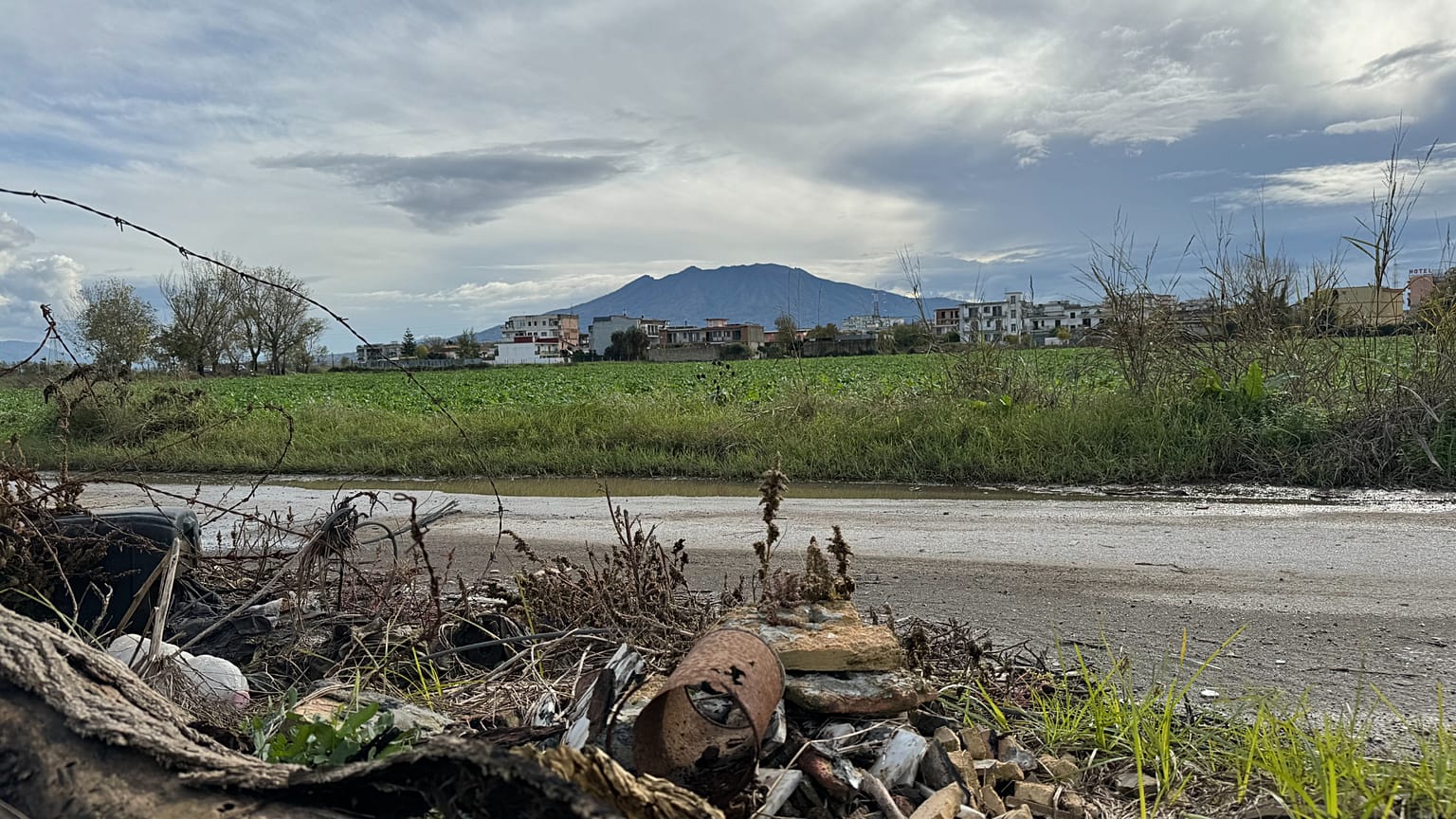














One year after Europe condemned Italy for failing to protect the lives of citizens in Campania's infamous "Land of Fires", the area poisoned by illegal toxic waste for decades remains an open crime scene.
This Friday, Italy marks an uncomfortable anniversary: it will be one year since the European Court of Human Rights condemned the Italian state for failing to protect its citizens living in the so-called Terra dei Fuochi or “Land of Fires” — a vast area of the south of the country devastated by decades of illegal toxic waste dumping and burning.
 ADVERTISEMENT
ADVERTISEMENT
ADVERTISEMENT
Euronews travelled to Campania to witness the grim realities of those who continue to bear the brunt of the area’s toxic legacy.
“This is a boy who died of cancer. Here is another—born in 2002, died in 2023. This woman, a tumor. This boy, a tumor. Here, a father and his two sons: all three died of cancer,” headstone after headstone, Angelo Venturato, a resident of Acerra, guides us through the alleys of the city cemetery.
He knows it only too well. “Here is my daughter”, he sighs, stopping in front of the tombstone bearing pictures of a radiant young woman. “She was 25. She died a few months before her wedding.”
Maria’s name was carved in stone after three years of fighting cancer. “It started with a malignant sarcoma on her leg, 23 centimetres long”, explains Venturato.
”It was removed, but the cancer spread to her lungs. Despite three surgeries, it kept coming back, more aggressively. And she died.”
Set at the heart of the Land of Fires, a zone stretching between Naples and Caserta, Acerra is one of the cities hardest hit by the record rates of cancer cases in a territory that is home to some 3 million people.
The cause is now well documented. For over 40 years, industrial, chemical, and sometimes radioactive waste was buried underground, burned in open fields, or dumped illegally along roadsides and farmland.
The trafficking was orchestrated by the Camorra criminal network, but depended on a much wider system involving companies from across Italy — and beyond.
'The state sold itself'
Marilena Natale has been investigating the Land of Fires — also known as the "Triangle of death" — for years.
Her reporting has earned her death threats from the mafia. Since 2017, she has lived under armed police protection.
She took Euronews under escort to one of the earliest dumping sites used during road construction.
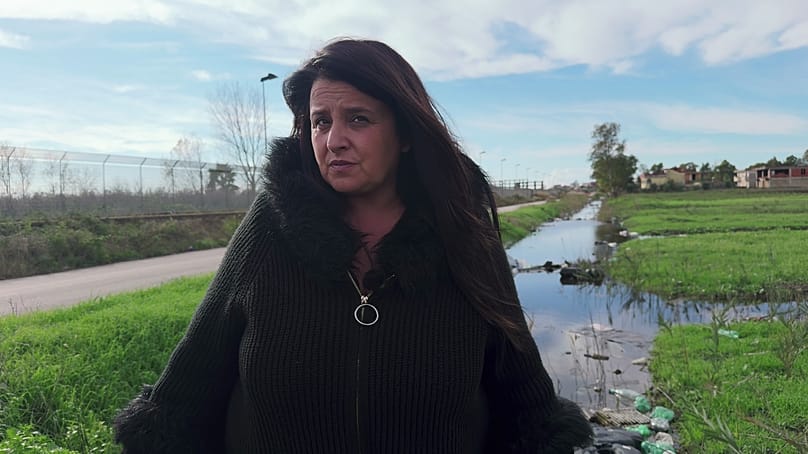
“To build these roads, they needed land,” she explains. “They dug huge holes. To fill them, they buried industrial waste, including radioactive waste. Then there were other sites, for construction waste, then urban waste.”
Italian authorities were aware of these practices as early as 1997. Yet much of the information was classified as a state secret until 2013, when Carmine Schiavone, a turncoat Camorra boss, publicly described the scale of the trafficking.
“The state sold itself,” Natale says. “To the Camorra, to corrupt businessmen, to corrupt magistrates, to corrupt police forces. That is how the Land of Fires was born.”
The large-scale trafficking of industrial waste has dwindled in the last decade, after a vast crackdown on traffickers as well as corrupt authorities, the judiciary, and law enforcers.
"Naples is the youngest region in Italy but also the sickest"
Nonetheless, for years, residents drank water, cultivated crops, and raised animals on contaminated land, unaware of what lay beneath their feet.
Heavy metals, hydrocarbons, asbestos, and toxic residues seeped into the soil, the air, and the groundwater.
All this came with long-term consequences.
“Naples in 2025 is the youngest region in Italy but also the sickest,” says Professor Antonio Marfella, a Naples-based oncologist and environmental health expert.
“We are at the national peak for lung cancer, liver cancer, leukemia, lymphoma, bladder cancer… We also have the highest rates of Alzheimer’s and Parkinson’s in Italy,” Marfella explained.
Luigi Costanzo, a family doctor in the town of Frattamaggiore, told Euronews he sees the human toll daily.
“In Italy, a general practitioner with 1,500 patients like myself, sees an average of nine cancer cases a year. I already have fifteen,” Dr Costanzo says.
“I also see many young couples who can’t have children. Or they have children with malformations,” he adds.
Only in 2021 did Italian health authorities officially recognise the impact of pollution of criminal origin on human health. For many families, it was far too late.
Marzia Caccioppoli’s son, Antonio, was nine and a half years old when he died in 2014 from a severe brain tumour.
She only understood the environmental causes of his illness after burying him.
“My Antonio was not an unlucky child. He was a child silently murdered by the state, which knew, and stayed silent,” Caccioppoli says, her voice a mix of anger and pain.
“That part of the state that was complicit, and over the years let so many other children die, who could have been saved.”
Out of her grief, Caccioppoli founded the association Noi Genitori di Tutti or “We the Parents of all,” supporting families of sick children and transforming personal tragedy into collective action.
Condemned for failing to protect Italians’ right to life
Caccioppoli was among the residents who, in 2013, brought Italy before the European Court of Human Rights (ECHR).
The verdict finally arrived on 30 January 2025.
The court established that Italy had violated Article 2 of the European Convention on Human Rights — the right to life —by failing “to deal with such a serious situation with the diligence and expedition required."
According to the ruling, it did so "despite having known about the problem for many years — specifically in assessing the problem, preventing its continuation, and communicating to the affected public.”
The “Cannavacciuolo and Others v Italy” case is named after Alessandro Cannavacciuolo’s family.
He was the first to appeal to the ECHR, after the animals of his family farm in Acerra, and many of his relatives, were decimated by the area’s pollution.
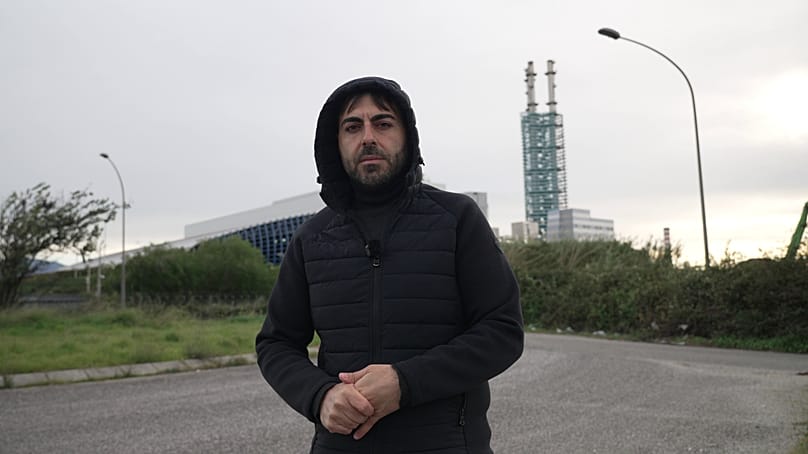
While raising hope for the victims, the landmark ruling has yet to be acted upon, Cannavacciuolo says.
“When we launched our first fights, protesting in public squares and calling institutions to take action, the threats also began: we were chased, our cars burned, our animals killed.”, he recalls.
“We had the courage to resist, and made sure that our voice and our tragedy reached European courts. Today, we expect citizens to be truly protected.”
The European Court ordered Rome to develop a comprehensive strategy to remediate the territory, establish independent monitoring, and create a public information platform detailing pollution and risks, within two years.
Italy responded to the ECHR judgement with Decree‑Law No. 116/2025, introducing urgent provisions to combat illegal waste activities, expand enforcement, and improve remediation procedures across Campania.
Pollution cleanup and public scepticism
In February 2025, a special commissioner, Carabinieri General Giuseppe Vadalà, was appointed to coordinate cleanup efforts. The scale of the challenge is enormous, he says.
“We have estimated that there were 33,000 tonnes of waste spilt on the surface that we are intervening on," General Vadalà tells Euronews.
"Then there is the depollution work to do for buried waste from the landfills of the 1980s and 1990s, which organised crime used for illegal trade”, he says.
“In the next two years, we must be more effective in eliminating the surface waste and implementing the depollution and securing of 15 sites. Over a longer period of 10 years, 293 sites must be cleaned or secured. We have estimated that €2 billion will be needed.”
The delays are too long, and the sums allocated to depolultion work are insufficient to address the plague, say many inhabitants, while toxic waste continues to be illegally dumped and burned on the Land of Fires.
The members of the association “Le Mamme di Miriam” monitor the territory relentlessly to assess the ongoing reality.
A group of them guide Euronews through rain puddles and debris at one of the illegal dumps that border houses and fields on the outskirts of Acerra.
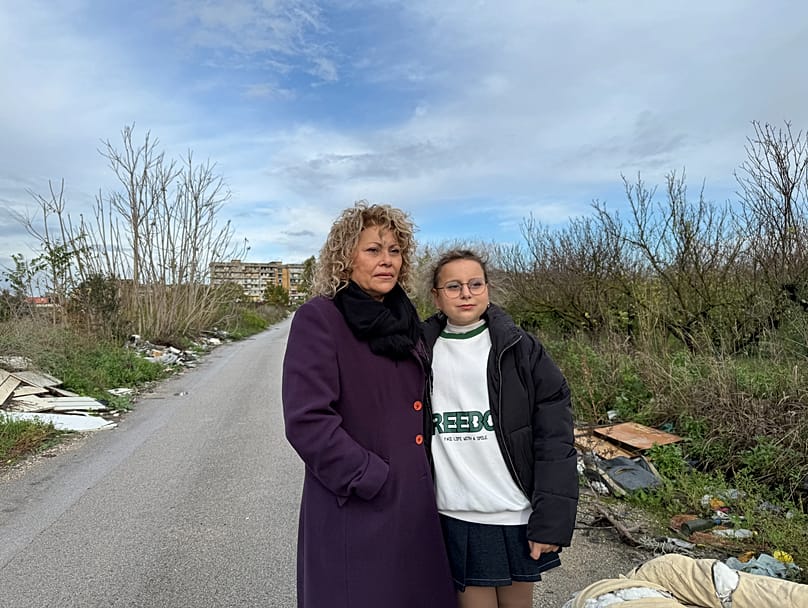
“As you can see, an ATM was dumped right here”, says Antonietta Moccia, pointing to a cash machine floating upside down at the surface of the canal flowing beneath our feet.
"This area has been under seizure for 10 years. Yet there are pipes, industrial waste, and very near here, a field with crops," Moccia points out
"Further on there’s also asbestos. We have been denouncing this for a long time, but it is still there.”
Uncontrolled territory
Brandishing a construction sign thrown on the roadside, alongside bags filled with waste, Anna Lo Mele, the association’s co-founder, cannot contain her rage.
“These are wastes from a construction site. It’s an uncontrolled territory. Is it normal to live in this mess? Is it normal for our children to never be able to play in the fields because of the waste?" Lo Mele asks.
The mothers’ association was named after Moccia's 19-year-old daughter Miriam, who survived a rare nervous system cancer.
“My daughter was diagnosed at age five with metastatic medulloblastoma. She survived, but it took 10 years to declare her out of danger," Moccia says.
"But it’s not over, because chemotherapy, radiotherapy and two autotransplants, destroyed other things. Miriam will need lifelong checks,” she recalls bitterly.
“Despite everything, I’m lucky because my daughter is alive, but many mothers cry for their children. That’s why I no longer believe in institutions that, even today, leave us to fend for ourselves,” adds Moccia, soon echoed by Lo Mele.
“They let us die, and they continue to let us die. It’s an ecocide,” she tells Euronews.
However, since the entry into force of the new action plan against Land of Fires pollution, sanctions against eco-crimes have been strengthened, as well as military and police presence.
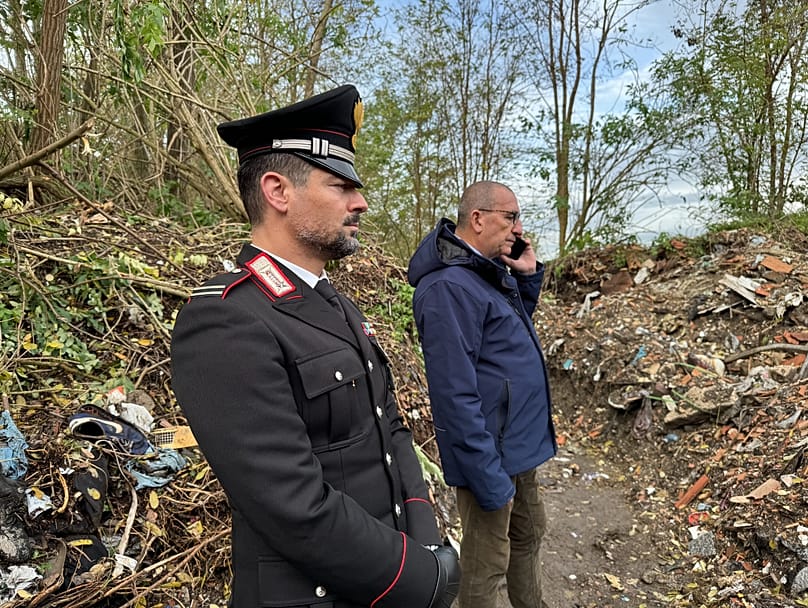
We head for Casal di Principe, some 30 kilometres east of Acerra.
Set in the province of Caserta, the town is long known as a Camorra stronghold. The local police let us follow them on one of their interventions.
“We will monitor activities that, according to our information, are illegal. We operate in a context of common and organised crime. I recommend maximum security,” warns Captain Marco Busetto, commander of the Casal di Principe Carabinieri group.
Carabinieri on the frontline
The sun barely breaks through the winter haze as the patrol cars roll into a small cement factory set on the city's outskirts.
Officers fan out across the property to scrutinise the site, as the company owners watch on.
“On paper, this firm is only allowed to do earthwork, but not to produce cement,” Captain Busetto says.
“The concrete residues produced here are rinsed and directly dumped in agricultural land,” he adds, pointing to a small canal leading to a field nearby.
The carabinieri inspect another site bordering the main structure, used to stockpile earth. “The earthworks are performed on agricultural land, which is not allowed," notes Captain Busetto. One of the mounds attracts the carabinieri’s attention.
“It is not excluded that asbestos-cement waste — or even radioactive materials — could be buried here. These activities play an important role in creating large illegal landfills, because there is probably a deeper system behind all this,” explains the Carabinieri commander.
“And we found profiles of people wanted for serious crimes on site. We will verify all findings and complete the control process”, he concludes, before placing the site under seizure.
Although monitoring of illegal activities was scaled up, this cannot solve a deep-rooted problem, says Valentina Centonze, one of the lawyers who defended the plaintiffs before the ECHR.
'We will discover other Lands of Fires in Europe and the world'
“Crime prevention actions are insufficient.”, she says. **“**There are production chains, for example for fashion, even prestigious and expensive brands. To save money, they outsource part of the chain, without verification."
"In any case, responsibility should be shared between the client and the subcontractor. I speak not only of financial responsibilities resulting from necessary depollution works, but also criminal responsibilities," Centonze explains.
In her view, the new Italian eco-crime law which focuses on harsher penalties will not end the scourge if the root cause is not addressed.
Centonze also slammed the Italian state's delays in implementing the ECHR’s ruling, including the creation of an independent monitoring body and a public information platform.
Her views are echoed by Professor Marfella.
“The plan implemented by the government cannot be effective because it is based solely on repression, without oversight and preventative intervention,” he says.
“Controls have increased by 200% in the last five years, but at the same time, activities involving tax evasion have increased by more than 200%."
The other thing the government has not done is to certify the traceability of hazardous waste. Hence, it is essential that the European Parliament pass a European framework law on the traceability of industrial waste," Marfella says.
Meantime, new challenges await, warns Marinela Natale, as both common and organised crime are adapting fast to the pressure.
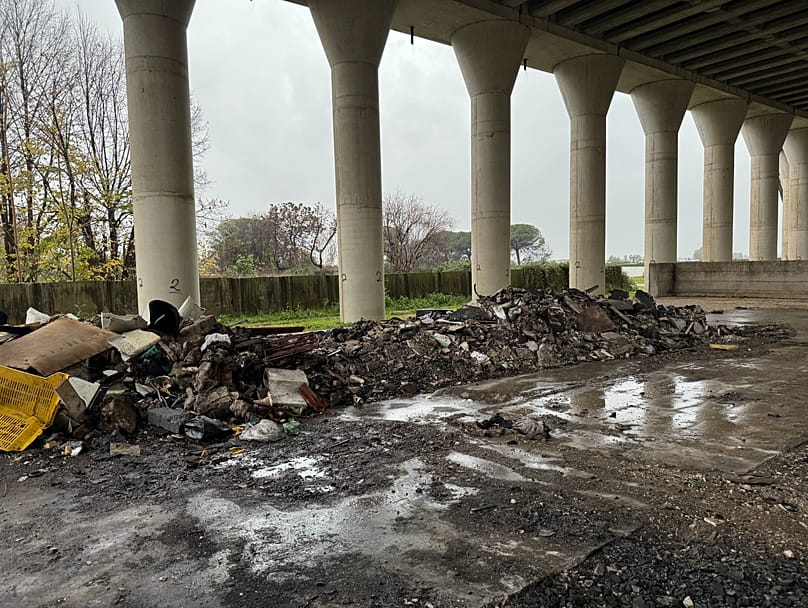
“The risk now is that the scoundrels who polluted our lands, infiltrate the companies contracted to carry out the depollution work,” Natale notes.
“What you see here now is the result of misconduct of small companies. The large-scale trafficking has found new routes. And in 20 years’ time, in the world, in Europe, we will discover other Lands of Fires.”