














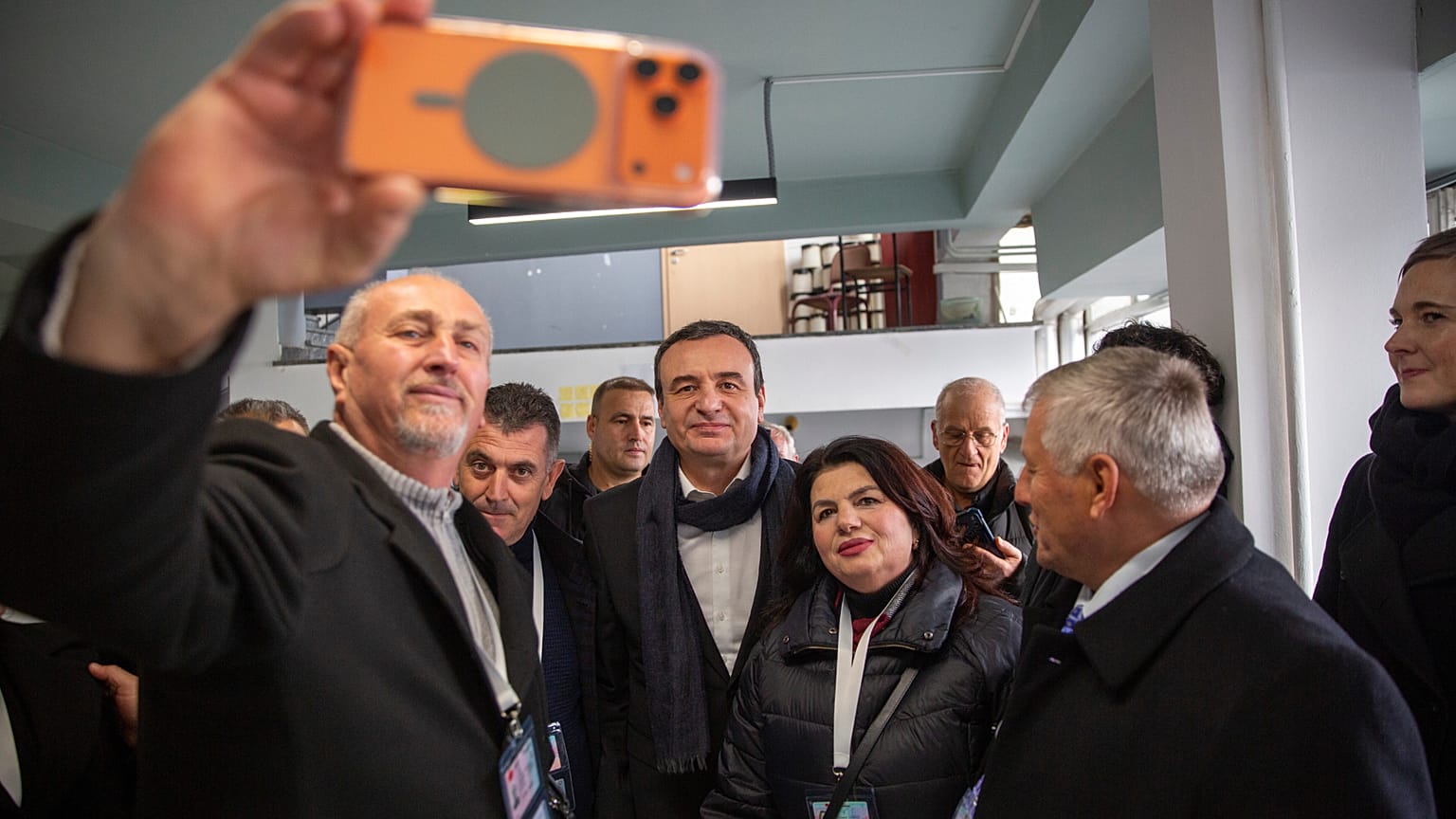













Analysts say caretaker Prime Minister Albin Kurti's party will come first but lack a majority, leaving ethnic minorities key to ending the stalemate.
Parliamentary elections were underway in Kosovo, two million citizens were expected to head to the polls on Sunday for the second time in 2025 to elect 120 members of parliament.
The previous elections, held on 9 February, failed to produce a government, and attempts to form a coalition were unsuccessful, resulting in a caretaker government holding power for almost ten months.
The Central Electoral Commission reported that by 11:00 (12:00 in Greece and Cyprus) 8.27% of registered voters had cast their ballots, roughly the same proportion as at the same point in the previous elections.
In the midst of a political crisis
Kosovo is facing its most serious political crisis since its declaration of independence in 2008.
As caretaker prime minister, Albin Kurti has refused to compromise. Even the formal constitution of parliament took months, after his insistence on a single candidate for the post of speaker resulted in 50 inconsequential votes.
It remains uncertain whether Sunday’s elections will provide a breakthrough in the political deadlock. Analysts in Kosovo predict that Kurti’s Self-Determination Movement (LVV) will once again emerge as the leading party, but is unlikely to secure over 50% of the vote, which is needed to elect 61 MPs. In the previous election on 9 February, the LVV won 42.3% of the vote, electing 48 MPs.

In these elections, Kurti is expected to increase his support, as around three hundred thousand citizens living and working abroad have returned to Kosovo in recent days. The diaspora has traditionally been a strong voter base for his party, which partly explains why the elections were scheduled during the holiday season.
The second strongest party is said by analysts to be the Democratic Union of Kosovo (PDK) led by Bendry Hamza. A prominent economist, Hamza has served as Minister of Finance and Governor of the Central Bank, was a member of parliament for three terms as well as mayor of South Mitrovica. He considers the US to be Kosovo's most important ally and accuses Kurti of causing a crisis in relations with Washington through his policies. The fact that he maintains channels of communication with the Serbian community in the north of Kosovo is also considered important.
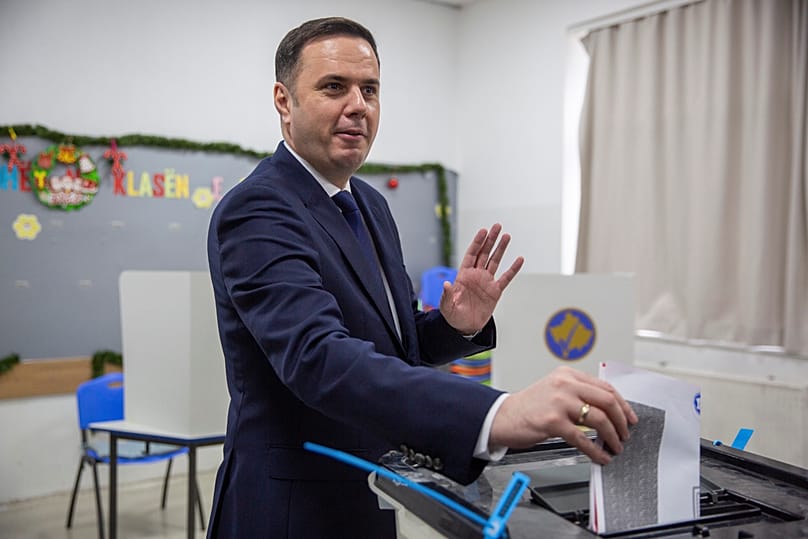
The Democratic Union of Kosovo (LDK), the oldest political party, would most likely emerge as the third political force. Its 42-year-old leader, Liumir Abdiđikou, has promised economic reforms, a crackdown on corruption, the rule of law and a European perspective. As a third political force, this party can play a decisive role in forming a government after the elections.
In the Serbian regions, the Belgrade-backed "Serbian List" is expected to assert its dominance.
According to Kosovo's constitution, 20 of the 120 seats in parliament belong to minorities. 10 seats to the Serb community and the other 10 to other ethnic minorities.
Minority deputies can determine the outcome of the processes of forming a government, as has often been the case in the past. Serb political representatives have ruled out any cooperation with the Albin Kurti movement.
The polls in Sunday's elections in Kosovo opened at 7:00 a.m. and closed at 7:00 p.m.
A total of 2,076,290 citizens are eligible to vote in Kosovo.