




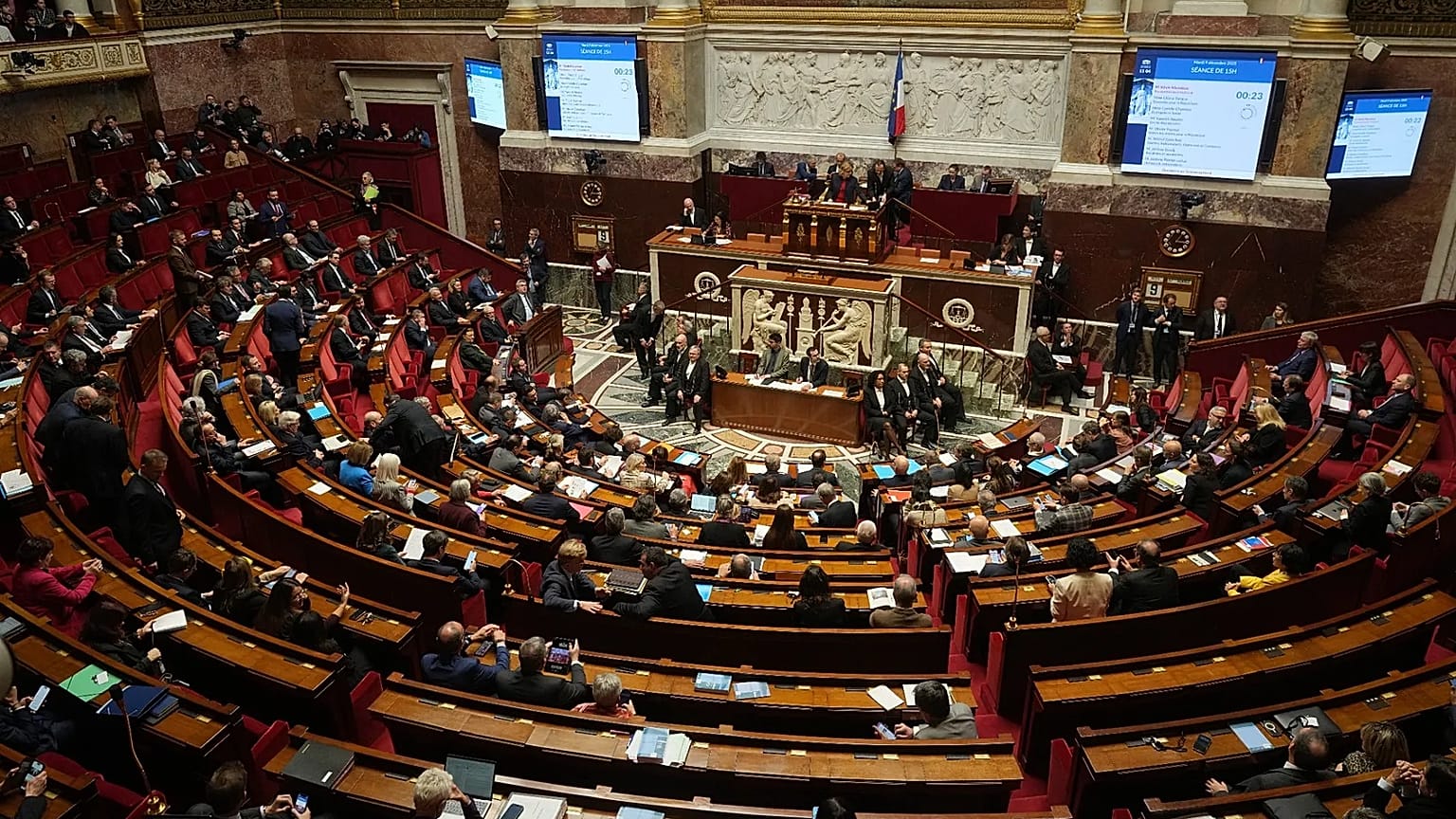














The high-stakes vote gives some respite for the weakened French Prime Minister Sébastien Lecornu
It came down to just 13 votes.
 ADVERTISEMENT
ADVERTISEMENT
ADVERTISEMENT
The Social Security Financing Bill (PLFSS)was adopted this Tuesday night by France's lower house of parliament, a major win for French Prime Minister Sébastien Lecornu, who has been walking a tightrope as he attempts to rein in a ballooning deficit in the face of increasing social discontent.
A total of 247 MPs voted in favour of the text and 234 voted against, while 93 abstained.
Lecornu was saved by making last-minute concessions to secure the vote of the centre-left Socialist party, alienating the conservative Republicans party and his own centrist alliance.
In the end, most of the centrist alliance voted for the bill while the conservative right either voted for or abstained.
The government had warned MPs that if the social security budget for next year were to be rejected, public finances could quickly deteriorate.

Last week, a memo was sent to MPs suggesting that the deficit could rise to €30 billion by 2026, a level deemed "extremely worrying" by Pierre Pribile, the head of the Social Security. The expected social security deficit for 2025 is estimated at €23 billion.
Social security accounts for over 40% of France's overall public sector spending. France's public deficit is currently one of the largest in the eurozone.
The social security budget also carries with it a major political issue: the suspension of French President Emmanuel Macron's highly unpopular pension reform.
This suspension, reintroduced by the MPs last Friday after being removed by the right-leaning Senate in the first reading, froze the increase of the retirement age from 62 to 64 until January 2028, after the next presidential election.
Although the text was adopted by the National Assembly, it will now have to go to the Senate for a new reading.

Either senators vote in favour of this version and the Social Security bill will be definitively adopted, or they reject the text, which is the most likely scenario, and a final reading will be necessary in the National Assembly, which will have the last word before its final adoption.
Sébastien Lecornu will then have to deal with the next major hurdle: the adoption of the 2026 state budget plan, a separate piece of legislation where compromise has proven difficult.
Both of Lecornu's predecessors, Michel Barnier and François Bayrou, were ousted after trying to push through significant budget cuts.