




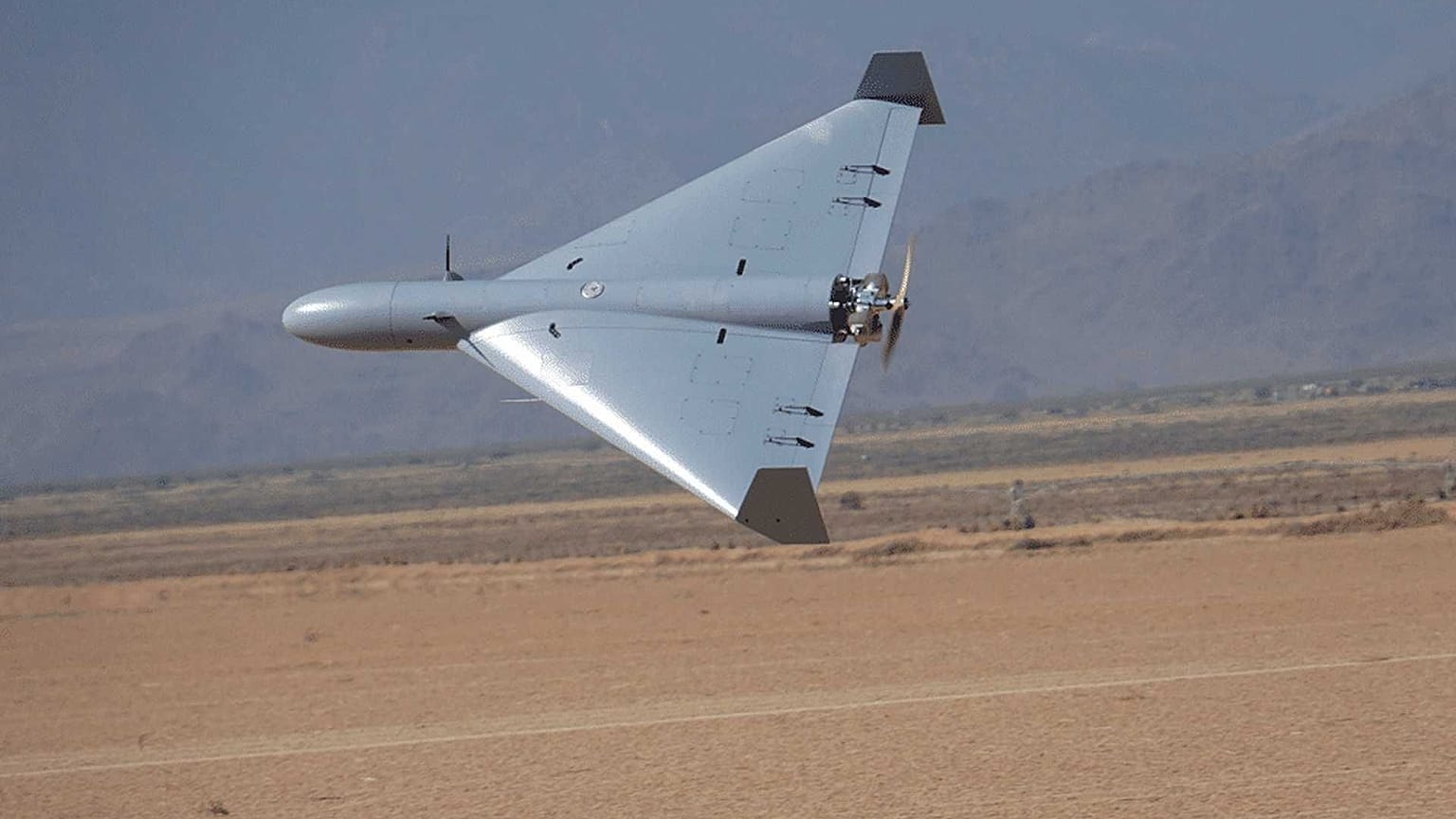













The US is deploying its own inexpensive drone to counter Iran’s Shahed 136 unmanned aerial vehicle. Enter the Low-Cost Uncrewed Combat Attack System known as FLM 136 LUCAS.
The ongoing Iran war is another example of the changing nature of warfare in the 21st century. One that is dominated by one technology above all: drones, especially cheap ones.
 ADVERTISEMENT
ADVERTISEMENT
ADVERTISEMENT
Iran’s armed forces are dwarfed by the US’ $900 billion (€773bn) military-industrial complex, with defence spending in 2025 at roughly $23 billion (€19.7bn). It is for this reason that the country has used drones to engage in asymmetric warfare to level the playing field.
The most visible example of this is the HESA Shahed 136 attack drone – an autonomous unmanned aerial vehicle that can fit in the back of a truck, designed for kamikaze strikes on targets.
Developed by Iran's IRGC-affiliated Shahed Aviation Industries in 2016, each drone costs between $20,000 and $50,000 (€17,000-€43,000). Meanwhile the US Patriot missile defence interceptors used to shoot them down cost a whopping $4 million (€3.4m) per missile.
This asymmetry of cost vs combat effectiveness is crucial to Iran’s defence planning, with the goal of making the war too costly for the enemy to wage for too long. The drone’s effectiveness did not go unnoticed by the US military.
Several US companies are now developing their own cheap drones, inspired by the Shahed 136. One company has even reverse-engineered their own version of the drone, which is now being used in combat for the first time to strike Iran: the FLM 136.
Imitation a form of flattery?
First unveiled by Arizona-based company Spektreworks last year, the FLM 136 is described as a Low-Cost Uncrewed Combat Attack System, otherwise known as LUCAS. It requires only a small team to operate and can take off and land autonomously.
The drone is very similar in size to the Shahed 136, coming in at 3 metres long and 2.5 metres wide, yet dramatically lighter at 81.5 kg compared to the Shahed at 200 kg. This also means the FLM 136 carries a lighter payload of 18kg versus Shahed’s 50kg.
The FLM 136 can conduct attacks for up to six hours within a range of 444 nautical miles and from an altitude of up to 15,000 feet or 4,500 metres.
It is powered by an internal combustion engine and can cruise at 137 kph and reach a top speed of 194 kph. Most importantly, each drone costs around $35,000 (€30,000) – putting it on par with the Shahed 136.
The drones are now being launched from the ground against Iran by Task Force Scorpion Strike (TFSS), a US Central Command unit deployed in the Middle East, to conduct one-way kamikaze strikes, just like their Shahed 136 counterparts.
While the US can still bring to bear a broad arsenal of weaponry, the ability of the Pentagon to produce low-cost drones at a volume greater in the long run is seen as a critical milestone.
US Defence Secretary Pete Hegseth declared on Tuesday that Iran is “losing drone dominance” and that the US has “total air dominance”.
The drone was showcased in July 2025 at an event organised by Hegseth at the Pentagon, with 12 of the country’s leading drone manufacturers competing to supply new military equipment.
Prior to this event, Trump signed the “Unleashing American Drone Dominance” executive order to stimulate the US commercial and especially military drone sectors.
This was followed in December 2025 by a US Department of Defence request for the US drone industry to deliver 300,000 drones quickly and inexpensively. A call Spektreworks and many other companies are answering.
Trump’s own sons, Eric Trump and Donald Trump Jr, are getting involved in the drone industry, backing a merger on Monday with manufacturer Powerus to increase domestic production.