













From passengers to fuel consumption, here are the technologies that could help airports operate more efficiently
What will airports look like in the future?
 ADVERTISEMENT
ADVERTISEMENT
ADVERTISEMENT
At the Mobile World Congress in Barcelona this week, airports were in the spotlight at a so-called “Airport of the Future” new segment.
Artificial intelligence (AI) is seen as central to the issue of air travel becoming increasingly crowded.
A self-driving robot transports passengers and luggage around airport terminals. It imagines a future where any weary traveller can hop on a self-driving buggy and be whisked to their gate.
The company ALBA Robot said that the AI robots can understand its environment, avoid obstacles, and perform navigation in the best way.
The robots are already used in some French and Italian airports and are being trialled in the United Kingdom and the United States, according to the Italian startup, ALBA Robot.
AI could also detect and track people and vehicles at an airport to help manage passenger flow.
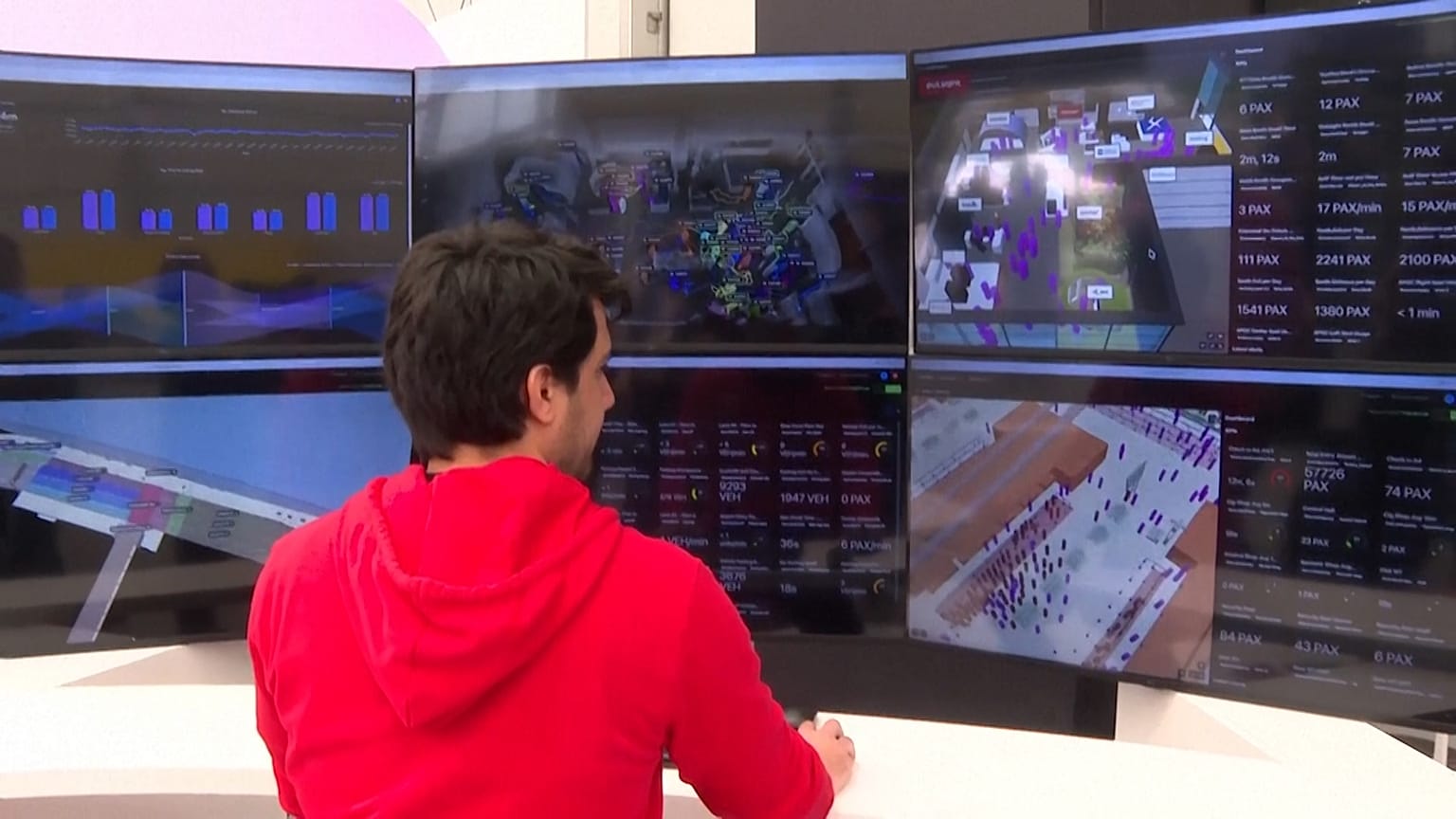
A French firm, Outsight, has developed software that monitors and predicts how passengers move from entrance to gate to help airports become more efficient.
Using AI and digital twins, the system assigns each moving object a unique ID. By monitoring and simulating real airport environments, the technology can show, for example, how many passengers use check-in counters and luggage services and how many go directly to security after checking in online.
The data aims to help airports prevent overcrowding, reduce queuing times and encourage passengers to spend more time in retail and food and beverage areas, where they are more likely to spend money.
"The operations team at airports or at any other location can learn and see exactly what they will do tomorrow. Should they have enough staff? Should they not? What if they have too many people joining an airport as staff, but there are not enough people flying?” said Eduardo De La Espriella, marketing team lead at Outsight.
A digital twin is a highly detailed simulation model that mirrors a physical object or environment. Outsight says individual data is kept anonymous. However, experts have previously warned the technology is not perfect, as simulations may be inaccurate and privacy concerns may still exist even when data is anonymised.
Other future airport technologies can also help airlines reduce their environmental impact.
Half of airport CO2 emissions happen when aircraft are still on the ground, according to theFrench tech company, Waltr.
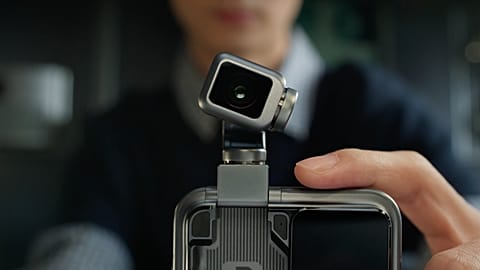
It has developed a system to monitor aircraft as they taxi and sit on their stand to work out when fuel is being wasted. It does this using a network of specialist cameras that can detect where and how fuel is being used.
It can tell pilots who have just landed to switch to one engine when taxiing to the stand, cutting the amount of fuel being used.Or it can send an alert when an auxiliary power unit has been left on unnecessarily.
Waltr says the system has already been deployed to some airports.
Demand for travel is taking off. Last year, international traffic grew by 7.1 percent, according to the International Air Transport Association, and is expected to shoot up further this year.