

















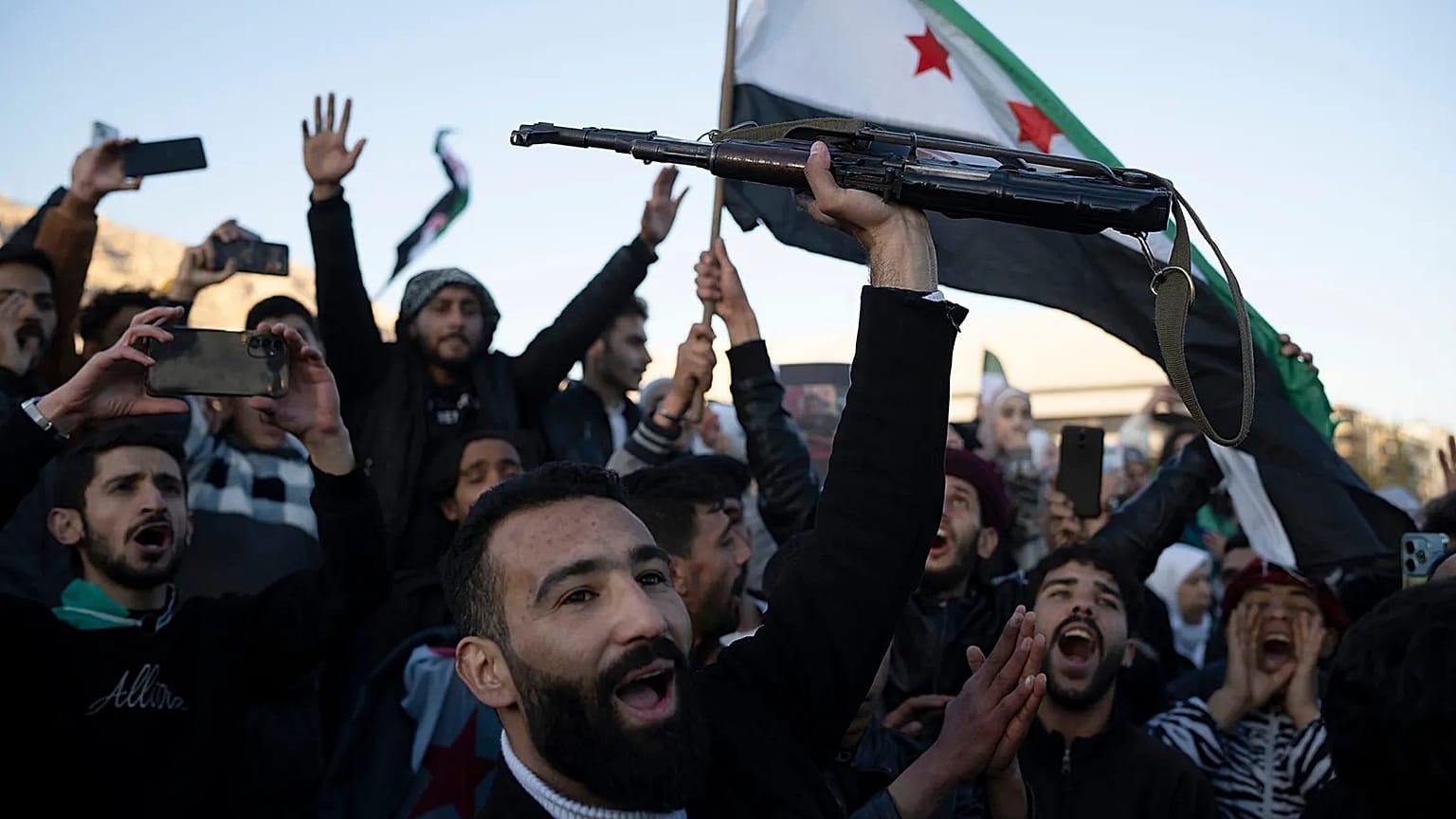














German Chancellor Friedrich Merz argues against granting asylum to Syrians after al-Assad's regime fell, but critics warn the country remains unsafe for minorities and women.
Germany should no longer grant asylum to Syrians now that President Bashar al-Assad's regime has fallen, German Chancellor Friedrich Merz has said, but critics warn the country remains unsafe for minorities and women.
 ADVERTISEMENT
ADVERTISEMENT
ADVERTISEMENT
Tareq Alaow, a former Syrian refugee and spokesperson on refugee policy for Pro Asyl, cautioned against hasty conclusions. After al-Assad's ouster in early December 2024, he initially felt hopeful.
"For me, it was a moment of hope that we could build a democracy and a constitutional state in Syria — until reality hit us hard," Tareq said.
On 29 January, Ahmed al-Sharaa — a former leader of an al-Qaeda affiliate in Syria known by his nom de guerre Abu Mohammed al-Jolani — became interim president.
This is when Tareq's enthusiasm turned into concern. "These are jihadists," Tareq warned. Shortly after Assad fell, Syria's new rulers began persecuting minorities, LGBTQ+ people and women, he said.
"They have no interest in addressing crimes against humanity, because they themselves committed crimes against humanity in northwestern Syria," he added.
Many Syrians fear al-Sharaa has not distanced himself from his past as leader of the Islamist militia Hayat Tahrir al-Sham.
Religious minorities under attack?
Reports have emerged of massacres targeting religious minorities, particularly the Alawites — to which the al-Assad family belonged.
On 6 March, heavy fighting broke out between al-Sharaa's forces and members of the Alawite community. Around 1,400 people, mostly civilians, were killed in the violence, according to United Nations figures.
Victims were murdered, tortured and their bodies mutilated, according to one report. Some atrocities were filmed and shared on social media. In several videos, perpetrators could be heard saying "We have come to kill the Alawites," according to the Syrian Observatory for Human Rights, a UK-based monitoring group.
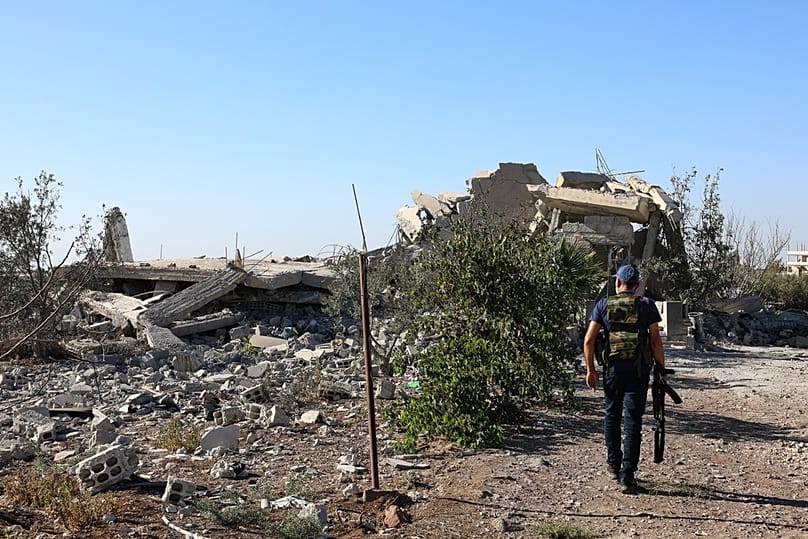
Syria's transitional government justified the fighting by claiming al-Assad loyalists had attacked security forces in Latakia province, which has a large Alawite population.
Further clashes occurred in July between government forces and Druze communities in Suwayda province. UN experts warned of killings, abductions, kidnappings, looting, property destruction and sexual violence against women and girls.
Al-Sharaa called for a ceasefire and described the clashes as a "challenge". He also promised to hold anyone who harmed civilians to account in both cases, but was met with scepticism by both Alawite and Druze leaders.
Meanwhile, many Syrians remain distrustful, questioning whether al-Sharaa truly controls his own security forces.
Who is Ahmed Al-Sharaa?
Several years ago, the United States offered a $10 million bounty for Al-Sharaa, then known as al-Jolani. Until 2024, he was considered a wanted terrorist in America.
Today, world powers — including Washington — are receiving him. The UN Security Council lifted sanctions against him in November, and he is now internationally recognised as Syria's leader.
"What hurts is that the international community is now trying to legitimise exactly this group under Ahmad al-Sharaa in Syria. As long as they have someone to talk to in Syria, they're willing to turn a blind eye," Tareq said.
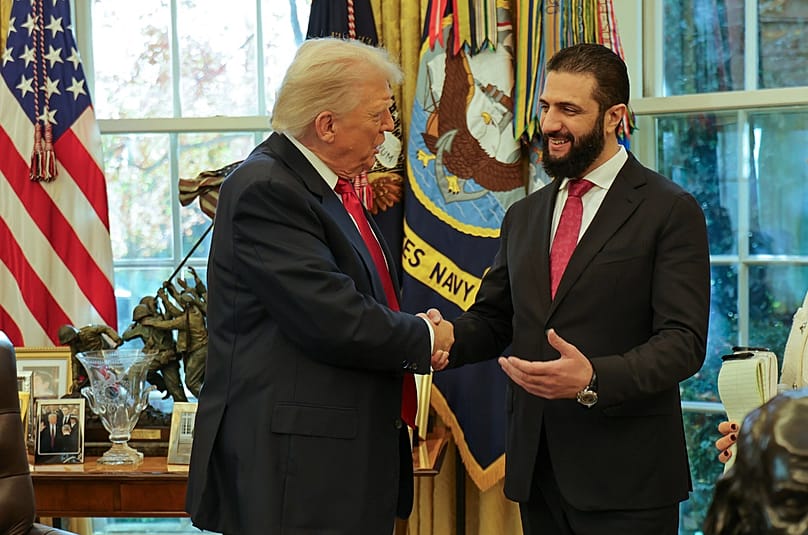
He believes it is dangerous that world powers are engaging with jihadists, warning this could trigger a new wave of displacement. He criticised the current refugee policy as unsustainable.
"The goal seems to be to keep people from fleeing to Germany or Europe as much as possible. But that's not going to work," Tareq said.
People flee because of wars and crises in their home countries, he explained. Sending people back will not help. "If things escalate again in two years, they will flee again."
He fled Syria after being persecuted for documenting human rights violations. He was sent to the battlefield where ISIS was supposed to kill him. The al-Assad regime "wanted to wash its hands" and avoid killing him directly, Tareq said.
He sees similar patterns emerging under the new government. The persecution of minorities occurred under the al-Assad regime in the 1960s as well, he noted.
"The difference is that the al-Assad regime relied on nationalist ideology. The new rulers rely on religious ideology. The methods are the same."
European response needed
Tareq believes Europe must increase pressure on Syria's current rulers. Only if people feel safe can they return permanently.
He criticised Germany's response: "Even during the massacre of the Druze, the German representative at a meeting in Syria did not say a single word about the massacres."
The human rights activist speaks extensively with people from Syria. "The majority say: 'If there were real stability in the country, we would return to rebuild it.'"
The experience Syrians have gained in Germany and Europe could help rebuild Syria's infrastructure, housing and cities — and democracy itself, he said. "That would be essential after almost 60 years of dictatorship."
But security and political foundations are currently missing. "Given the widespread availability of weapons across the country, I see no safety. Even the smallest conflict can escalate to a degree that affects everyone in the region," he warned.
He expects more from Europe's democratic governments: "We need more political pressure on the new rulers."
Public statements by European politicians would help protect people on the ground by showing these events are being watched from abroad, Tareq argued.
He insisted human rights protections should be made a condition for receiving development funding.
"We have political weight. We can exert diplomatic pressure on Syria's rulers. So far, that has unfortunately not happened."